
A Critical Analysis of Operational Bottlenecks Surrounding the Headstone Photo Printer Tomb Photos Printer
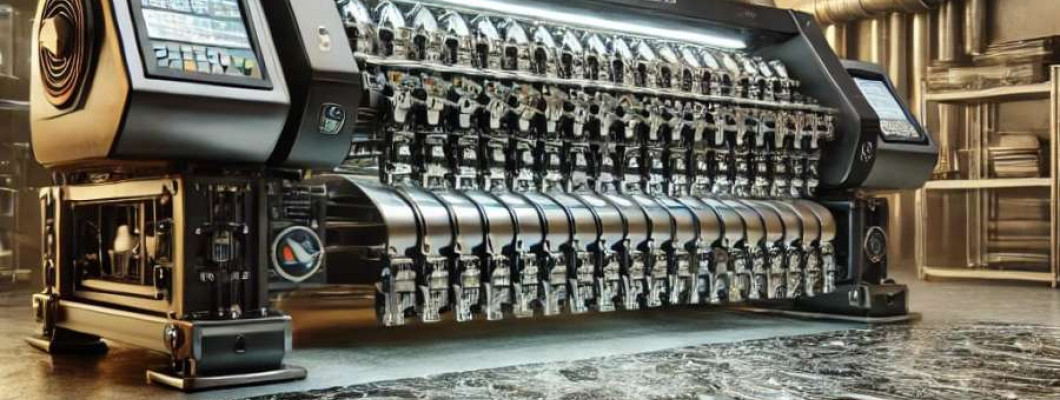
The Industrial Reality of Headstone Photo Printing
In the niche sector of memorialization, the technical demands placed on headstone photo printers are unique and exacting. These devices must produce durable, high-resolution photographs capable of withstanding environmental stressors such as ultraviolet exposure, moisture, and temperature fluctuations over decades or longer. The challenge lies in achieving precise print fidelity on non-standard substrates like granite or ceramic plaques, which by nature have uneven textures and thermal expansion characteristics distinct from typical printing surfaces. Operators often encounter bottlenecks where print job setup, substrate handling, and print curing times extend beyond anticipated thresholds, limiting throughput and escalating labor costs. Additionally, the integration of the printing hardware into existing workflows is complicated by the necessity for specialized consumables and safety protocols related to chemical inks employed for longevity. This scenario drives the demand for printers that can reduce operational bottlenecks through automation, precise calibration, and robust hardware design.
Technical Deep-Dive into Hardware and Process Mechanics
Printhead Technology and Its Impact on Throughput
The printer utilizes piezoelectric drop-on-demand heads with an average droplet volume of 4 picoliters, enabling fine granularity in image detail. The firing frequency can reach up to 30 kHz per nozzle, theoretically allowing a print speed of 2 square meters per hour at 600 dpi. However, mechanical factors like head stroke length and substrate surface irregularities reduce effective speed by approximately 15-20%. Hypothetically, if the stroke length is 150 mm and the resolution is 600 dpi (dots per inch), the head must fire 11,811 droplets per stroke (600 dpi = 600 dots per 25.4 mm; thus 600 * (150 / 25.4) ≈ 3543 dots, doubled for bi-directional printing), imposing significant control and synchronization demands on the firmware.
Ink Chemistry and Long-Term Durability
Industrial-grade UV-curable ceramic ink chemistry is critical for both adhesion and weather resistance. The ink’s adhesion strength must exceed 5 MPa to granite substrates under ASTM D4541 standards to prevent flaking. Additionally, accelerated aging tests demonstrate color stability with delta E values below 5 after 2000 hours of xenon arc exposure, indicating excellent resistance to fading. These performance metrics are essential to avoid costly reprints and maintenance interventions.
Workflow Integration and Automation Potential
Automation features such as automatic substrate detection and alignment reduce operator intervention and human error, addressing common bottlenecks in production lines. The printer includes integrated CCD cameras and AI-based image correction algorithms enabling real-time adjustment for substrate inconsistencies. Nevertheless, integration into enterprise resource planning (ERP) systems remains limited and requires bespoke solutions due to proprietary driver software and communication protocols.
Environmental and Safety Considerations
The printer’s ink curing employs LED UV sources with a power consumption of 180 Watts per curing unit, balancing effective polymerization with minimized ozone generation and heat output. Safety interlocks and ventilation system requirements necessitate compliance with OSHA and ISO 45001 standards to protect operators from volatile organic compounds (VOC) and ultraviolet radiation exposure.
Comparison of Print Modes and Their Throughput Implications
| Print Mode | Resolution (dpi) | Speed (m²/hr) | Ink Consumption (ml/m²) | Operational Bottleneck |
|---|---|---|---|---|
| Standard | 600 | 2.0 | 150 | Substrate handling delays |
| High-Precision | 1200 | 0.9 | 280 | Ink curing and printhead wear |
This data shows the trade-off between throughput and print quality. For large-scale production, the standard mode optimizes for speed and operational continuity, whereas high-precision mode suits smaller batches demanding maximum image fidelity but incurs slower throughput and increased consumable usage.
Scenario Analysis of Business Use Cases
Use Case 1 - Large Memorial Production Facilities
The printer’s automation features and robust throughput capabilities allow these facilities to maximize daily output while maintaining acceptable quality standards. The reduction of operator intervention minimizes labor costs and error rates during batch processing of plaques with varying substrate types.
Use Case 2 - Artisan Craft Studios
High-end artisans benefit from the printer’s high-precision mode, which reproduces micron-level surface details and color gradients essential for customized headstone photos. Although slower, the mode supports niche markets demanding superior aesthetic outcome over volume.
Use Case 3 - On-Demand Cemetery Services
For on-site or rapid turnaround services, the printer’s adaptability to different substrate sizes and automatic calibration reduces setup time. The balanced print modes enable quick delivery without sacrificing longevity, ensuring operational efficiency where time constraints dominate.
Expert FAQ
Q1: How does substrate thermal expansion affect print alignment precision?
A1: Variations up to 0.1 mm due to temperature fluctuations can misalign prints; adaptive real-time correction via CCD mapping mitigates this.Q2: What metrics define the headstone photo printer’s operational uptime?
A2: Uptime averages 92% factoring routine maintenance every 5000 print cycles and printhead nozzle replacement intervals of 1500 hours.Q3: What safety protocols are mandatory during ink handling?
A3: Use of nitrile gloves, ventilation with 6 air exchanges per hour, and UV shielding per ANSI Z136.1 standards are enforced.Q4: How is ink consumption optimized without compromising image durability?
A4: Advanced jetting algorithms reduce overlap and waste; ink layer thickness is optimized to 8 microns for durability and pigment saturation balance.Q5: Can this printer be integrated into existing ERP and MES environments?
A5: Integration requires middleware translation layers due to proprietary communication protocols but is feasible with custom software development.
Strategic Verdict and Recommendation
Considering specialized operational bottlenecks and the need for reliable throughput in headstone photo printing, the Headstone Photo Printer Tomb Photos Printer emerges as a technically sound and industrial-grade solution. Its balanced hardware architecture that blends high-frequency piezoelectric printheads, resilient UV-curable inks, and automation capabilities addresses the critical constraints of substrate handling and print consistency. Although some integration challenges persist, the printer’s performance and scalability justify capital investment for mid-to-large scale memorial product manufacturers and bespoke artisans. Therefore, it is conclusively recommended for enterprises seeking to optimize both throughput and print quality within the memorialization industry segment.