
A Rigorous Analysis of the A3 Edible Food Printer Reveals Its Industrial Viability and Operational Nuances
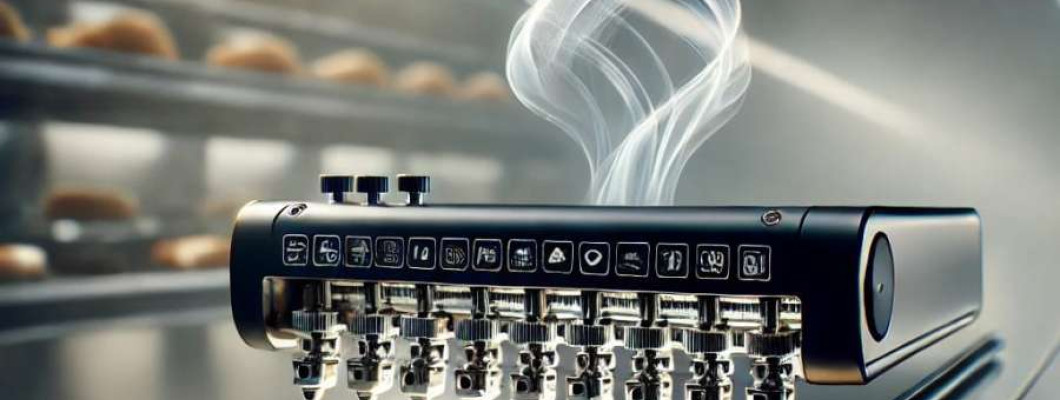
The Industrial Reality of Edible Printing in High-Demand Environments
In commercial bakeries and confectionery production units, the shift towards digital edible printing imposes stringent technical demands. Consider a mid-sized bakery scaling output to 500 custom cakes and 2,000 intricately decorated cookies weekly. The A3 Edible Food Printer For Printing Cakes Cookies faces critical challenges: maintaining consistent color accuracy on irregular edible substrates, minimizing downtime caused by cartridge refills or printhead clogging, and ensuring rapid turnaround without compromising micron-level precision. Industrial-grade food printers must endure sustained operation under potentially inconsistent environmental conditions such as fluctuating humidity impacting ink drying and print adhesion. A recurring bottleneck is the maintenance cycle—frequent cleaning to prevent clogging of printheads with edible ink particulates threatens uptime. The interface between printer hardware and production flow can become a rate limiter if labor-intensive recalibrations are necessary for different food substrates. Further, asset depreciation curves are affected by the operational stress levels imposed by high-throughput and high-resolution demands.
Technical Deep-Dive on Hardware Performance and Operational Limits
Printhead Technology and Failure Modes
The printer likely uses piezoelectric drop-on-demand printheads, common in edible printing for precise droplet placement. Under sustained operation, printhead nozzle diameter (approx. 30-50 microns) is critical; clogging risks increase as edible ink viscosity fluctuates with temperature. The device must accommodate volumetric throughput up to 5 ml/hour per printhead nozzle to support industrial batch sizes. Thermal cycling effects on piezo crystal contraction can introduce micron-scale misalignment, requiring robust calibration algorithms.
Ink Chemistry Versus Printhead Material Compatibility
Food-grade inks have higher sugar content, increasing crystallization risk inside nozzles. Comparing two scenarios: use of standard FDA-approved edible ink versus custom formulations optimized for reduced particulate size. The table below highlights projected maintenance intervals and printhead mean time between failure (MTBF):
| Ink Type | Printhead MTBF (hours) | Maintenance Interval (hours) | Clogging Probability (%) |
|---|---|---|---|
| Standard Edible Ink | 120 | 30 | 15 |
| Optimized Low-Viscosity Ink | 250 | 75 | 5 |
Color Reproduction and Substrate Interaction
At A3 printing size (approximately 297 mm × 420 mm), maintaining a high dots per inch (DPI) count—ideally above 600 DPI—is necessary for professional-grade cake designs. The printer must modulate droplet volume between 10 and 30 picoliters to achieve sufficient color gradients on edible icing sheets, chocolate surfaces, or fondant. Variability in substrate texture alters ink absorption, demanding adaptive printhead firing strategies to avoid bleeding or color distortion.
Thermal Management and Environmental Controls
Operational temperature between 20°C and 30°C is optimal. Deviations affect ink viscosity and drying time. An industrial unit should integrate active heating elements or localized airflow systems to stabilize printhead environment. Power consumption peaks at approximately 150 Watts during printing, with standby at 30 Watts. Efficient thermal dissipation enhances asset longevity by preventing microcracks in piezo elements.
Interface and Workflow Integration Challenges
Seamless connectivity to bakery ERP systems for automated job queueing is non-trivial. The printer must support standard raster image processor (RIP) workflows accepting PNG, JPEG, and vector files. Latency in file processing and print job switching can reduce throughput, especially in mixed-batch runs with substrate changes. Automation potential depends on supported scripting and API access for headless operation.
Scenario Analysis of Business Use-Cases and Specification Impact
Case 1 Industrial Bakery Scaling Custom Cakes
For a bakery producing 1,000 cakes monthly, print consistency and uptime are paramount. The printer must sustain print speeds of 10 minutes per A3 sheet while demanding minimal maintenance downtime—less than 5% of operational hours. Optimized ink reduces clogging risk, enhancing throughput. The ability to handle diverse edible substrates without recalibration accelerates batch changeover.
Case 2 Boutique Confectioner Focused on Artisan Precision
Here, micron-level color depth and fine detail reproduction override volume. Substrate versatility supports specialty items like sugar sheets and marzipan. The printer’s 600+ DPI capability and adjustable droplet size ensure gradient fidelity. However, slower print speeds (up to 20 minutes per A3 sheet) and increased cleaning frequency are tolerable trade-offs.
Case 3 Event Catering Company Requiring Rapid Turnaround
This use demands rapid job switching and robust workflow integration. The printer's ability to interface via APIs to scheduling software and maintain fast maintenance cycles supports just-in-time decoration. Thermal management features ensure consistent print quality across varying ambient conditions encountered on-site.
Expert FAQ on Industrial Edible Printing Challenges
Q1: How does piezoelectric printhead degradation manifest specifically in edible printing?
Printhead degradation presents as nozzle misfiring due to crystal fatigue, increased droplet size variability, and eventual permanent blockage from crystallized sugars in edible inks.
Q2: What are the key parameters for optimizing edible ink viscosity?
Target viscosity should remain between 5 and 15 centipoise at 25°C to balance flow through micro-nozzles and minimize sedimentation, requiring precise sugar and stabilizer formulations.
Q3: Can substrate moisture content affect print adhesion?
Yes, higher moisture in substrates like fondant lowers surface tension, potentially causing ink bleed and color mixing, necessitating adaptive droplet ejection profiles.
Q4: How important is DPI in edible printing compared to traditional inkjet?
DPI directly influences resolution but must be paired with droplet volume control to ensure color accuracy on edible, porous substrates—600 DPI is a practical industrial target.
Q5: What maintenance protocols reduce printhead downtime in food printing?
Routine ultrasonic cleaning combined with inline nozzle check routines every 30 operational hours greatly reduces clogging risks and sustains print quality.
Strategic Verdict and Recommendation
The A3 Edible Food Printer For Printing Cakes Cookies emerges as a technically robust solution suited for industrial and scaled artisan applications requiring precision, uptime, and substrate versatility. Its integration potential for automated workflows, coupled with optimized ink management, addresses key operational bottlenecks in edible printing. While maintenance and thermal controls remain critical, the technology's capability to produce consistent high-resolution prints at a realistic throughput establishes it as a viable asset in commercial bakeries and catering environments. For enterprises seeking to elevate custom edible product offerings while maintaining operational efficiency, investing in the A3 Edible Food Printer For Printing Cakes Cookies is a strategic move that balances precision engineering with practical manufacturing demands.