
A2+ Size UV Printer Embossed Glossy Printing Analyzing Lifecycle Maintenance Costs for Industrial Precision Output
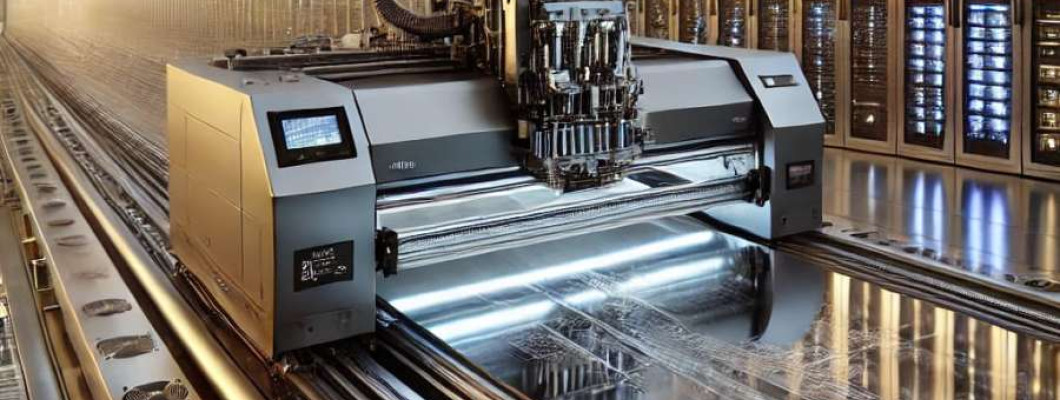
The Industrial Reality of Lifecycle Maintenance in High-Precision UV Printing
In large-scale industrial printing environments, the challenge of maintaining consistent output quality while controlling lifecycle maintenance costs demands rigorous technical discipline. The A2+ Size UV Printer with embossed glossy printing capability operates at the intersection of precision optics, mechanical robustness, and advanced ink chemistry. Such a device is expected not only to deliver high-definition prints across substrates but also to minimize unplanned downtime caused by frequent maintenance cycles or component wear. A typical industrial print shop processing medium to high volume jobs must anticipate the long-term operational expenses tied to printhead replacements, UV lamp degradation, substrate feeding systems, and cleaning mechanisms. These elements have direct impact on throughput and cost of ownership, aspects that define the practical viability of an industrial-grade UV printer.
Consider a scenario in an enterprise print setting producing embossed glossy finishes on variable substrates ranging from rigid plastics to thin metal sheets. The embedded UV curing modules are exposed to photochemical stress, accelerating lamp wearing and optics fouling. Likewise, printheads eject microscopic droplets measured in picoliters (pl), which necessitates highly sophisticated fluidics and clog prevention routines. The maintenance overhead can escalate if the printer architecture lacks modularity or real-time diagnostic feedback, forcing extended offline servicing and increasing labor costs. Lifecycle analysis thus becomes a critical factor in procurement decisions—one where capital expenditure (CAPEX) must be balanced with operational expenditure (OPEX).
Technical Deep-Dive into Lifecycle Maintenance Costs
Printhead Longevity and Replacement Frequency
The printhead is arguably the highest-wear item in the UV printer system. The technology underpinning the A2+ Size UV Printer involves piezoelectric or thermal bubble inkjet mechanisms delivering droplets between 4pl–10pl in size across resolutions up to 1440 dpi. Assuming an average operational duty cycle of 10 hours daily with a throughput of 100 sqm/day, cumulative droplet ejections can approach 10^12 over 12 months. The sound velocity through the piezoelectric crystal and nozzle material fatigue dictate failure rates, typically requiring printhead replacement every 18–24 months under ideal maintenance conditions.
UV Lamp Output Degradation and Recalibration
UV curing lamps operate within a spectral bandwidth tailored to ink photoinitiators, predominantly 365–405 nm wavelengths. Over time, lamp output intensity decays typically by 15–20% after 2000 operational hours, necessitating recalibration and eventual lamp replacement to maintain gloss consistency and curing uniformity. The embedded solution in the A2+ unit uses mercury vapor lamps or LED arrays, with LEDs providing enhanced lifespan but at higher upfront cost. Estimated lamp replacement costs combined with recalibration labor add approximately 5–7% to yearly maintenance expenditure.
Mechanical Substrate Feeding and Embossing Head Wear
Workflow throughput hinges on precise substrate transport and embossing pressure calibration. The feeding mechanism uses servo-controlled rollers with feedback loops maintaining positional accuracy within ±0.1 mm. Bearings and embossing heads subject to mechanical abrasion require scheduled lubrication and inspection every 500 operational hours. Failures manifest as registration errors, causing rework and downtime. Empirical data indicate mechanical service accounts for around 12% of maintenance costs, with potential spikes in high-volume scenarios.
Cleaning Cycles and Consumable Costs
Ink residue build-up in nozzle arrays and UV curing chambers degrades print quality and gloss finish. The printer's automated cleaning cycle duration averages 15 minutes per shift, involving solvent use and waste ink disposal. Consumables like cleaning cartridges and filter replacements constitute roughly 8% of OPEX annually. Optimization of cleaning frequencies based on real-time sensor data can reduce these costs by 20%, a feature embedded in the latest firmware releases.
Comparative Table on Maintenance Cost Drivers
| Component | Maintenance Cycle (Hours) | Cost Impact (%) | Failure Mode | Mitigation Strategy |
|---|---|---|---|---|
| Printhead | 4000–4800 | 40 | Nozzle clogging, piezo fatigue | Routine cleaning, modular replacement |
| UV Lamp | 2000 | 15 | Output decay | Scheduled calibration, LED upgrade |
| Feeding Mechanism | 500 | 12 | Roller wear, registration errors | Lubrication, precision servo control |
| Cleaning Consumables | Daily/Shift | 8 | Residue accumulation | Automated cleaning, sensor feedback |
Scenario Analysis for Business Use Cases
High-Volume Commercial Print Shop
Here, throughput and uptime define profitability. The A2+ Size UV Printer's moderate printhead lifespan and quick modular replacements minimize downtime. Scheduled lamp recalibration aligns with shift cycles ensuring gloss consistency. The automated cleaning reduces operator intervention, maximizing production hours. Lifecycle costs, while non-trivial, are offset by high volume margins and predictable maintenance scheduling.
Specialized Artisanal Production
In low-volume but high-precision scenarios producing embossed glossy finishes on luxury packaging, print quality and substrate versatility surpass throughput. Maintenance cycles extend printhead life by reducing operational hours but require frequent recalibration to maintain micron-level precision. The machine’s ability to handle variable media thickness with calibrated embossing heads proves advantageous, while maintenance cost allocation shifts towards consumables impacting fine-detail reproduction.
Enterprise R&D Labs
For innovation labs testing new substrate and ink formulations, the printer’s modular design and diagnostic sensors facilitate rapid cycling between experimental runs. The maintenance overhead is a trade-off for stability in output and ability to recalibrate UV intensity in real time. Lifecycle costs are planned as part of iterative testing phases, with high emphasis on printhead longevity and ink chemistry compatibility.
Expert FAQ
How does droplet size variation affect printhead maintenance?
Smaller droplets (4–6 pl) increase nozzle clog risks due to higher surface tension effects and ink viscosity variation, accelerating cleaning frequency and reducing printhead lifespan. Larger droplets provide robustness but reduce resolution.
What metrics predict UV lamp replacement timing?
Operational hours combined with real-time output photodiode intensity readings allow predictive maintenance triggers when output falls below 80% of baseline power measured in mW/cm².
Can substrate embossing pressures be automated to reduce mechanical wear?
Yes, servo-actuated embossing with force sensors permits dynamic pressure adjustment per substrate thickness, minimizing mechanical stress and extending component life.
What to expect from cleaning consumable cost fluctuations?
Ink chemistry and environmental dust levels contribute to residue rates; adaptations in cleaning cycle frequency and solvent formulations can mitigate consumable expenses by up to 20%.
Are modular replacements preferred over component repairs?
Industrial operations prioritize modular replacements to minimize machine downtime. While repairs can be cost-effective, they introduce longer offline periods and risk calibration drift.
Strategic Verdict and Recommendation
After exhaustive analysis of lifecycle maintenance costs, the A2+ Size UV Printer Embossed Glossy Printing emerges as a viable industrial-grade solution. Its modular architecture, sensor-driven maintenance protocols, and optimized consumable usage align with enterprise expectations for uptime and quality. While maintenance demands cannot be fully negated, the printer’s design balances CAPEX with manageable OPEX profiles. For businesses tasked with delivering high-precision, embossed glossy finishes over diverse substrates at scale, this UV printer provides a mature platform with predictable lifecycle costs and robust operational continuity. Integration into existing workflows with adherence to scheduled maintenance will ensure asset longevity and excellent return on investment over multiple annual cycles.