
A2+ Size UV Printer Embossed Glossy Printing Exposes Infrastructure Integration Challenges with a Clinical Precision for Scalable Businesses
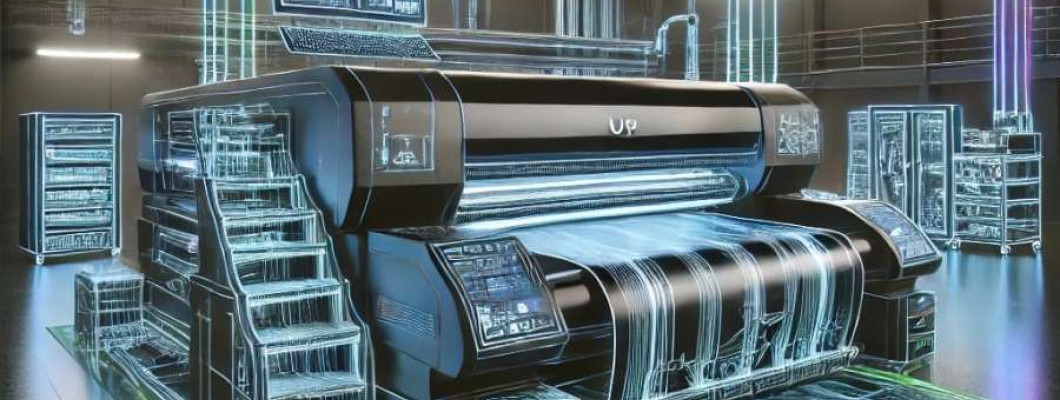
The Industrial Reality of Integrating a Specialized A2+ UV Printer
In a mid-sized scalable printing business environment focusing on diversified substrates, incorporating an A2+ Size UV Printer Embossed Glossy Printing device represents a critical infrastructure decision. Unlike desktop-grade or purely artisanal printers, this hardware demands rigorous integration into existing production workflows driven by throughput, automation, and minimal labor overhead. Challenges arise at the intersection of substrate handling, UV curing management, and networked device orchestration.
Consider a production floor where print throughput targets exceed 100 sheets per hour at a resolution threshold of 1440 dpi with embossed glossy finishes. The printer’s specialized UV curing lamps and embossed gloss modules impose atypical power and thermal management requirements, which must align with existing power delivery infrastructure to prevent voltage drops or system downtime. Moreover, the printers operate with precision mechanics sensitive to environmental fluctuations including humidity and particulate contamination, further necessitating controlled climate zones or sealed enclosures.
This industrial reality mandates assessment beyond nominal print specifications; it requires a deep dive into rack space allocation, cooling logistics, and automated feeder compatibility. The A2+ format challenges conveyor systems designed for smaller or roll-fed media, necessitating custom modular feeders and output stacking automation. From an IT perspective, networked command protocols and driver compatibility issues with legacy MIS (Management Information Systems) require proactive firmware and software integration strategies.
Technical Deep-Dive Into A2+ UV Printer Infrastructure Integration
Thermal Load and Power Management
The A2+ UV printer typically employs medium-pressure mercury lamps or LED-based UV sources consuming approximately 450-600 W per lamp module. For continuous embossing and glossy printing, multiple lamps run concurrently with auxiliary cooling fans drawing 150-250 Watts more. Given four lamp modules, the total peak power consumption reaches 2.4 kW, imposing significant electrical infrastructure demands. Hypothetically, with a three-phase 400 V supply, the current draw per phase can be estimated using:
I = P / (V * sqrt(3) * PF), assuming a Power Factor (PF) of 0.9, I = 2400 / (400 * 1.732 * 0.9) ≈ 3.8 A
These figures highlight the necessity for dedicated circuits with surge protection and UPS provisioning to avoid thermal-induced shutdowns or print defects.
Mechanical Handling Precision and Substrate Compatibility
Handling A2+ sheets (420 mm x 594 mm) embedded with UV-curable embossed gloss requires tight mechanical tolerances. Feed rollers calibrated with ±0.1 mm lateral tolerance prevent misregistration and ensure uniform embossing pressure. Materials ranging from rigid acrylics 1.5 mm thick to flexible PVC films demand substrate thickness sensors and adaptive molding stations capable of real-time adjustment.
Software and Network Integration Challenges
The printer’s firmware interfaces with multiple industrial control protocols such as OPC UA and Modbus TCP. Compatibility with existing MIS platforms is not guaranteed and can necessitate middleware translation layers. Real-time job tracking and defect logging require integrating machine status APIs and environmental sensor data streams, intensifying the need for robust IT infrastructure.
Comparative Table of Integration Complexity
| Parameter | A2+ UV Printer Embossed Glossy | Standard Desktop UV Printer |
|---|---|---|
| Power Consumption | 2400 W Peak | 500 W Peak |
| Substrate Size | 420 mm x 594 mm | Up to A4 (210 mm x 297 mm) |
| Integration Complexity | High due to custom feeders and thermal management | Low, plug-and-play typical |
| Network Protocols | OPC UA, Modbus TCP | USB/Ethernet Standard Print Drivers |
| Maintenance Cycle | Monthly calibrated embossing modules | Quarterly head cleaning |
Environmental Control and Safety Considerations
UV emission containment and ozone extraction systems must be installed inline, aligning with local safety codes. Operating humidity between 40-60% and temperatures of 20-25°C optimize mechanical and chemical stability, reducing substrate warping and ink curing inconsistencies.
Scenario Analysis Under Varied Business Use-Cases
Scenario 1 High-Volume Commercial Printing Facility
Here, throughput and uptime dominate. The printer’s rapid UV curing and embossed gloss enable premium product lines without slowing the production pipeline. Infrastructure investments in dedicated power and climate control pay off by minimizing bottlenecks, ensuring 99.8% uptime and print job consistency at 120-150 sheets/hour.
Scenario 2 Boutique Creative Agency with Limited Print Runs
The ability to print on various substrates at micron-level emboss precision enhances product differentiation but requires manual substrate loading and frequent calibration, increasing labor time. Integration with automation is limited, making it less cost-effective for high throughput but ideal for bespoke, high-value jobs.
Scenario 3 Distributed Multi-Site Franchise Operation
Standardizing the A2+ UV Printer across sites challenges IT and maintenance teams to maintain consistent firmware versions and environmental controls. Remote monitoring systems become essential to uphold operational standards. The printer’s advanced network protocols allow integration into centralized MIS for job tracking and quality control.
Expert FAQ on Advanced Integration and Technical Considerations
1. What are the primary failure points during thermal cycling in continuous embossed glossy printing?
Thermal cycling stresses embossing rollers and UV lamp components. Deformation of curing plates and weakening of adhesive bonds in rollers occur, necessitating monthly recalibration and lamp module replacements after approximately 3000 operational hours.
2. How does ambient humidity influence embossed UV ink adhesion?
Humidity above 65% risks ink layering defects due to slower curing and increased substrate expansion, causing micro-cracks. Maintaining 40-60% RH ensures optimal ink cross-linking and mechanical durability.
3. What network security protocols are recommended when integrating industrial UV printers?
Implementing TLS 1.3 encryption for OPC UA connections alongside VPN tunneling restricts access. Regular firmware patches safeguard against zero-day vulnerabilities inherent in embedded controllers.
4. Can existing conveyor automation systems be adapted for A2+ sheets?
Standard conveyors often require modular feeders with adjustable width guides and vacuum stabilization to handle rigid A2+ substrates without misalignment or damage.
5. How does embossed glossy printing impact printhead wear rates compared to flat UV printing?
Embossed printing introduces variable substrate thickness and pressure, accelerating printhead nozzle wear and clogging. This requires more frequent head cleaning cycles and nozzle checks, typically reducing lifetime by 15-20% versus flat printing.
Strategic Verdict and Recommendation
The A2+ Size UV Printer Embossed Glossy Printing device presents a technologically rigorous but strategically advantageous option for scalable business owners emphasizing throughput and automation synergy. Its power-intensive UV curing modules, precise mechanical substrate handling, and advanced network integration requirements elevate infrastructure demands but deliver premium quality embossed glossy outputs at industrial speeds.
Given the extensive considerations outlined, firms prepared to invest in specialized thermal management, customized feeders, and IT middleware will find this printer an optimal asset for mid- to high-volume production. This analysis supports a conclusive recommendation of the A2+ Size UV Printer Embossed Glossy Printing as a leading industrial-grade solution tailored for automated, high-precision workflows focused on substrate versatility and operational scalability.