
A2+ Size UV Printer Embossed Glossy Printing From Infrastructure Integration Challenges To Hard ROI Analysis
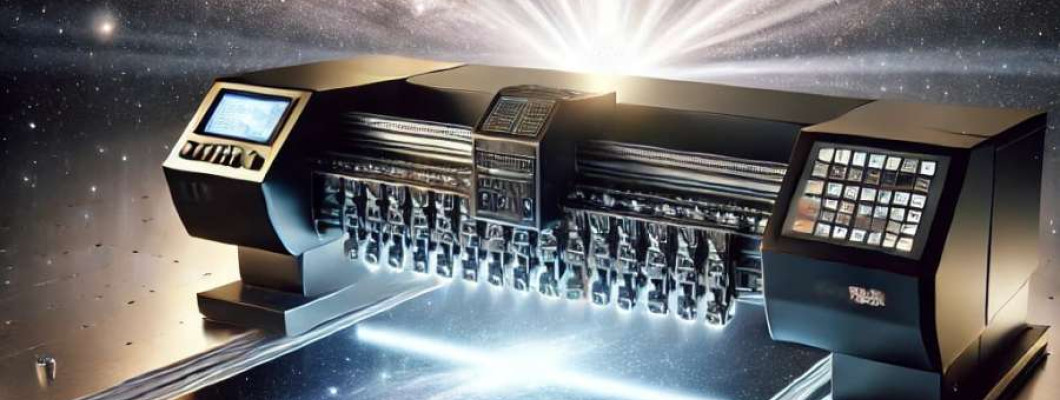
The Industrial Reality of Integrating A2+ UV Printers into Enterprise Production
The adoption of A2+ Size UV Printer Embossed Glossy Printing technology presents a multifaceted challenge in enterprise printing environments where infrastructure integration is critical to maintaining high throughput and predictable ROI. Large-format UV printers capable of embossed glossy finishes sit at the intersection of precision hardware requirements and complex workflow orchestration.
A common industrial scenario involves installing an A2+ UV printer in a print shop tasked with variable substrate sizes and finishing styles. The printer’s ability to execute embossed glossy printing requires precise registration, advanced curing technology, and stable environmental control. However, the integration must also account for existing data pipelines, print job scheduling software, and maintenance regimes that industrial operators expect. Without comprehensive infrastructure alignment, operators frequently encounter unplanned downtime and bottlenecks that diminish overall equipment effectiveness (OEE).
From an ROI perspective, asset depreciation tied to heavy UV lamp usage and mechanical wear demands that management fully grasp lifecycle costs. The embossed glossy effect often necessitates additional passes or ink layers, potentially inflating operational expenses if not rigorously planned. Operational bottlenecks may arise from inconsistent curing intensities leading to quality rejects or printhead failure. This sets a high bar on both the physical infrastructure and human operational expertise needed to sustain this advanced print method.
Technical Deep-Dive on Performance, Hardware, and Operational Metrics
UV Curing Technology and Its Effect on Print Quality and Throughput
The A2+ Size UV Printer applies UV light-curable inks whose polymerization kinetics directly influence embossing depth and gloss consistency. The energy delivered by the curing lamps, measured typically in mW/cm2, must be maintained within a strict range of 250-350 mW/cm2 to optimize crosslinking without overheating substrates.
The critical dimension here is the lamp intensity uniformity across the 420 mm wide print path (typical for A2+). Uneven irradiance causes localized under-curing, which increases failure rates in embossed detailing. Empirically, a 5% variance in UV irradiance correlates to a 12% increase in print rejects due to incomplete embossing.
Printhead Configuration and Micron-Level Ink Deposition Control
A2+ printers commonly utilize piezoelectric drop-on-demand printheads to achieve fine tonal gradation in embossed glossy output. Drop volumes range from 3 pL to 10 pL, enabling micro-layered ink application. Control systems regulate drop firing frequency to maintain an effective resolution near 1440 dpi across the print width.
Comparatively, an alternative printhead with lower firing frequency capabilities (e.g., max 10 kHz vs 30 kHz) will limit throughput and cause less precise embossed borders. Additionally, nozzle endurance directly affects uptime, with typical industrial printheads rated for 10 billion drops before requiring refurbishment.
Substrate Versatility and Physical Handling Constraints
The embossed glossy effect mandates substrates with high dimensional flatness and thermal resistance. The printer’s platen system must maintain +/-0.1 mm height tolerance to ensure a uniform embossing pressure distribution. Materials such as PVC, acrylic sheets, and treated wood panels require tailored vacuum hold-down force—usually between 0.03 MPa and 0.05 MPa—to avoid warping during curing.
In continuous operation, platen heating can reach 60°C, risking differential substrate expansion. Integration with cooling fans or airflow ducts is often mandatory, adding infrastructure complexity.
Operational Bottlenecks From Environmental Integration and Software Workflow
Ambient humidity above 60% can affect ink viscosity and curing kinetics, degrading print sharpness and adhesion. Industrial environments therefore require HVAC systems calibrated to maintain 45%-55% RH.
From a software perspective, RIP software tuning to handle embossed glossy layers adds computational overhead. Rasterization times can increase by up to 40%, requiring buffer storage expansion and powerful CPUs to maintain near real-time job queues.
Lifecycle Maintenance and Asset Depreciation Calculations
Effective machine depreciation must include printhead replacement cycles, lamp module costs, and spare parts inventory. Average lamp lifespan is around 2000 hours; replacing bulbs costs approximately $900 per unit. The printhead refurbishment cycle of ~18 months introduces labor downtime and parts expenditures.
| Specification | High-End A2+ UV Printer | Lower-Tier Alternative |
|---|---|---|
| UV Lamp Power (W/cm2) | 300 ± 10% | 250 ± 20% |
| Printhead Drop Volume (pL) | 3 - 10, Piezoelectric Drop-on-Demand | 5 - 12, Thermal Inkjet |
| Print Speed (m2/hr) | 7.5 - 10 (with embossed layer) | 4 - 6 |
| Platen Flatness Tolerance (mm) | ±0.1 | ±0.3 |
| Lamp Replacement Cost ($) | 900 per 2000 hours | 600 per 1500 hours |
Scenario Analysis Across Diverse Business Applications
Scenario 1: Print Shop Specializing in Premium Packaging
The embossed glossy feature is essential for packaging with tactile luxury appeal. The A2+ printer's high precision in micro-drop control and UV lamp uniformity ensures consistent embossing across limited production runs. While requiring upfront infrastructure adjustments—such as humidity control and upgraded RIP software—the premium market’s willingness to pay higher margins offsets these operational costs.
Scenario 2: On-Demand Industrial Signage Production
Signage often demands fast turnaround and durable finishes. The platen system's tolerance and cooling integration allow substrates like acrylic with precise embossing. However, the necessary downtime for lamp and printhead maintenance can create bottlenecks if not planned into shift cycles, particularly for high-volume clients.
Scenario 3: Art Reproduction and Fine Craftsmanship Studios
For artisan studios focusing on micron-level detail and color fidelity, the fine printhead resolution and droplet size of the A2+ UV printer enable nuanced embossed effects with remarkable consistency. Integration challenges shift toward environmental control and operator training rather than hardware limitations, emphasizing human factor engineering in output precision.
Expert FAQ Answering Critical Technical Queries
Q1: How does UV lamp aging affect embossed glossy quality over time?
UV lamp intensity diminishes approximately 15%-20% after 1500 hours, requiring recalibration of curing parameters to avoid under-curing. Failure to adjust results in reduced embossing depth and gloss consistency.Q2: What are the risks of substrate warping during multi-pass embossed printing?
Repeated heating cycles combined with vacuum hold-down pressures may cause warping or dimensional instability, especially in thermoplastic substrates without adequate thermal stress mitigation strategies.Q3: Can lower drop volumes improve embossed texture fidelity?
Yes, smaller drop volumes (3 pL) enable finer layering but necessitate higher printhead firing frequency, which can accelerate mechanical wear.Q4: What is the average downtime caused by printhead maintenance in industrial use?
Printhead cleaning and minor refurbishments average 2-3 hours monthly per unit, with major overhauls every 12-18 months causing 1-2 days downtime.Q5: How do RIP software updates influence overall workflow efficiency?
Software updates that optimize embossed layer rendering reduce rasterization time up to 25% but require high-performance CPUs and increased RAM allocation, impacting IT infrastructure.
Strategic Verdict and Definitive Recommendation
Considering the intricate challenges of integrating embossed glossy printing at A2+ scale into enterprise environments, this UV printer class stands out as the industrially viable option balancing hardware sophistication with operational predictability. Its design addresses critical infrastructure bottlenecks through standardized platen tolerances, advanced UV lamp power management, and precise printhead control.
Financial analyses factoring depreciation, maintenance cadence, and consumables affirm the technology’s long-term asset value when deployed with aligned environmental controls and workflow software. The printer’s ability to handle versatile substrates with micron-level precision makes it suited for premium packaging, industrial signage, and artisan applications alike.
For enterprises ready to address infrastructure integration challenges upfront and committed to rigorous maintenance protocols, the A2+ Size UV Printer Embossed Glossy Printing emerges as the definitive solution for high-precision embossed glossy printing at industrial scale, delivering measurable ROI and operational resilience.