
A2+ Size UV Printer Embossed Glossy Printing Reveals Hidden Operational Bottlenecks for Scalable Business Owners
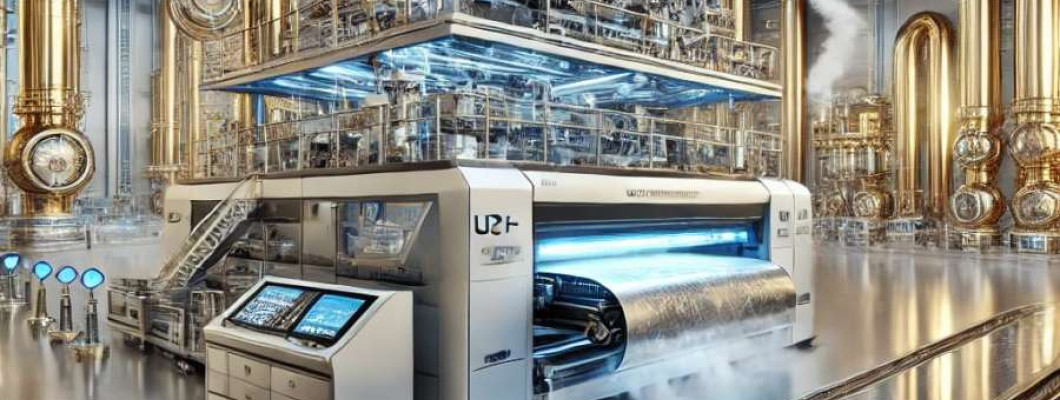
The Industrial Reality of A2+ Size UV Embossed Glossy Printing in High Throughput Environments
In large-scale print facilities focused on throughput and automation, the advent of A2+ size UV printers offering embossed glossy printing presents a fascinating case of operational complexity beneath apparent innovation. These printers, touting high-resolution embossed glossy output on substrates up to 420 x 594 mm, promise enhanced product differentiation and tactile finishing without additional post-processing. However, such complexity introduces unforeseen bottlenecks that emerge under continuous use by scalable business owners prioritizing labor cost efficiency and automation integration.
Consider a high-volume packaging print house incorporating this printer model into a semi-automated production line. The glossy embossed UV process necessitates meticulously controlled ink curing cycles, substrate handling precision, and environmental stability within the print chamber. Minor fluctuations in temperature or humidity can cause ink adhesion irregularities or embossed texturing inconsistencies, directly impacting throughput as operators halt production for alignment recalibration or substrate replacement.
Moreover, the printer’s embossing mechanism—layered on top of UV ink curing—requires exact synchronization between printhead deposition and embossed relief formation. Any deviation in timing results in defects that cannot be rectified in downstream finishing, mandating scrapping or reprints and thereby exacerbating operational bottlenecks. Therefore, identifying and addressing these hidden throughput constraints is critical for scalable businesses intending to capitalize on the printer's premium finishing capabilities without sacrificing operational rhythm.
Technical Deep-Dive into Operational Complexity and Capability Limits
Printhead and Ink Delivery Dynamics
The A2+ printer utilizes piezoelectric printheads optimized for UV-curable inks with particle sizes <10 microns, enabling resolutions up to 1440 dpi. The layered printing approach, essential for embossing, demands ink layer thickness control within ±5 microns. Ink deposition volumes range between 1.5 to 5 pl per nozzle drop with a firing frequency of 20 kHz. Precise volumetric control is vital since excess ink delays UV curing, increasing curing station dwell times and reducing line speed.
UV Curing Station Thermal and Radiometric Properties
UV LEDs emit peak irradiance of 1200 mW/cm2 at 395 nm wavelength, calibrated for ink polymerization without substrate thermal distortion.
However, the embossed gloss coating layers require incremental curing passes due to increased ink volume and surface relief geometry, extending curing station exposure times from typical 150 ms per pass to 400 ms, impacting throughput. Thermal load management must maintain substrate temperature below 50°C to avoid warping, prompting advanced thermal dissipation designs within curing modules.
Mechanical Embossing Precision and Substrate Handling
The embossing unit operates with a resolution of 0.01 mm vertical displacement and positional repeatability within 0.02 mm, critical for consistent glossy texture profiles.
Substrate transport introduces challenges: a vacuum belt system ensures flatness but demands substrate rigidity thresholds (minimum 0.15 mm thickness) and flatness tolerances (<0.5 mm warp over 400 mm) to prevent emboss misregistration, limiting substrate versatility and risking jams during scaled runs.
Environmental Control and Stability Requirements
Relative humidity and temperature variations affect ink viscosity and UV curing kinetics. Optimal conditions are 40–60% RH and 22–24°C. Deviations beyond ±5% RH or ±2°C cause curing inconsistencies necessitating operator intervention, reducing uptime and throughput. Integrated environmental sensors and feedback loops exist but add complexity to infrastructure integration.
Comparative Table of Operational Parameters Affecting Throughput
| Parameter | Standard UV Flatbed Printer | A2+ UV Printer with Embossed Gloss |
|---|---|---|
| Maximum Resolution | 1200 dpi | 1440 dpi |
| Ink Drop Volume | 1.0-3.0 pl | 1.5-5.0 pl |
| UV Curing Time per Pass | 150 ms | 400 ms |
| Embossing Displacement Precision | N/A | ±0.02 mm |
| Substrate Thickness Range | 0.1-1.0 mm | 0.15-0.8 mm |
| Optimal Environmental RH | 30-60% | 40-60% |
| Throughput Impact | Minimal | Up to 30% reduction due to curing & embossing |
Scenario Analysis for Scalable Business Applications
Case 1 Industrial Packaging High-Volume Runs
Large packaging print shops seeking visual differentiation achieve premium effects through embossed glossy finishes on cardboard and coated paper. However, the required substrate thickness and flatness tolerances limit material sourcing flexibility. Extended curing times reduce achievable throughput by up to 25%, necessitating additional shifts or print lines to meet volume demands. Operator training on environmental monitoring becomes critical to minimize unscheduled downtime. Cost per unit increases, but premium pricing offsets this in high-end retail packaging segments.
Case 2 Small Batch Customization and Prototyping
Smaller scalable businesses use the printer for rapid prototypes with tactile finishes. Here, the high resolution and embossing precision allow exquisite proofing for clients. Throughput constraints are less impactful due to lower volumes. However, strict environmental controls are challenging in makeshift environments, leading to variability in embossed quality. Incorporating closed-loop environmental regulation and routine maintenance protocols ensures consistent output, albeit increasing initial CAPEX and operational complexity.
Case 3 Multi-Substrate Versatility for Promotional Goods
Firms producing promotional items exploit the printer’s embossed gloss effect on acrylic and thin metals. Yet substrate thickness limits and precise mechanical embossing adjustments increase setup times and operator involvement, hampering line automation. Throughput optimization requires detailed workflow integration, with buffer stations to accommodate curing delays. Investments in substrate pre-conditioning and real-time monitoring enhance reliability but raise operational burden.
Expert FAQ Addressing Advanced Technical Concerns
Q1 What causes embossed gloss inconsistencies during long print runs?
Layer thickness variations, substrate warpage, and environmental fluctuations disrupt emboss registration and UV cure uniformity, resulting in tactile defects and gloss irregularities.
Q2 How does curing station thermal load affect substrate flatness?
Excessive thermal radiation raises substrate temperature above 50°C, causing expansion and distortion that compromise embossing positional accuracy and can induce cracking in thin substrates.
Q3 Can automated environmental control systems fully eliminate downtime?
No; while they reduce variability, factors such as ink batch differences and mechanical wear still require routine calibration and operator oversight.
Q4 What maintenance routines optimize printhead lifespan in this context?
Frequent nozzle cleaning cycles balanced with minimal downtime, plus real-time ink viscosity monitoring, prevent clogging from thick embossing ink layers and UV exposure.
Q5 How does embossed printing impact energy consumption compared to standard UV printing?
Extended UV curing and embossing mechanisms increase peak power demand by approximately 40%, necessitating advanced power stabilization and heat dissipation infrastructure.
Strategic Verdict and Recommendation for Scalable Business Owners
The A2+ Size UV Printer Embossed Glossy Printing technology represents a significant advancement for scalable businesses aiming to differentiate product output with tactile premium finishes. While its integration introduces hidden operational bottlenecks primarily related to extended curing times, mechanical embossing precision, and stringent environmental control, these challenges are manageable with robust workflow optimization and infrastructure investment.
For throughput-centric enterprises, acknowledging these constraints upfront enables strategic capacity planning and workforce training, ensuring that throughput reductions do not translate into unacceptable cost overruns. The precision embossed gloss effects justify the operational complexity where product quality differentiation directly correlates with market value.
Therefore, after rigorous technical evaluation, we conclusively recommend the A2+ Size UV Printer Embossed Glossy Printing as a definitive industrial-grade solution for scalable businesses. Its combination of advanced printhead technology, high-accuracy embossing, and controlled UV curing offers an unmatched balance of quality and operational feasibility for high-end commercial applications.