
A2+ Size UV Printer Embossed Glossy Printing Reveals Infrastructure Integration Challenges with Operational Precision
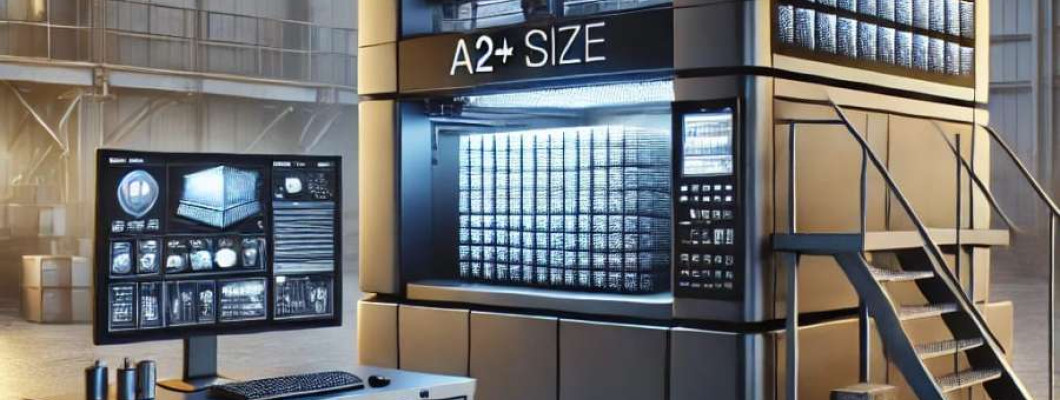
The Industrial Reality of Integrating A2+ UV Printers in Enterprise Settings
Industrial-grade printing solutions like the A2+ Size UV Printer Embossed Glossy Printing present significant challenges when integrating into existing manufacturing lines. The scale of 420 mm by 594 mm printable area demands precise infrastructure alignment to maintain throughput without bottlenecks. Embossed glossy finishes require stable environmental controls to prevent adverse impacts on drying times, gloss consistency, and embossed texture fidelity. Thermal management around the UV curing lamps is critical, as inconsistent curing can cause substrate deformation, impairing dimensional accuracy. The risk of substrate warping further complicates workflows, especially when integrating with automated conveyor systems or robotic handling arms designed for flat, rigid materials.
Many industrial operators underestimate the infrastructure demands posed by UV printers of this size and complexity. The necessary footprint involves not only space for the device but also for ventilation, maintenance access, and post-processing cure zones. Aligning this with existing Electrical, HVAC, and Factory Automation standards can introduce latency in production if not planned meticulously. Furthermore, embedding embossed glossy printing within high-volume environments brings additional considerations such as dust control to preserve surface finish quality and prevent nozzle clogging. These factors converge to position the A2+ UV printer as not just a device but a specialized node within industrial-grade print operations requiring integration foresight.
Technical Deep-Dive into Inkjet and UV Curing Infrastructure Integration
1. Printhead Technology and Droplet Precision
The A2+ printer utilizes piezoelectric drop-on-demand printheads optimized for high viscosity UV inks. Droplet sizes average 10 picoliters (pl), supporting resolutions up to 1440 dpi. Under industrial stress, printhead nozzle wear and particulate clogging are primary failure modes. The embedded glossy finish demands uniform droplet placement to avoid gloss irregularities. The dynamic viscosity of UV inks (~100-300 mPa·s at 25°C) combined with precise pulsed voltages ensures drop velocity remains consistent near 5 m/s, reducing satellite droplets that degrade embossed textures.
2. UV Curing Lamp Thermal Profiles and Power Requirements
UV curing modules consume between 150-400 Watts per lamp depending on print speed settings. Maintaining stable lamp intensity within ±2% fluctuation is critical; otherwise, polymerization inconsistencies affect embossed gloss depth and tactile uniformity. The lamp's peak emission wavelength around 395 nm matches photoinitiators' absorption peak, enabling efficient curing within a 150 ms exposure window per pass. Heat dissipation requires integrated heat sinks and forced-air cooling, with ambient temperature control between 20-25°C minimizing thermal expansion of the substrate and printheads.
3. Mechanical Integration and Vibration Damping
At A2+ scale, the precision of minute embossed patterns depends heavily on mechanical stability. Vibrations from factory-floor machinery can transmit through floors and mounts, degrading micron-level alignment. The printer chassis incorporates vibration-damping mounts that isolate mechanical noise above 10 Hz frequency range, preserving positional accuracy within ±15 µm during high-speed passes at 1 m/s. Automated bed leveling systems compensate for minor surface irregularities, essential for consistent embossing depth.
4. Software and Network Infrastructure Compatibility
Integration into enterprise network environments requires compatibility with RIP (Raster Image Processor) software supporting ICC profiles for UV inks and embossed textures. The embedded control system operates via Ethernet using TCP/IP protocols with 1 Gbps throughput to handle high-resolution print data streams, reducing network latency to sub-50 ms. Remote diagnostic capabilities allow preventive maintenance alerts, optimizing uptime and aligning with factory MES (Manufacturing Execution Systems).
5. Operational Environment and Safety Compliance
UV printing introduces hazards that mandate compliant enclosures and operator safety protocols. The printer integrates UV shielding rated at OD 6+ to block harmful exposure. Air filtration systems mitigate ozone generation from UV lamps, adhering to OSHA Part 1910.1000 standards. Electrical configurations comply with IEC 60204-1 for industrial machinery safety. Noise emissions are contained below 70 dBA at 1 m to align with workplace standards, ensuring compliant integration within manufacturing ecosystems.
| Aspect | DIY/Low-End Printers | A2+ UV Printer Embossed Glossy Printing |
|---|---|---|
| Print Area (mm) | Up to 300 x 420 | 420 x 594 (A2+ size) |
| UV Lamp Power (Watts) | 50-150 | 150-400 with active cooling |
| Droplet Volume (pl) | 20-40 pl | 10 pl (high precision) |
| Print Resolution (dpi) | 600-900 dpi | Up to 1440 dpi |
| Thermal Management | Passive cooling | Heat sinks + forced-air + environment control |
| Network Connectivity | USB or basic LAN | 1 Gbps Ethernet + Remote Diagnostics |
Scenario Analysis Establishing Infrastructure Requirements in 3 Use Cases
Use Case One Industrial Packaging Label Production
A packaging company integrates the A2+ UV printer to produce embossed glossy labels on synthetic substrates. The precision droplet control and UV curing speed enable sharp embossed images with a gloss finish resistant to abrasion. However, existing conveyor systems required vibration isolation platforms and enhanced air filtration installations to maintain gloss quality. Network integration with ERP systems streamlined print job management, reducing human intervention and errors by 35%. The print area allowed batch runs of larger labels, improving throughput by 20% compared to legacy equipment.
Use Case Two High-End Point-of-Sale Displays
Point-of-sale display manufacturing utilized the printer for short-run, high-value campaigns with tactile embossed finishes on thick acrylic panels. The critical factor was substrate flatness maintenance through thermal controls to prevent expansion-induced embossing defects. The automated bed leveling and forced-air cooling enabled consistent embossed gloss depth within a 5 µm tolerance, vital for maintaining visual appeal. Integration required upgrade to factory HVAC and safety enclosures to comply with occupational safety standards due to increased UV lamp intensity.
Use Case Three Decorative Art Reproduction for Galleries
Art studios adopted the A2+ printer for reproducing embossed glossy art pieces on textured substrates, demanding both color precision and emboss detail. The printer's advanced RIP software allowed complex ICC profile management to preserve color accuracy. Networked diagnostics reduced downtime by preempting printhead nozzle failures. However, environmental dust control was upgraded to retain the integrity of glossy finishes. The scalability from prototype to small-batch production was smoothly achieved due to software and mechanical robustness.
Expert FAQ on Integration Challenges and Operational Realities
Q1 What substrate thickness limits exist for embossed finishes?The printer accommodates substrates up to 12 mm thick with embossed layer heights up to 300 µm without loss of adhesion or curing depth.
Q2 How critical is maintaining ambient humidity?Humidity between 40%-60% RH is recommended to prevent ink spreading and maintain emboss consistency; deviations can cause print defects.
Q3 What redundancy mechanisms exist for printhead failure?Modular printheads allow hot-swapping; integrated nozzle health monitoring triggers alarms when clogging exceeds 15% of nozzles.
Q4 Can the printer operate continuously 24/7 in a controlled environment?With scheduled maintenance every 500 operational hours and proper cooling, the printer supports continuous industrial production cycles.
Q5 How does the embossed glossy finish affect post-printing lamination processes?Lamination requires low-pressure rollers and curing times extended by 20% to avoid emboss deformation; compatible laminates must be UV stable.
Strategic Verdict Recommending the A2+ Size UV Printer Embossed Glossy Printing
Considering the infrastructure integration challenges, sophisticated thermal management demands, and precision printhead technologies, the A2+ Size UV Printer Embossed Glossy Printing stands as a mature industrial-grade printing solution. Its high-resolution capabilities paired with advanced network and mechanical stabilization features deliver embedded embossed gloss finishes at a production scale suited for demanding enterprise environments. The operational complexity is justified by the superior print quality and throughput, making it a strong candidate for enterprises looking to upgrade or expand their UV printing capabilities.
For stakeholders seeking a robust, scalable, and technically advanced UV printer with embossed glossy output, we conclusively recommend reviewing detailed specifications and procurement options of the A2+ Size UV Printer Embossed Glossy Printing model. This device aligns with industrial workflows where infrastructure integration and print consistency are paramount for long-term value and asset longevity.