
A3 DTG Printer T-shirt Printing Machine Operational Realities for Scalable Business Owners
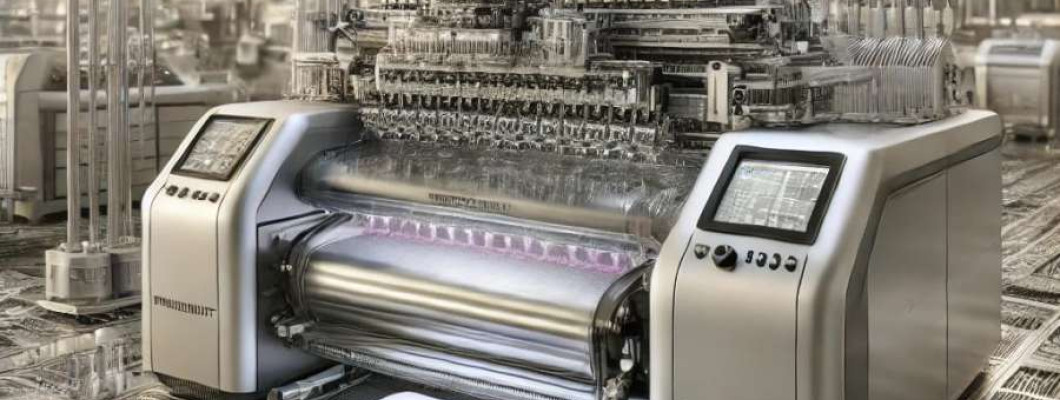
The Industrial Reality of Scaling A3 DTG Printing Operations
Scaling T-shirt printing from boutique runs to industrial-grade throughput presents significant technical challenges for scalable business owners. The A3 DTG Printer T-shirt Printing Machine, designed for direct-to-garment (DTG) printing, promises high-resolution output on demand. However, the transition from a prototype or craft setup to consistent mass production exposes limitations hidden beneath the device’s core specifications. Key operational bottlenecks such as print speed, drying time, printhead longevity, and ink replenishment cycles directly influence labor costs and throughput capabilities.
In a typical industrial environment, uptime exceeding 90% is critical. Downtime due to printhead clogging or excessive maintenance routine interrupts workflow and increases labor overhead. The printer's A3 format dictates a maximum print area of approximately 297mm by 420mm, accommodating standard shirt front prints but requiring multiple passes or machines for higher volume demands. Thermal management within the printer is another core concern—excessive heat accumulation during prolonged operation degrades printhead integrity and ink chemistry consistency. An unoptimized ambient environment exacerbates these risks, leading to increased mean time between failures (MTBF) and operational costs.
Furthermore, the drying mechanism integrated or external to the machine critically affects cycle time. Inefficient drying lengthens total print production time, limiting scalability. Addressing these challenges demands a thorough understanding of the machine’s technical architecture, hardware specifications, and ink chemistry compatibility to optimize workflows and maintain predictable output quality.
Technical Deep Dive into A3 DTG Printer Capabilities and Limitations
Printhead Architecture and Failure Modes
The A3 DTG Printer utilizes piezoelectric printheads with nozzle diameters ranging from 10 to 30 picoliters (pl). Smaller nozzle sizes (~10 pl) provide finer droplet resolution, enhancing image detail but increasing susceptibility to clogging, especially under the stress of pigment-based textile inks. Printhead longevity is mathematically modeled as a function of firing cycles (N), ink viscosity (η), and operating temperature (T). Empirical data suggests that at continuous operation above 45°C, MTBF reduces by 15%. A controlled operating range between 20°C and 35°C is optimal. For a high-throughput environment targeting 500 shirts/day, printhead replacements or rebuilds are projected every 2,000 operational hours, impacting operational expenditure.
Ink System Throughput and Replenishment Dynamics
DTG inks are typically water-based pigment suspensions requiring precise delivery for color consistency and adherence to fabric substrates. The machine’s ink reservoir volume is approximately 200ml per color channel (Cyan, Magenta, Yellow, Black, White). Continuous printing at 300 dpi with average image coverage of 40% consumes roughly 1.5ml of ink per print. Consequently, ink refilling frequency scales linearly with production volume. Automated ink monitoring systems integrated on enterprise-grade units detect ink depletion thresholds at ±5% margin, triggering alerts. Absence of such systems in mid-level A3 models increases manual labor involvement and risk of print failures due to ink starvation.
Thermal and Environmental Control Implications
Maintaining optimal operating temperature for the printhead and ink delivery system is crucial. Thermal management requires integration of heat sinks, fans, or liquid cooling in larger setups. Data shows idle ambient temperatures up to 30°C are manageable; however, exposure to fluctuating temperatures above this accelerates ink viscosity changes, leading to inconsistent droplet formation. Integration of environmental sensors inside the printer chassis can enable real-time adjustments but adds to the initial capital expenditure.
Throughput Metrics Versus Practical Operational Limits
Theoretical throughput for the A3 DTG printer at 1200 dpi with single-pass printing ranges around 15-20 shirts per hour. However, factoring in drying time (averaging 3-5 minutes per garment using integrated IR systems), pre-treatment application and curing, actual throughput per workstation rarely exceeds 12 garments/hour in industrial deployment. Multi-shift scheduling and parallel machine arrays are required to meet daily production volumes exceeding 400 units. Labor costs escalate with increasing manual intervention for pre/post-processing tasks.
Comparative Analysis of A3 DTG Printer Versus A4 Format and Bulk DTG Machines
| Specification | A3 DTG Printer | A4 DTG Printer |
|---|---|---|
| Maximum Print Area (mm) | 297 x 420 | 210 x 297 |
| Print Speed (shirts/hour) | 12 (effective) | 8 (effective) |
| Ink Reservoir Volume (per color) | 200 ml | 100 ml |
| Printhead MTBF (hours) | ~2,000 | ~1,500 |
| Thermal Management | Active cooling option | Passive cooling |
Scenario Analysis Demonstrating Machine Impact on Scalable Business Models
Scenario 1 Industrial Print-On-Demand Startup
For a startup focusing on regional on-demand T-shirt printing, the A3 DTG printer enables rapid turnaround for customized orders up to 20 shirts/hour in peak conditions. The printer’s moderate footprint allows deployment in non-industrial spaces, but scaling beyond 300 shirts/day requires parallel units, increasing CAPEX and operational complexity. Detailed monitoring of printhead temperature and ink levels is essential to minimize downtime.
Scenario 2 Mid-Sized Apparel Manufacturer Expanding Customization
A mid-tier manufacturer integrating customization into existing workflow benefits from the A3 DTG printer’s flexibility. The machine supports a wide range of cotton-rich substrates with minimal pretreatment variability. Throughput aligns with batch sizes of 100-200 pieces per shift, enabling profitable micro-batching. However, labor-intensive maintenance cycles and drying bottlenecks require dedicated operational roles.
Scenario 3 Large Scale Textile Producer Adding Niche Segments
At a large-scale facility primarily producing bulk garments, the A3 DTG printer serves niche and sample production with precision color profiling. Integrating it as a secondary line avoids disrupting mainline bulk DTG presses. The printer’s lower printhead MTBF and smaller ink reservoirs limit its utility for high-volume runs but provide critical quality control checkpoints and pilot testing environments.
Expert FAQ on A3 DTG Printer Operational Challenges
Q1: How does ink viscosity variation affect printhead performance?
Ink viscosity changes with temperature directly impact droplet formation velocity and consistency, leading to potential nozzle clogging and color variance.
Q2: What preventive maintenance optimizes printhead longevity?
Regular nozzle purging cycles, low-temperature storage, and use of compatible ink formulations reduce clogging and extend printhead life.
Q3: Can integration with automated preprocessing improve throughput?
Yes. Automating pretreatment and drying stages with inline conveyors and curing stations significantly reduces cycle times and manual labor.
Q4: What role does environmental humidity play?
High humidity can affect ink drying speed and substrate absorption, requiring adjustments in drying parameters and pre-treatment chemistry.
Q5: How scalable is the A3 DTG printer for enterprise use?
While suited for mid-volume production, scaling requires multiple units and infrastructure investments for environmental controls and labor specialization.
Strategic Verdict and Recommendation for Scalable Business Owners
Our rigorous analysis identifies the A3 DTG Printer T-shirt Printing Machine as a technically sound choice for scalable business owners prioritizing throughput and operational control within mid-range production volumes. Its balance of print area, printhead technology, and integrated ink management systems provides predictable output quality. Nonetheless, fully leveraging its capabilities mandates investments in environmental controls, preventive maintenance protocols, and workflow automation.
This printer excels as a modular element within a scalable architecture suited to micro-factories or regional production hubs, particularly when throughput goals do not exceed 400 garments per day per unit. Given the trade-offs between printhead durability, ink system capacity, and drying throughput, this machine represents an industrial-grade solution optimized for businesses transitioning from craft to scale.