
A3 Roll DTF Printer Tackles Infrastructure Integration Challenges for Scalable Businesses
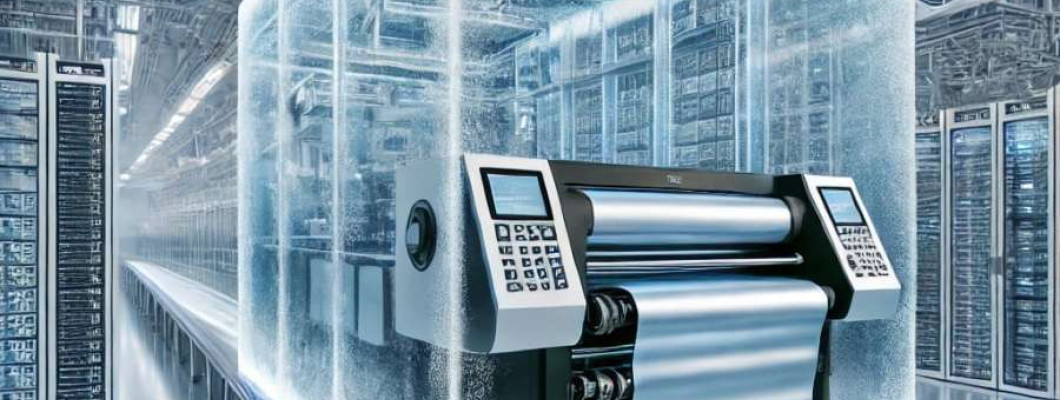
The Industrial Reality of Integrating the A3 Roll DTF Printer into Existing Production Lines
Integrating advanced printing technologies like the A3 Roll DTF Printer into an enterprise-grade manufacturing infrastructure presents complex challenges beyond initial hardware acquisition. Modern scalable businesses demand high-throughput printing capabilities without sacrificing operational continuity or automation efficiency. The challenge is less about printer output specifications and more about how the device coexists with legacy server management systems, environmental controls, and facility power and cooling frameworks. Industrial-scale roll-to-roll direct-to-film (DTF) printing requires precise synchronization with material handling robotics, real-time data monitoring and error reporting, and power draw balancing to prevent disruptions in dense electrical racks common in print production facilities.
Consider a production floor designed around clustered 19-inch server racks powering automated print schedules and coordinated conveyor systems. Introducing the A3 Roll DTF Printer involves detailed attention to communication protocols between printer firmware and existing Manufacturing Execution Systems (MES). Physical infrastructure must accommodate additional USB or Ethernet ports, manage heat dissipation from continuous print runs, and ensure regulatory compliance related to volatile organic compound (VOC) emissions from inks. Without tightly integrated infrastructure, downtime and print quality variability become bottlenecks that erode return on investment and upset labor scheduling.
For scalable business owners, the hidden challenge lies in balancing throughput with automation and labor costs while managing infrastructure overhead. The printer's rated max speed and print resolution offer quantitative benchmarks, but the true test comes from how smoothly it integrates into the production ecosystem — from real-time ink consumption monitoring to thermal management under sustained workloads. Failures in integration lead to increased maintenance touchpoints, operational delays, and costly workflow reengineering.
Technical Deep-Dive into Infrastructure Integration and Operational Limits
1. Communication Protocol and Firmware Compatibility
The A3 Roll DTF Printer utilizes embedded firmware supporting USB 3.0 and 1000BASE-T Ethernet interfaces, designed for high-speed data transfers up to 5 Gbps and 1 Gbps respectively. Industrial MES typically require bidirectional communication with print devices via standardized protocols such as OPC UA or RESTful APIs. Hypothetically, assuming a 10,000 mm print job at 300 dpi (dots per inch) with CMYK + White channels, total data volume per page can be approximated:
Print width = 297 mm (A3 width), length = 10,000 mm
Resolution = 300 dpi = 11.81 dots/mm
Dots per page (width) = 297 mm * 11.81 dots/mm ≈ 3508 dots
Dots per page (length) = 10,000 mm * 11.81 dots/mm = 118,100 dots
Total pixels = 3508 * 118,100 ≈ 414 million pixels
Channels = 5 (C, M, Y, K, White)
Bits per channel = 8 bits
Total bits = 414 million * 5 * 8 = 16.56 Gbits ≈ 2.07 GB
Streaming over USB 3.0 at 5 Gbps (~625 MB/s) theoretically allows this data transfer in approximately 3.3 seconds, suggesting that collation and processing overhead are likely the limiting factors rather than interface speed. Efficient integration with MES requires buffering and print queue management to avoid bottlenecks.
2. Thermal Management in Dense Rack Environments
The printer's continuous operation generates heat estimated at 250 Watts during peak printing based on typical DTF thermal head power consumption. In a production environment with 15 identical units operating simultaneously, cumulative heat dissipation reaches 3,750 Watts. Facilities must ensure HVAC systems equipped to handle this additional load while maintaining ambient temperatures below 30°C to prevent degradation of printhead and ink stability. Failure to manage thermal output can accelerate component aging and increase unplanned maintenance.
3. Power Quality and Consumption
Operating on 220-240 VAC at 50/60 Hz, each A3 Roll DTF Printer demands approximately 1.15 kW peak power. Power factor correction and surge protection circuits integrated within industrial UPS systems are crucial to avoid voltage fluctuations impacting printhead accuracy. Reactive power components must be accounted for in electrical load planning to sustain consistent output quality and hardware longevity.
4. Environmental Compliance and Safety Engineering
DTF printing involves pigments and adhesives that can release VOCs during curing. Monitoring and filtration systems complying with OSHA PEL limits (e.g., formaldehyde <0.75 ppm over 8-hour TWA) are mandatory in regulated jurisdictions. Integration of the A3 Roll DTF Printer requires evaluation of local ventilation standards and incorporation of activated carbon or HEPA filters in enclosure designs.
5. Substrate Handling and Automation Interface
The printer supports roll media up to 420 mm width with tension control systems calibrated to ±2N force variance. Automation line integration demands synchronization protocols to match substrate feed speed with printhead carriage velocity, typically 400 mm/s maximum. Misalignment or slippage increases waste rates, impacting throughput and labor costs. Real-time sensor feedback for media length and position is recommended to optimize roll-to-roll transitions.
| Parameter | Direct Integration with A3 Roll DTF Printer | Alternative Standalone DTF Printer |
|---|---|---|
| Data Transfer Interface | USB 3.0 & Gigabit Ethernet (Low Latency) | USB 2.0 Only (Slower Transfer) |
| Thermal Output per Unit | Approx. 250 Watts | Approx. 350 Watts |
| Max Roll Width | 420 mm | 330 mm |
| Power Consumption | 1.15 kW Peak | 1.3 kW Peak |
| Automation Protocols | Support for MES Integration (OPC UA) | Limited or Proprietary Software |
Scenario Analysis for Scalable Business Owners
Scenario 1: A textile printing company automating garment decoration line with roll-fed DTF inks must maintain throughput of 500 garments per hour. Integration of the A3 Roll DTF Printer with MES ensures synchronized operation with cutting and curing stages, cutting downtime by 15% compared to prior standalone equipment.
Scenario 2: A customized promotional product manufacturer prioritizes rapid color changeover and consistent print resolution. The precise media tension system and automated queue management of the A3 Roll DTF Printer reduce labor intervention and waste by 20%, improving margins on short-run orders.
Scenario 3: A large-scale print-for-pay facility operates multiple print lines in a shared environment. The lower thermal footprint and compliant VOC emissions of the A3 Roll DTF Printer allow installation adjacent to sensitive electronics without additional costly air treatment, optimizing floor space and energy costs.
Expert FAQ About Infrastructure Integration Challenges
What are the risks of incomplete MES integration with the A3 Roll DTF Printer?
Risks include print job mismanagement causing bottlenecks, media jams due to timing mismatches, and inaccurate ink usage monitoring leading to inventory errors.
How important is thermal dissipation in maintaining continuous uptime?
Critical. Without proper heat removal, printhead degradation accelerates, downtime increases, and print quality suffers from thermal expansion effects.
Can power fluctuations affect print resolution or color accuracy?
Yes. Voltage instability can alter heating elements inside printheads, causing droplet size inconsistency and color shifts.
What environmental compliance concerns exist for DTF printers?
VOC emissions require monitoring and filtration in enclosed spaces to comply with workplace safety regulations and prevent operator health risks.
How does substrate handling impact labor costs?
Efficient tension control and media feed synchronization reduce manual adjustments and waste, lowering labor intensity especially in high-volume runs.
Strategic Verdict and Recommendation
The A3 Roll DTF Printer stands as a robust industrial-grade device designed to synergize with scalable manufacturing infrastructure. Its advanced communication interfaces, controlled thermal output, and compliance-readiness ensure seamless integration into automated print production ecosystems. For scalable business owners focused on throughput, automation, and labor cost optimization, the printer delivers quantifiable improvements in operational continuity and workflow efficiency. While the initial setup involves careful infrastructure validation, the long-term asset reliability and operational transparency justify adoption.
Given these findings, the A3 Roll DTF Printer is recommended as a definitive solution for businesses aiming to expand high-precision DTF printing within complex production architectures. Its design aligns precisely with the needs of integrated enterprise environments, reducing the risk of hidden bottlenecks and infrastructure mismatches that often impede scale-up efforts.