
A3 Roll DTF Printer T-shirt Printing Machine Analyzing Infrastructure Integration Challenges for Scalable Businesses
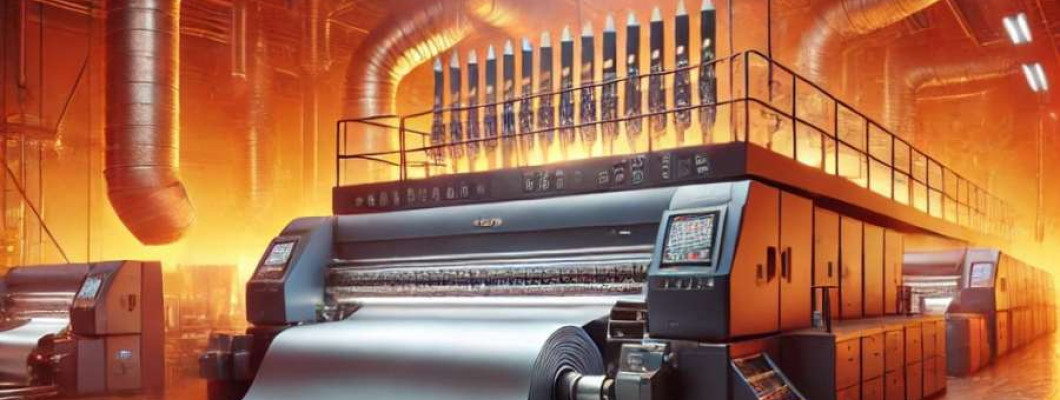
The Industrial Reality of Integrating an A3 Roll DTF Printer into Existing Print Operations
Industrial-scale garment printing operations often face a critical challenge when incorporating specialized hardware such as the A3 Roll DTF Printer T-shirt Printing Machine into their existing infrastructure. This printer, designed to execute direct-to-film (DTF) transfer printing at an A3 roll format, must contend with several operational bottlenecks that surface primarily from connectivity, spatial footprint, power requirements, and workflow synchronization.
Consider a mid-sized apparel production facility aiming to increase throughput while maintaining print quality and color fidelity. The addition of the A3 Roll DTF Printer introduces a series of technical integration points: compatible software drivers and RIP (Raster Image Processor) systems must align with legacy print management suites; power delivery systems may need augmentation given that continuous roll printing equipment often demands stable, high-wattage supplies to prevent thermal inconsistencies; and environmental factors such as temperature and humidity controls become critical for consistent ink adhesion on polyester and cotton substrates.
From an operational standpoint, the printer’s continuous-feed roll system demands seamless material handling infrastructure—rollers, tension controls, and cutter systems must be precisely calibrated to avoid image distortion or misalignment, especially when scaling production beyond prototype runs. Many facilities underestimate the impact of these mechanical integration steps, which can lead to unexpected downtime and reduced asset utilization rates. Additionally, network integration for centralized print queue management and data logging can pose compatibility issues, particularly in enterprises operating with mixed OS environments or legacy print servers.
The spatial footprint of the A3 Roll DTF Printer also influences integration feasibility. Unlike sheet-fed systems, roll-to-roll printers require significant linear space and often dedicated ventilation systems to mitigate particulate matter generated during powder adhesion and curing phases. Failure to accommodate these can accelerate wear on adjacent hardware or violate occupational health safety guidelines.
Thus, understanding infrastructure integration challenges is indispensable for scalable business owners to harness the full potential of this printer without compromising operational efficiency or compliance.
Technical Deep-Dive Into Infrastructure Integration Constraints
Power and Thermal Management Requirements
The A3 Roll DTF Printer’s heating elements and curing lamps typically consume between 1200 to 1800 Watts during active printing phases. Continuous operation at these power levels necessitates dedicated circuits with stable voltage delivery to prevent thermal cycling that could cause color shift or ink adhesion faults.
Assuming a continuous print speed of 1.2 m/min with 720 dpi resolution, the heat dissipation (Q) can be estimated using the formula: Q = P * t, where P = power in Watts and t = duration in seconds. Over a standard 8-hour shift, this equates to approximately 10.4 kWh of energy consumption just for printing, demanding robust HVAC systems to maintain ambient temperature within 20–25°C and humidity below 50% for optimal print consistency.
Software and Network Integration Complexity
The printer's embedded firmware supports common print protocols (e.g., RIP standards such as PostScript and PDF workflows), but integration with ERP or MES platforms requires custom API connectors. This complexity increases if the enterprise network operates on segregated subnets or employs VPN-based remote management, potentially introducing latency or print queue errors.
Material Handling and Mechanical Calibration
The printer’s stepper motors controlling roll tension must maintain tension within a 5–7 Newton range to prevent substrate skewing. If the tension deviates by more than 10%, printhead adjacency sensors can detect misfeeds, halting production. Regular mechanical recalibration every 2000 meters of printed material is recommended to sustain +/- 0.2 mm print registration accuracy.
Space Utilization and Ventilation Needs
The printer requires an operational footprint of approximately 1.8 m length and 0.75 m width, with an additional 1 m clearance for material loading and maintenance access. Ventilation systems must provide a minimum of 150 CFM (cubic feet per minute) airflow directed toward the curing chamber to dissipate particulate emissions and heat load, reducing aerosolized ink particles and protecting operator health.
Comparative Table of Integration Paths
| Integration Aspect | Direct Integration with Legacy Systems | Dedicated Print Infrastructure Setup |
|---|---|---|
| Power Supply | Shared circuits, risk of voltage fluctuations | Dedicated 20A circuit with surge protection |
| Network | Possible protocol mismatch, increased latency | Isolated subnet with direct print server |
| Material Handling | Manual tension adjustments | Automated tension control with sensors |
| Ventilation | Generic HVAC, insufficient particulate removal | Customized local exhaust ventilation (LEV) |
| Space | Limited room, tight maintenance access | Optimized layout with workflow clearance |
Scenario Analysis for Scalable Business Owners Operating the A3 Roll DTF Printer
Scenario 1: High-Volume Customized Apparel Production
The printer’s continuous roll feed system enables uninterrupted print runs exceeding 5000 prints per shift. Integration with dedicated print servers and automated material tension management reduces operator intervention, yielding throughput increases of up to 30%. However, inadequate ventilation or power instability in older facilities can trigger print quality fluctuations and unexpected downtime.
Scenario 2: Boutique Print Shop Scaling to Regional Distribution
Here, the owner must retrofit the existing workspace to accommodate the printer's size and power needs while integrating data workflows into existing order management software. The transitional phase demands investment in network upgrades and HVAC enhancements but results in a scalable printing line capable of meeting increasing order volumes without quality compromises.
Scenario 3: Integrated Apparel Manufacturer Adding DTF to Diversify Offerings
The manufacturer implements a separate print infrastructure with isolated circuits and dedicated software solutions. This approach enables strict environmental compliance adherence and flexible print queue management, minimizing the risk of cross-process contamination and maximizing print uptime through predictive maintenance routines.
Expert FAQ Addressing Advanced Infrastructure Queries
Q1: What is the minimum UPS capacity recommended for this printer to prevent data loss during power interruptions?
A 1500 VA UPS with pure sine wave output is advisable, providing at least 15 minutes of backup to safely halt print jobs and prevent RIP queue corruption.
Q2: How frequently must the firmware be updated to maintain network security and print stability?
Firmware patches should be applied quarterly, with particular focus on network protocol updates to mitigate vulnerabilities inherent in embedded controllers.
Q3: Can the printer operate reliably in environments with ambient temperatures above 30°C?
Operating beyond 30°C significantly increases printhead thermal stress and reduces ink curing consistency. Auxiliary cooling or environmental controls are mandatory.
Q4: What are the implications of network latency exceeding 100 ms on print job throughput?
High latency causes delayed RIP communications, resulting in print pauses and potential misregistrations, effectively lowering throughput by up to 15%.
Q5: How does substrate variability affect tension calibration and printhead maintenance schedules?
Substrate weight and elasticity alter tension dynamics, requiring more frequent calibration cycles and accelerated printhead cleaning to avoid nozzle clogging.
Strategic Verdict and Recommendation for Scalable Businesses
After rigorous analysis of the A3 Roll DTF Printer T-shirt Printing Machine’s integration challenges, it is clear that this hardware solution is engineered to meet the demands of scalable business models provided that infrastructure adaptations are rigorously implemented. The printer's continuous roll feed mechanism, high-resolution printing capabilities, and flexible software support position it as an industrial-grade solution that can underpin growth in custom apparel production lines.
Facility managers and operations planners must proactively address electrical, environmental, and networking requirements to fully realize the printer’s potential without sacrificing uptime or print quality. The provision of automated tension control and dedicated ventilation infrastructure further enhances productivity and compliance with occupational safety standards.
For firms committed to evolving their print infrastructure while scaling volume and complexity, the A3 Roll DTF Printer T-shirt Printing Machine represents a definitive, industrial-grade choice. Investing in robust integration pathways mitigates common bottlenecks and positions enterprises to benefit from high-throughput, precision garment printing workflows well into the future.