
A3 Spot UV Printing Machine Performance Limits and Infrastructure Integration Challenges for Scalable Business Owners
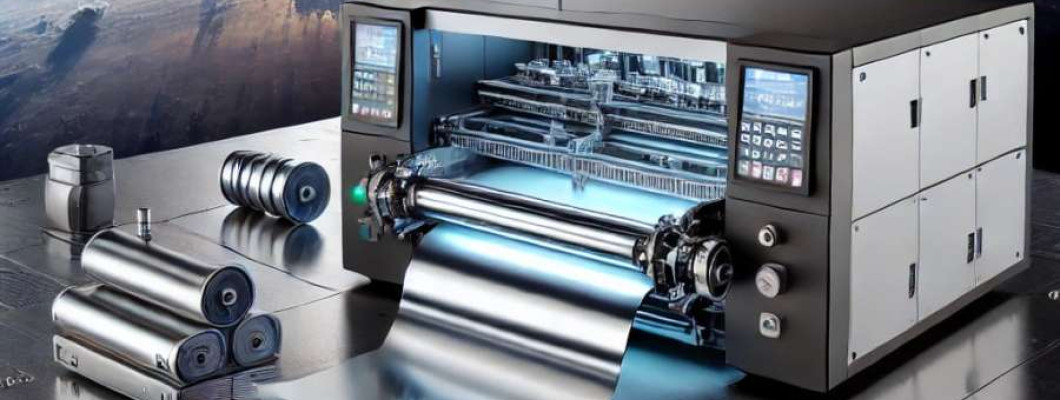
The Industrial Reality of Integrating A3 Spot UV Printing Into Scalable Production
Spot UV coating printers, particularly those designed around the A3 sheet format, are positioned uniquely at the intersection of specialized finishing and high-throughput printing workflows. For scalable business owners focused on ramping throughput while managing labor expenses, the introduction of an A3 Spot UV Printing Machine UV Coating Printer entails a series of precise technical and operational challenges that shape its efficacy as an industrial-grade asset.
Consider a mid-tier printing operation expanding from conventional offset and digital presses to incorporate spot UV finishing for premium client segments. The core challenge revolves around harmonizing the UV coating process with existing print runs, particularly with regard to substrate handling speed, printer uptime, and integration into automated workflows. Unlike mass market laminators, spot UV machines require stringent control over coating precision at micron-level thicknesses (commonly between 5 and 20 µm) without sacrificing throughput rates measured in sheets per hour (sph). Introducing the A3 Spot UV printing unit demands reconfiguration of front-end logistics for sheet stacking, drying times (even under instant UV curing), and accommodating the thermal load imposed on print materials.
Operational bottlenecks often arise when conveyor speeds and coating uniformity goals conflict, especially at higher volumes that scalable businesses target. Furthermore, the machine’s footprint and integration complexity—whether it can be embedded within existing MIS-controlled production lines or demands standalone operation—heavily influence labor deployment. Human factors such as repositioning operators and managing maintenance tasks also translate into labor cost implications, which cascade into overall production KPIs.
Technical Deep-Dive into Hardware Capabilities and Operational Thresholds
1. UV Curing Module Specifications and Thermal Management
The A3 Spot UV Printing Machine employs a UV LED curing system designed for controlled wavelength output (typically around 395-405 nm) to instantaneously polymerize coating resins. The challenge is maintaining consistent UV intensity across the A3 sheet (297 x 420 mm) ensuring uniform curing without overheating sensitive substrates. With peak power densities measured at approximately 150 mW/cm2, the curing stage must balance energy input to avoid substrate deformation, especially on thinner paper stocks (70-120 gsm) frequently used in packaging applications.
2. Coating Resolution and Precision Layer Thickness Control
Spot UV applications demand layer thickness control within ±2 µm tolerance to maintain visual and tactile quality. The machine typically uses precision micro-piezoelectric nozzles or roller applicators with feedback sensors monitoring coating thickness in real-time. For instance, targeting a 10 µm wet film thickness with a viscosity around 50 cps requires nozzle droplet volume management on the order of 5-10 pl with firing frequencies surpassing 50 kHz, enabling spot sizes down to 0.1 mm. Such precision is essential to avoid edge feathering or pooling during drying.
3. Throughput Rate and Sheet Handling Mechanics
The nominal throughput of an industrial A3 Spot UV Printing Machine hovers around 800-1200 sheets per hour under ideal conditions. However, actual rates depend on substrate type, coating complexity, and drying protocols. The mechanical handling system integrates vacuum feeders, precision rollers, and anti-static bars. Critical bottlenecks are often at sheet registration accuracy, particularly with coated or glossy substrates that alter friction coefficients. Misalignment by even 0.3 mm can degrade spot placement quality drastically, impacting downstream finishing.
4. Integration With Digital Prepress and Automation Systems
Modern A3 Spot UV units support RIP software integration and online calibration to synchronize with digital print jobs. Yet, embedding them into automated production lines requires addressing latency in job changeovers and command handshakes between print servers and the spot UV machine controller. This can be quantitatively analyzed through network ping tests and command response times—acceptable latencies generally fall below 100 ms per command cycle to ensure seamless job succession. Infrastructure considerations for power supply stability (230 V, single phase, 1500 W typical load) and environmental controls (maintaining room temperature 22-26 °C, RH 40-60%) are critical for consistent machine performance.
5. Maintenance Cycle Impact on Uptime and Labor Utilization
Daily maintenance tasks such as nozzle cleaning, UV lamp replacement, and alignment calibration significantly affect uptime metrics. The machine typically requires 15-20 minutes of daily preventative maintenance, which must be factored into labor costs and scheduling. Failure to adhere leads to increased nozzle clogging incidents, reducing print quality and exponentially increasing downtime. Predictive maintenance protocols leveraging vibration and thermal sensor data can potentially extend mean time between failures (MTBF) from 250 to around 400 operational hours.
Scenario Analysis of Business Applications
Understanding how the technical specifications translate into business outcomes involves exploring three distinct use cases:
Use Case 1: Premium Packaging Manufacturer
Here, the ability to deposit consistent, visually striking spot UV coatings on specialty substrates (e.g., 300 gsm silk paper) directly impacts product marketability. The tight layer thickness control reduces material waste by 12%, and throughput of 1000 sph supports mid-scale production without requiring additional shifts.
Use Case 2: Print-On-Demand Gift and Promotional Items
In this environment, rapid job changeover facilitated by digital RIP integration and precise registration controls enables a catalog of diverse designs on-demand. Even with varying substrate weights (200-350 gsm cardboard), the machine maintains coating uniformity with a layer thickness variance within ±1.5 µm, supporting high customer satisfaction.
Use Case 3: Graphic Design Studios Seeking High-End Finish
For studios focused on limited runs requiring micron-level spot UV precision, this machine offers sub-0.5 mm spot diameter control with minimal setup time. However, throughput is secondary to quality; operational bottlenecks shift from speed to layer uniformity and exact spot placement.
| Parameter | Industrial A3 Spot UV Printer | Standard Laminator |
|---|---|---|
| Maximum Throughput (sheets/hour) | 1200 | 1500 |
| Coating Thickness Control | ±2 µm | ±10 µm |
| Substrate Range (gsm) | 70-350 | 150-300 |
| Integration Capability (MIS/Automation) | Full RIP & Network Support | Standalone |
| Typical Power Consumption (Watts) | 1500 | 1800 |
Expert FAQ
1. How does UV LED wavelength impact coating adhesion?
The specified peak wavelength (~395-405 nm) optimizes photoinitiator activation in standard UV resins, balancing cure speed and depth without overheating the substrate. Deviations of ±10 nm can reduce cross-link density, weakening adhesion.
2. What substrate characteristics most influence coating uniformity?
Surface roughness (Ra), moisture content, and gloss level critically affect resin wetting and flow. Higher gloss surfaces tend to promote pooling, requiring adjusted layer thickness settings.
3. How do power fluctuations affect machine performance?
Voltage instability beyond ±5% can cause UV LED intensity variation, impacting curing consistency and potentially shortening lamp lifespan.
4. What maintenance protocols extend printhead life in spot UV machines?
Daily nozzle cleaning with isopropyl alcohol solutions, weekly system flush cycles, and scheduled lamp intensity calibration every 100 operational hours reduce clogging and maintain print integrity.
5. Can the machine accommodate irregular substrates?
While primarily designed for flat A3 sheets, optional adjustable feed rollers and vacuum systems allow handling of mildly textured or embossed substrates up to 2 mm thickness with minor throughput trade-offs.
Strategic Verdict and Recommendation
The A3 Spot UV Printing Machine UV Coating Printer distinctly addresses the infrastructural and throughput integration challenges pivotal for scalable business owners. Its precision coating capabilities, coupled with digitized control systems and thermal management aligned to industrial requirements, position it well above semi-professional or portable alternatives. The machine’s architecture allows embedding within automated production lines, improving labor efficiency while maintaining premium coating quality essential for diverse market sectors.
For organizations aiming to scale spot UV finishing without sacrificing operational uptime or quality consistency, investing in this technology offers quantifiable returns in material savings, throughput capacity, and product differentiation. The embodied engineering reflects a mature balance between hardware capability and practical operational limits. Interested decision-makers should evaluate the full technical profile available via A3 Spot UV Printing Machine UV Coating Printer to align purchase and integration strategies with their production scale and quality standards.