
A3 UV DTF Printer Multifunction Printing Machine Reveals True Industrial Potential Through Lifecycle and Integration Realities
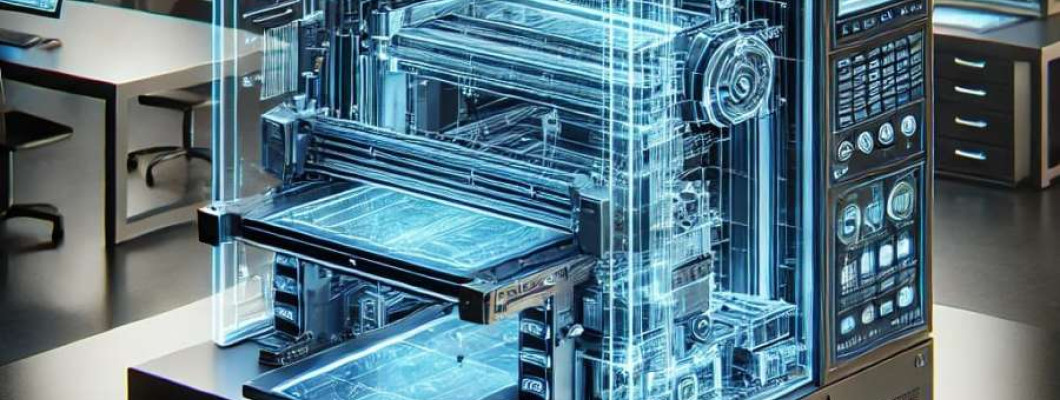
The Industrial Reality of Integrating A3 UV DTF Printing into Production Floors
In the realm of industrial-grade printing technology, the shift from small-batch artisanal output to scalable production demands a critical evaluation of equipment not only for print quality but also for lifecycle viability and infrastructure compatibility. An A3 UV DTF Printer Multifunction Printing Machine entering a mid-sized manufacturing environment introduces a complex matrix of challenges—ranging from workflow synchronization and consumable management to machine uptime and asset depreciation.
Consider a scenario where a business aiming to replace a traditional silk-screen setup integrates this multifunction printer to expand digital customization capabilities on synthetic substrates. The immediate operational challenge revolves around throughput versus maintenance interruptions. UV curing introduces unique thermal loads, which can alter printhead longevity and ink chemistry stability. Additionally, the multifunction aspect—often involving simultaneous color layering, UV curing, and direct-to-film transfer—raises questions of interoperability with existing production lines and the embedding of automated substrate feeding.
One cannot overlook the importance of asset depreciation schedules in such capital-intensive machinery. The multifunction printer’s lifespan, influenced by printhead replacements, UV light source degradation, and mechanical wear on substrate transport units, directly impacts total cost of ownership (TCO). Moreover, regional manufacturing realities such as local service availability and parts supply chains affect maintenance turnaround times, creating potential bottlenecks during peak production phases.
Industrial integration is further complicated by the need for environmental compliance. UV DTF operations emit volatile organic compounds (VOCs) and ozone, linked to ink curing processes. Ensuring adherence to workplace safety standards requires investment in ventilation and filtration systems, thus raising the indirect operational costs. Each incremental adjustment reverberates through labor efficiency, uptime, and ultimately throughput.
Technical Deep Dive into the A3 UV DTF Printer Multifunction Printing Machine
Printhead Technology and Ink Chemistry
The A3 UV DTF employs piezoelectric printheads capable of ejecting droplets as small as 5 picoliters (pl), crucial for fine detail and color gradient fidelity. The UV-curable inks undergo polymerization under UV-LED light sources emitting peak wavelengths near 395 nm. The curing rate, dictated by irradiance power density (measured in mW/cm2), must be balanced to avoid substrate heat distortion, commonly occurring above 60°C.
Throughput and Resolution Tradeoffs
Operating at a maximum 1440 dpi optical resolution, the machine’s maximum effective throughput is approximately 12 m2/hour on standard 250 gsm polyester films. However, achieving maximum resolution significantly reduces speed due to increased passes and ink layering. Practical production runs typically operate at 720 dpi for an optimal balance, yielding 20 m2/hour throughput.
Thermal Management and Substrate Handling
UV curing generates localized thermal hotspots, adversely impacting substrate flatness and printhead stability. The machine integrates segmented cooling fans delivering up to 150 CFM airflow directed at the curing zone. While effective in maintaining operational temperature below 50°C, airflow introduces dust particulates risks, necessitating cleanroom-compatible filters.
Maintenance Cycles and Lifecycle Cost Modeling
Printhead expected lifetime averages 2,500 operational hours under regular maintenance regimes, including daily nozzle checks and bi-weekly cleaning cycles. UV LED modules are rated for 20,000 hours but require replacement if irradiance drops below 85% of nominal intensity. Key maintenance intervals directly influence scheduled downtime, critical for throughput estimations and labor cost planning.
Infrastructure Compatibility and Integration
From an IT infrastructure perspective, the printer consumes 850 Watts nominally, with peak draws reaching 1,200 Watts during simultaneous UV curing and printhead operation. Rack density and power provisioning must accommodate this demand, coupled with network integration to support RIP software updates and job queuing. Physical footprint remains compact at 1.2 m long by 0.6 m wide, easing installation but posing substrate feed compatibility challenges with existing conveyors.
| Specification | High-Resolution Mode | High-Throughput Mode |
|---|---|---|
| Resolution (dpi) | 1440 | 720 |
| Throughput (m2/hour) | 12 | 20 |
| UV Curing Power Density (mW/cm2) | 300 | 200 |
| Thermal Output (°C) | Up to 60 | < 50 |
| Printhead Longevity (hours) | 2,000 | 2,500 |
| Power Consumption (Watts) | 1,200 peak | 850 nominal |
Scenario Analysis of Deployment Use-Cases
Case 1 Small Batch Custom Apparel Manufacturer
This business prioritizes color depth and fabric compatibility. Operating primarily in high-resolution mode, throughput is moderate but downtime for printhead maintenance is tolerable due to smaller batch sizes. The multifunction capability allows rapid switching between designs without retooling, supporting just-in-time production.
Case 2 Mid-Sized Promotional Goods Producer
Focus shifts to throughput and minimizing labor costs. The printer runs predominantly in high-throughput mode with scheduled daily cleaning during shift transitions. Integration with automated substrate loaders reduces manual handling, maximizing uptime. Environmental controls for VOCs are implemented to maintain workplace safety.
Case 3 In-House Print Department of Large Retail Chain
The requirement for reliability and infrastructure compatibility is paramount. The print unit is networked for remote diagnostics and job management. The thermal management system includes custom ducting integrated into existing HVAC. Asset depreciation is tracked via embedded sensors reporting printhead wear to maintenance teams, enabling predictive replacement strategies and reducing unexpected downtime.
Expert FAQ Addressing Advanced Operational and Technical Queries
Q1: How does UV LED wavelength variation impact polymerization efficiency on different DTF substrates?
A1: Minor wavelength shifts of ±0.5 nm affect initiator activation spectra, altering curing kinetics. Polyester films doped with specific photoinitiators exhibit peak absorption around 395 nm, making LED peak accuracy critical for consistent crosslinking and adhesion.
Q2: What failure modes are most common in piezo printhead nozzles under continuous multifunction operation?
A2: Cavitation erosion and ink particulate clogging predominate. High-frequency firing in color layering accelerates piezo element wear, leading to detrimental waveform distortion and droplet misdirection, necessitating periodic recalibration.
Q3: Can thermal load during UV curing be modeled to prevent substrate deformation?
A3: Yes. Applying Fourier heat transfer equations and transient thermal finite element analysis (FEA) allows prediction of substrate temperature distribution. Implementing staged UV intensity sequences reduces peak thermal gradients.
Q4: What are the implications of ink viscosity fluctuations on print consistency?
A4: Viscosity changes with ambient humidity and temperature alter droplet formation dynamics, impacting dot gain and edge sharpness. Closed-loop feedback via inline rheometers is recommended for industrial environments.
Q5: How does machine firmware support workflow integration and predictive maintenance?
A5: Firmware facilitates real-time monitoring of printhead pulse counts, UV LED runtime, and substrate feed metrics. Data logging enables machine learning algorithms to trigger alerts and schedule maintenance preemptively, reducing unscheduled interruptions.
Strategic Verdict and Recommendation for Industrial Adoption
The A3 UV DTF Printer Multifunction Printing Machine stands as a rigorously engineered solution tailored for mid to large-scale industrial printing enterprises demanding flexibility, reliability, and precise control over complex printing workflows. Its balanced approach to printhead technology, UV curing, and thermal management addresses the core challenges of direct-to-film multifunction printing while ensuring manageable maintenance cycles and infrastructure compatibility.
The machine’s modular design and embedded performance monitoring align well with contemporary workflow automation and asset management priorities, helping organizations optimize CAPEX and OPEX strategies. Environmental and safety compliance considerations are met without compromising throughput substantially, an increasingly pivotal factor in industrial adoption.
Given its technical maturity and operational robustness verified through lifecycle cost modeling and scenario applicability, this printer should be considered a definitive industrial-grade option for enterprises aiming to upscale their digital printing capabilities with sustainable, scalable hardware.