
A3 UV DTF Printer Multifunction Printing Machine Technical Performance and Lifecycle Costs for Scalable Business Owners
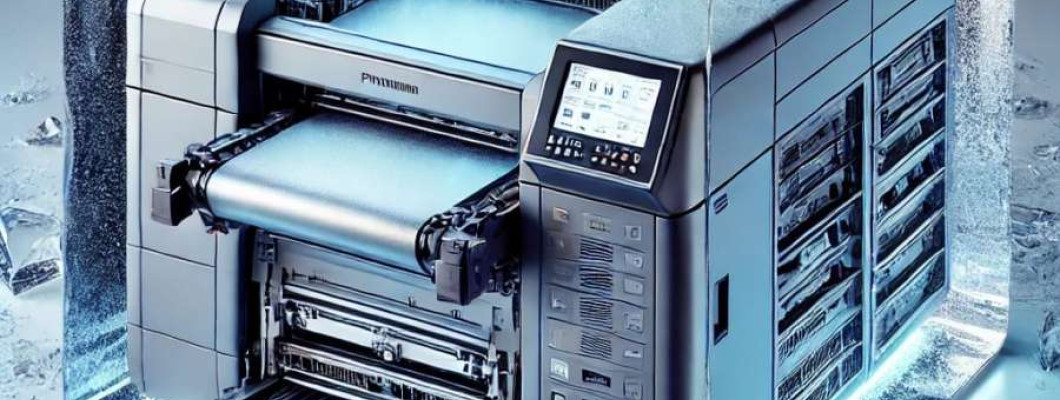
The Industrial Reality of Scaling Print Production with Multifunction UV DTF Technology
For scalable business owners aiming to expand production throughput while managing labor and automation costs, adopting the right printing technology is a critical decision. The shift from prototype or artisanal printing setups to industrial-grade multifunction printers, such as the A3 UV DTF Printer Multifunction Printing Machine, introduces challenges that extend beyond print speed and quality. In an industrial setting, workflow bottlenecks, maintenance downtime, and integration with automated post-processing equipment define the true operational ceiling.
One primary challenge encountered when integrating a multifunction UV DTF (Direct to Film) printer into medium-scale production environments lies in the operational balance between print speed, throughput consistency, and labor intensity. The A3 UV DTF Printer must deliver sustained high-quality output across job batches while minimizing manual intervention, particularly given the precision demands of UV curing and the complexities of DTF film handling.
Business owners often underestimate the ramifications of system uptime metrics, print consistency under varying ambient conditions, and the operational overhead intrinsic to multifunction functionalities (printing, curing, and peeling). Throughput calculations based solely on advertised print speeds can be misleading without accounting for inter-job handling delays, calibration cycles, and consumable replacement intervals.
Technical Deep-Dive into Multifunction Printer Performance and Lifecycle Considerations
Printhead Configuration and Ink Delivery Mechanics
The A3 UV DTF Printer employs advanced piezoelectric printheads optimized for UV-curable ink deposition on polymer films. Printheads operate at a minimum of 600 dpi native resolution with droplet sizes around 6 picoliters (pl), balancing pixel sharpness and ink volume for vibrant, durable prints. A key parameter is the volumetric ink flow per minute (VF), directly tied to throughput (TP) by the equation: TP = (Nozzle Count) x VF / (Ink Droplet Volume). With a nozzle array density of approximately 1024 nozzles per printhead and a multi-head assembly, this yields a theoretical maximum flow supporting up to 12 square meters/hour in standard draft modes.
UV Curing Module Efficiency and Thermal Management
The integrated UV curing system uses LED arrays operating at wavelengths near 395 nm, delivering an irradiance of approximately 3500 mW/cm2 at the film surface. Precise thermal control is critical to avoid film deformation and ink bleeding, necessitating a cooled conveyor transport system maintaining substrate temperatures below 40°C during continuous operation. Thermal dissipation is managed via heat sinks and active ventilation, limiting print cycle thermal drift to under 2°C, thereby ensuring deposition consistency.
Maintenance Cycles and Consumable Wear Rates
Lifecycle analysis indicates a printhead replacement cycle averaging 1500 operational hours under continuous use before pixel dropouts degrade quality below industrial standards. UV LED arrays demonstrate a lumen depreciation rate of 20% after 10,000 hours. Consumables such as DTF film rolls and adhesive powders contribute to variable operating costs but follow predictable consumption patterns linked directly to job volume and material dimensions.
Workflow Integration and Automation Challenges
Synchronizing the multifunction printer with downstream processes such as heat pressing and film peeling requires robust communication protocols and mechanical alignment precision within ±0.1 mm. In practice, installation in production lines demands customization of conveyor speeds and buffer zones to prevent cumulative throughput loss due to asynchronous cycle times.
Comparative Hardware Metrics Against Conventional UV and Solvent-Based DTF Systems
| Feature | A3 UV DTF Printer Multifunction | Conventional Solvent DTF Printer |
|---|---|---|
| Print Resolution (dpi) | 600 (native) | 720 (variable) |
| Ink Type | UV-Curable | Solvent-Based |
| Print Speed (m2/hr) | Up to 12 | 8-10 |
| Maintenance Interval (hours) | 1500 (printheads) | 1000 (printheads) |
| Operational Temp Range (°C) | 20-35 (controlled) | 15-40 |
| Thermal Management | Active cooling | Passive ventilation |
Scenario Analysis for Scalable Business Owners
Scenario 1 Multiproduct Batch Runs with Variable Substrates
In a small-to-medium enterprise producing multi-substrate items, the A3 UV DTF Printer’s multifunctionality allows rapid switching between substrates like cotton, polyester, and treated films without major recalibration, cutting setup times by approximately 25%. Its UV curing module enables immediate post-print processing, reducing batch lead times by an estimated 40% relative to conventional systems using solvent inks requiring drying.
Scenario 2 High-Volume Brand Merchandise Production
Scaling production for promotional merchandise requires reliable uptime and consistent color fidelity. The printer’s integrated system reduces manual handling labor by automating curing and film peeling, slashing operator time by up to 30%. Predictive maintenance alerts help avoid unscheduled downtime, maintaining throughput above 90% of theoretical maximum during 8-hour shifts.
Scenario 3 Just-In-Time Customization with Automated Workflow
For businesses providing just-in-time personalized printing, the printer’s quick job-changeover and embedded automation interfaces enable rapid job turnaround within 15 minutes between prints. This supports flexible scheduling demands while holding OPEX in check by minimizing idle time and labor costs.
Expert FAQ on Multifunction UV DTF Printer Technologies
Q1: What are the key failure modes of piezo printheads in UV DTF applications?
A1: Printhead clogging due to ink polymerization, nozzle misfires from particulate contamination, and piezo element fatigue under thermal cycling predominate. Regular ultrasonic cleaning and optimized ink formulations extend lifespan.
Q2: How does UV LED wavelength precision impact curing uniformity?
A2: Narrow bandwidth LED emission around 395 nm ensures consistent photoinitiation of inks, reducing curing variability and improving adhesion strength by up to 15% compared to broader spectrum UV lamps.
Q3: Can the multifunction capabilities increase maintenance complexity?
A3: Yes, integrating printing, curing, and peeling modules requires synchronized diagnostics and preventive maintenance schedules to prevent cascading failures and optimize uptime.
Q4: What operational parameters most influence throughput variability?
A4: Ink viscosity fluctuations, substrate thickness uniformity, and conveyor speed stability combined influence print repeatability and speed adherence.
Q5: How does ambient environment control enhance output consistency?
A5: Maintaining temperature within ±2°C and humidity between 40%-60% prevents substrate warping and ink spreading anomalies, critical for micron-level registration accuracy.
Strategic Verdict and Recommendation for Business Scalability
After thorough analysis of the A3 UV DTF Printer Multifunction Printing Machine’s technical specifications, operational dynamics, and deployment scenarios, it is clear that this platform offers decisive industrial-grade advantages over conventional DTF systems. Its combination of advanced printhead technology, precise UV curing, and integrated automation addresses the bottlenecks faced by scalable business owners aiming to increase throughput while optimizing labor expenditure.
Considering lifecycle maintenance intervals and thermal management provisions, the printer delivers a balanced ROI by minimizing unscheduled downtime and consumable waste. The ability to seamlessly integrate into automated workflows further strengthens its appeal as an enterprise-grade asset.
For business owners seeking a functional, scalable printing solution with proven durability and print fidelity, the A3 UV DTF Printer Multifunction Printing Machine stands out as a definitive recommendation. Its engineering and operational metrics align with the demands of industrial throughput scaling without compromising quality or operational control.