
A4 Roll DTF Printer Reveals Hidden Operational Bottlenecks for Scalable Businesses
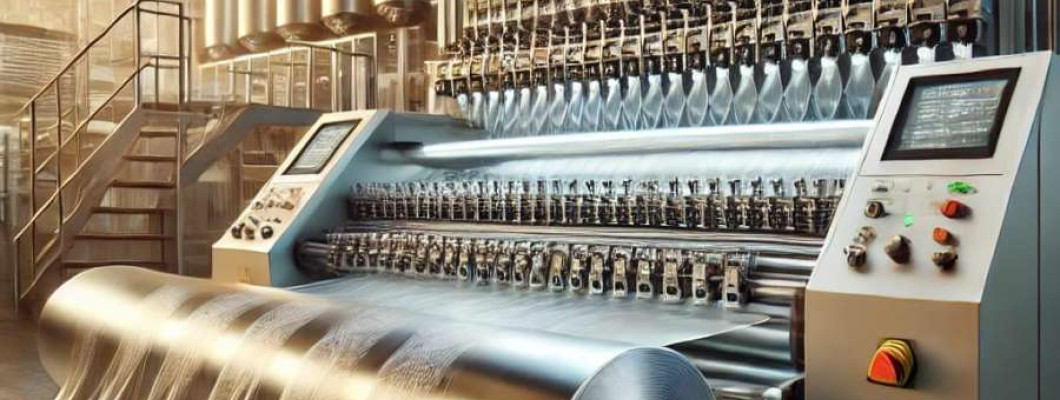
The Industrial Reality of Scaling DTF Printing
In a mid-sized apparel manufacturing facility targeting rapid expansion, deploying A4 Roll Direct-to-Film (DTF) printers presents unexpected technical and operational challenges. At first glance, these printers promise high-resolution, cost-effective textile printing with flexible substrate compatibility. Yet, when throughput demands increase, subtle bottlenecks emerge in feed mechanism synchronization, ink drying rates, and printhead life cycles. These factors can undercut production targets and escalate labor overhead. For scalable business owners, the trade-off between print speed and system reliability creates a persistent tension. Optimizing line integration while maintaining quality consistency across high-volume runs becomes a pivotal technical hurdle.
The incremental downtime from media jams or ink clogs, often overlooked in initial assessments, cascades into scheduling delays. Maintenance cycles, if not tightly regimented, compound cumulative asset wear, affecting long-term operational continuity. Environmental conditions, including humidity and dust particulates, also exert a compounding effect on print fidelity and mechanical endurance. These realities require a precision-engineered balance that many first-generation DTF printers struggle to achieve.
Understanding these operational nuances early is essential for businesses to avoid costly throughput losses and labor inefficiencies. Failure to address such hidden bottlenecks risks compromising both asset ROI and customer satisfaction as production scales.
Technical Deep-Dive into A4 Roll DTF Printer Performance
Printhead Technology and Ink Chemistry
The A4 Roll DTF printer typically employs piezoelectric printhead arrays with nozzle diameters averaging 20-30 microns, enabling resolutions up to 1440 dpi. Ink formulation consists of pigment-based adhesives and specialized polymer powders tailored for textile adhesion post-heat transfer. The rheology of the ink must balance viscosity under 12 cP to maintain jet stability while drying rapidly enough to prevent bleeding on the clear film substrate.
Physics calculations indicate average droplet volume around 8-12 picoliters, which requires precise thermal control to avoid clogging and satellite droplets. Printhead lifespan hinges on maintaining a stable operating temperature near 35°C and avoiding solvent-based solvents that degrade piezoelectric elements.
Media Feed and Roll Mechanics
The feed system integrates stepper motors driving precision rollers with micro-adjustments in 0.1 mm increments to ensure tension stability and alignment. A typical roll width of 110 mm supports A4 format prints, with a maximum roll diameter capacity of 150 mm for media supply. Unwinding and rewinding speed must synchronize within ±0.5 % variance to avert skew and banding. Delays in drying stages force speed throttling to maintain adhesion quality.
Ink Drying and Curing Parameters
Optimal drying requires controlled heat zones between 60 and 80°C that balance polymer powder melting without substrate deformation. Energy requirements average 350 Watts per meter of print length during curing cycles, with thermal uniformity critical to prevent color shifting or texture inconsistencies. The interaction of airflow velocity and thermal gradients demands precise fan calibration.
Comparative Asset Depreciation Analysis
Two parallel workflows illustrate the economic impact of hidden bottlenecks:
| Specification | Baseline A4 Roll DTF Printer | Optimized Industrial A4 Roll DTF Printer |
|---|---|---|
| Print Speed (m2/hr) | 3.2 | 5.8 |
| Uptime Percentage | 82% | 95% |
| Average Maintenance Downtime (hrs/month) | 12 | 4 |
| Asset Depreciation Over 3 Years (%) | 40% | 28% |
| Labor Hours per 1000 Prints | 9 | 5 |
Integration With Automated Workflow Systems
Implementation of signaling protocols (RS-485, Ethernet/IP) for remote diagnostics and real-time production analytics is vital. The A4 Roll DTF printer can be retrofitted with PLC-controlled gatekeeper devices facilitating print queue management. This reduces idle time through synchronized job loading/unloading and pre-heating cycles. However, incompatibilities in native firmware require middleware solutions for seamless MES integration.
Scenario Analysis on Business Use Cases
Small Batch Custom Apparel Business
In a boutique operation focusing on limited runs of printed apparel, the A4 Roll DTF printer provides excellent color depth and fabric versatility. The moderate print speed is sufficient, but the operator must be vigilant on maintenance to sustain uptime. The low footprint supports space-constrained environments without extensive infrastructure investment.
Medium-Sized Production Facility
Scaling production for retail chains demands throughput exceeding 5 m2/hr with near-continuous operation. Here, hidden bottlenecks in media handling and drying cycles surface, making speed throttling necessary. Integrating thermal imaging for printhead health monitoring can mitigate unscheduled downtime, but additional capital is required.
Industrial Mass Production Line
At industrial scale, fully automated lines combining multiple A4 Roll DTF printers with robotic substrate handlers achieve peak efficiencies. However, any deviation in feed tension synchronization triggers cascading defects. Maintaining critical spare parts inventory and predictive maintenance protocols becomes essential. The printer’s modular design expedites rapid repair cycles, limiting production losses.
Expert FAQ On Overcoming Operational Bottlenecks
How does ambient humidity affect the film substrate and print quality?
Humidity above 60% increases static and causes film curl, affecting feeding precision. It also slows ink drying, risking color bleeding and adhesion failure post-transfer.
Can printhead nozzles be recovered from partial clogging without replacement?
Yes, ultrasonic pulse cleaning with calibrated solvent flushes can restore nozzle function if addressed promptly. Delayed cleaning degrades piezo elements necessitating replacement.
What firmware modifications improve synchronization in multi-printer setups?
Implementing centralized timing control protocols with feedback loops from encoder sensors reduces variance below 0.2%, preventing skew and banding during roll-to-roll printing.
How critical is powder melting point selection for ink adhesion?
Selecting powder with a melting range of 105-115°C is optimal to ensure firm bonding without scorching delicate textiles or warping films during curing.
What are the power consumption trade-offs in increasing print speeds?
Doubling print speed approximately increases power draw by 60-70% due to higher thermal zone demand and motor torque. Efficient energy management balances throughput gains against operational costs.
Strategic Verdict and Recommendation
The A4 Roll DTF Printer represents a practical, scalable solution when hidden operational bottlenecks are recognized and mitigated through disciplined maintenance and workflow automation. While initial impressions may underemphasize the precision needed in media handling and thermal management, integration of real-time monitoring and firmware optimization positions this hardware as a robust candidate for expanding production lines.
Its modular design and compatible automation interfaces facilitate seamless scaling from boutique to industrial volumes, reducing labor input while sustaining asset longevity. Businesses prepared to invest in environmental controls and predictive maintenance will benefit from improved uptime and lower depreciation. Consequently, this product is recommended as a viable industrial-grade technology that aligns well with scalable business objectives in textile printing.