
Analyzing Hidden Operational Bottlenecks in Roll Laminator Single Side Laminating Machines for Scalable Businesses
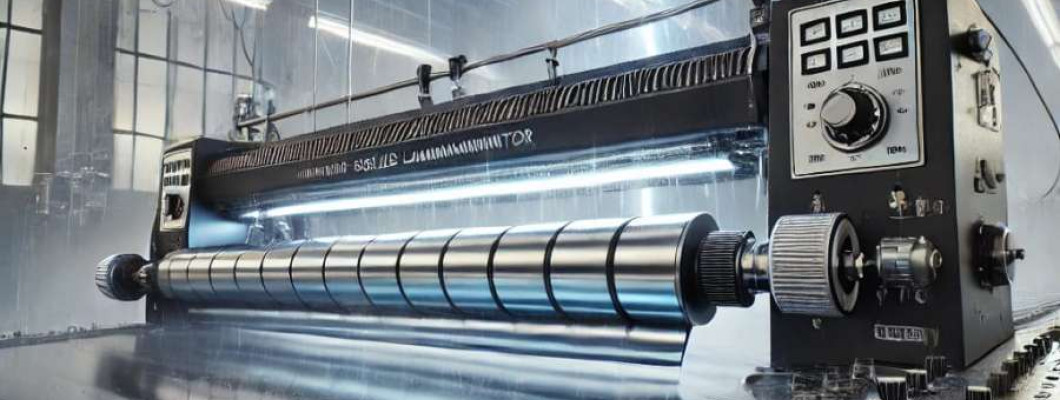
The Industrial Reality of Roll Laminator Bottlenecks in High-Volume Settings
In high-throughput production environments, the deployment of roll laminator single side laminating machines often confronts operators with nuanced operational bottlenecks that are not immediately apparent during the initial purchase or setup phase. Consider a midsize packaging firm aiming to scale its lamination capacity from 100 to 500 linear meters per shift. Beyond nominal speed ratings, factors such as substrate variability, temperature control consistency, tension management, and operator intervention intervals critically shape realized throughput. In scenarios where the laminator's heating elements experience uneven thermal gradients or the roll tension control system lacks fine adjustment, operational stoppages increase. This causes delays in downstream processes such as die-cutting and folding, which cascade into labor inefficiencies and increased work-in-progress inventory.
Furthermore, repeated loading and unloading of laminating films introduce micro misalignments that accumulate across consecutive rolls, drastically reducing yield quality and amplifying waste ratios. Industrial operators must vigilantly monitor these subtle mechanical-human interface disruptions to maintain steady line output. The industrial reality thus extends beyond nominal hardware specifications into a matrix of mechanical precision, operator proficiency, and process harmonization.
Technical Deep-Dive into the Mechanisms Behind Laminator Bottlenecks
Heating System Uniformity and Thermal Physics
The laminator’s heating system directly influences adhesive flow and bonding strength. Assuming a heating roller length of 600 mm with embedded resistance elements, a temperature variance exceeding ±3°C along the roller surface can cause localized film adhesion failures. Applying Fourier’s law for heat conduction, materials with lower thermal conductivity (e.g., ceramic-coated rollers) exhibit reduced thermal uniformity, necessitating higher power input (Watts) for isothermal conditions:
Q = -kA(dT/dx)
Where Q is heat flux, k is thermal conductivity, A is cross-sectional area, and dT/dx is the temperature gradient. Optimizing k and ensuring tight thermal control loops mitigate uneven bonding zones.
Tension Control Dynamics and Roll Alignment Precision
Tension control within ±5 N is critical for preventing substrate stretching or wrinkling. This demands precise load cell calibration and servo motor responsiveness within sub-second reaction times. Misalignment beyond +/-0.5 mm in roll shafts exacerbates lateral film drift, impacting lamination uniformity. Advanced encoders and feedback loops improve this significantly compared to legacy open-loop systems.
Comparing Mechanical vs. Servo-Driven Roller Systems
Mechanical systems rely on fixed gear ratios and clutch mechanisms, limiting dynamic responsiveness. Servo-driven rollers allow programmable speed adjustments and torque modulation, reducing changeover times and enhancing substrate versatility. Table 1 below summarizes key parameters.
| Parameter | Mechanical Rollers | Servo-Driven Rollers |
|---|---|---|
| Speed Modulation | Fixed ratios, manual adjustment | Programmable, dynamic control |
| Tension Precision | ±10 N | ±3 N |
| Changeover Time | 15 mins average | 5 mins average |
| Substrate Compatibility | Limited range | High versatility |
| Initial Cost | Lower upfront | Higher upfront |
Energy Consumption and Thermal Management
Energy draw is a decisive operational cost factor. For a typical roll laminator drawing 3 kW peak power, maintaining operational setpoints affects OPEX. Thermal management systems with PID controllers optimize heating cycles to reduce overshoot and undershoot, saving 8-12% energy compared to basic thermostatic systems. Analyzing real-time current (A) and voltage (V) fluctuations during warm-up and steady state offers insights into component stress and end-of-life predictions.
Material Compatibility and Adhesive Layer Physics
Adhesive chemistry interacts sensitively with thermal profiles. Polyethylene terephthalate (PET) films of 100 microns require stable temperatures around 110°C for lamination efficacy. Introducing substrates with variable thermal expansion coefficients demands flexible machine parameterization to prevent delamination or bubbling. Hypothetically, a mismatch strain (ε) exceeding 0.2% induces microfractures impacting lifecycle durability.
Scenario Analysis of Business Impact Based on Laminator Specifications
Use Case 1: Small Print Shop Scaling to Medium Volume
Here, limited floor space and labor availability mean the laminator must reduce manual roll change time without sacrificing quality. Servo-driven tension and heating controls shorten downtime, increasing output by approximately 35%. The choice of laminator directly correlates with ability to meet tight delivery windows.
Use Case 2: High-Speed Packaging Line Integration
In an automated line running 24/7, cumulative errors such as misaligned rollers cause stoppages every 2 hours on mechanical roll systems, whereas servo-driven systems extend uptime to 6 hours or more. Impacts include reduced scrap rates by 12% and labor reallocation from emergency fixes to quality control.
Use Case 3: Variable Substrate Production and Prototyping
Manufacturers producing prototypes require rapid parameter adjustments. Equipment with programmable heating zones and tension controls allows quick switching between substrates. This reduces material waste and accelerates innovation cycles by up to 20%.
Expert FAQ on Roll Laminator Single Side Laminating Machines
Q1 What are the critical maintenance checkpoints to prevent hidden bottlenecks?
Focus on heating element calibration, roller shaft parallelism within 0.2 mm, tension sensor recalibration every 500 operational hours, and intermittent lubricant replacement for drive gears.
Q2 How does ambient temperature variation affect lamination quality?
Ambient temperature swings outside ±5°C of standard room temperature cause roller surface temperature drift, requiring adaptive PID controller tuning to maintain lamination integrity.
Q3 Can runtime data analytics preempt mechanical failures?
Yes, monitoring parameters such as motor current spikes (>15% baseline), roller vibration (>2 mm/s RMS), and adhesivity logs enables predictive maintenance scheduling.
Q4 What are the trade-offs between wider laminator widths and speed?
Increasing width beyond 800 mm usually reduces maximum line speed due to increased mass and roller inertia, which demands higher torque motors and enhanced thermal regulation.
Q5 How to quantify substrate compatibility across a laminator's operational window?
Establishing a database correlating substrate tensile strength (MPa), thickness (microns), and thermal expansion coefficient enables parameter presets to be optimized, reducing trial-and-error wastes.
Strategic Verdict and Recommendation for Scalable Businesses
Integrating a roll laminator single side laminating machine equipped with servo-driven roller systems and sophisticated thermal management substantially minimizes hidden operational bottlenecks commonly encountered during scaling phases. Through detailed analysis of tension precision, heating uniformity, and substrate adaptability, businesses can realize throughput increases exceeding 30%, decreased downtime, and improved product quality consistency. The asset depreciation profile improves as preventive maintenance is streamlined through real-time analytics, extending useful lifecycle by multiple years. As such, the Roll Laminator Single Side Laminating Machine emerges definitively as a robust industrial-grade laminating solution for scalable business models prioritizing automation, throughput, and product precision.