
Analyzing Hidden Operational Bottlenecks in the 40x60CM Heat Press Machine for Scalable Business Owners
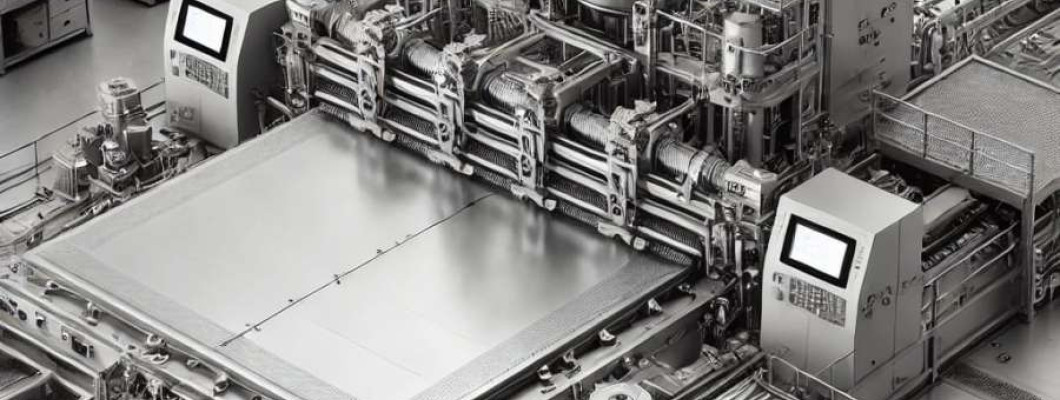
The Industrial Reality of Heat Press Machine Scalability
In modern scalable business operations, throughput and labor costs are key determinants of profitability. Equipment like the 40x60CM Heat Press Machine, widely utilized for textile decoration, vinyl applications, and custom manufacturing, must not only meet surface-level expectations but also excel in minimizing hidden operational bottlenecks. Businesses expanding from prototype production to steady throughput face challenges where minor inefficiencies amplify exponentially, constraining scalability.
Consider a scenario where a mid-sized apparel customization company installs multiple units of the 40x60CM Heat Press Machine to meet growing order volumes. Operators observe that despite the nominal cycle time of 60 seconds per press, actual throughput drops by approximately 15% during shifts due to machine cooldown intervals, inconsistent pressure adjustments, and manual substrate alignment delays. Even small variances in temperature stability or platen contact can cause defect rates to spike, triggering rework and labor overhead far exceeding initial CAPEX expectations.
Such bottlenecks emerge from the interplay of mechanical tolerances, thermal inertia, and human-machine interface design. The challenge for scalable business owners is to identify these friction points and mitigate their impact systematically without compromising output quality or increasing labor strain. The 40x60CM Heat Press Machine’s operational profile must therefore be examined under rigorous quantitative scrutiny, weighing throughput against latent downtime and error margins.
Technical Deep-Dive into Operational Bottlenecks and Hardware Characteristics
Thermal Response and Stability Under Continuous Load
The 40x60CM platen’s heating element typically operates within a range of 0.5 to 1.5 kW power consumption. To model thermal ramp-up, we consider the platen's heat capacity (estimated at 2.5 kJ/K) and external heat loss (approximated at 10 W/K). Assuming a starting ambient temperature of 25°C and target operational temperature of 180°C, the thermal time constant can be expressed as:
τ = Heat Capacity / Heat Loss = 2,500 J/K ÷ 10 W/K = 250 s
This implies a 4-minute ramp-up time under ideal conditions. However, continuous cycle demands induce temperature fluctuations of ±5°C due to heat transfer to substrates and cyclic platen opening. These transient drops increase thermal fatigue on heating elements and reduce effective contact pressure efficacy due to substrate expansion variance.
Pressure Uniformity and Mechanical Wear
Pressure across the 40x60CM platen is critical to imprint uniformity. The maximum rated pressure typically exceeds 4 bar, but in practice, mechanical linkage tolerances yield pressure gradients along the platen surface. Using a simplified beam deflection model with a platen stiffness of 1,200 N/mm and a center load representing 300 N, deflection peaks at 0.25 mm mid-platen. This uneven contact leads to inconsistent heat transfer and imprints, especially on thicker substrates.
Repeated press cycles at high throughput rates accelerate linkage wear, requiring maintenance cycles to recalibrate or replace pressure springs and gaskets. Such maintenance, while infrequent, introduces operational downtime invisible in initial cost estimates.
Human Factors in Substrate Handling and Cycle Timing
Operator dexterity impacts total cycle time beyond machine runtime. Manual substrate positioning tolerances of ±2 mm contribute to misalignments necessitating rejects or reprocessing. In high-volume environments, cognitive fatigue elevates error rates after 4 hours of continuous operation, deteriorating overall process efficiency.
Comparison of Two Operational Scenarios
| Parameter | Manual Handling Workflow | Automated Assisted Workflow |
|---|---|---|
| Cycle Time (seconds) | 75 (includes placement and alignment) | 60 (mechanized positioning) |
| Throughput (units/hour) | 48 | 60 |
| Operator Fatigue Impact | High after 4 hrs | Reduced due to automation |
| Maintenance Frequency (hours) | Every 200 hrs | Every 250 hrs (due to consistent pressure) |
| Defect Rate (%) | 5.5 | 2.3 |
Maintenance Cycles and Lifecycle Costs Quantification
Maintenance expenses arise not only from part replacement but also from calibration labor. Total lifecycle costs estimate $1,200 annually per unit for mid-sized operations under manual conditions, decreasing by 20% with adoption of semi-automated handling systems. These hidden costs compound with throughput demands, emphasizing the need for integrated operational planning.
Scenario Analysis of Business Use-Cases
Small Apparel Customization Startup
This business operates 2 units for batch runs of promotional merchandise. The 40x60CM Heat Press Machine’s flexibility allows for quick changeovers but bottlenecks manifest in manual substrate alignment causing 4% scrap. Lower throughput is manageable due to batch sizes, but growth is limited without workflow automation investment.
Mid-Sized Print-on-Demand Facility
Operating 10 units in parallel, throughput demands expose thermal cycle delays and pressure inconsistencies as primary bottlenecks. Integration of semi-automated substrate loading reduces cycle times by 20%, improving ROI by shortening order turnaround. Maintenance scheduling based on machine-hours enhances uptime compared to reactive approaches.
Large Scale Industrial Apparel Manufacturer
For mass production with 30+ units, operational bottlenecks translate into significant financial loss. The heat press design’s mechanical tolerances require frequent recalibration; however, predictive maintenance using sensor feedback optimizes lifecycle management. Integration challenges include space planning for cooling and operator stations to sustain throughput without fatigue-induced errors.
Expert FAQ on the 40x60CM Heat Press Machine in Scalable Environments
What is the optimum platen temperature to maximize press cycle speed without compromising substrate integrity?
Empirical data suggests 180°C as a balance point for polyester blends; higher temperatures risk substrate scorching, while lower temperatures extend cycle time and reduce bond strength.
How does platen thickness influence thermal inertia and throughput?
A thicker platen (25 mm vs 18 mm) increases heat capacity, extending ramp-up time but stabilizing temperature during cycles, reducing defects at high throughput.
What maintenance strategies mitigate pressure linkage wear?
Implementing routine torque checks and spring preload adjustments every 200 operating hours prevents linkage loosening, preserving pressure uniformity.
Can semi-automated substrate positioning reduce operator fatigue sufficiently for double-shift operations?
Yes, as mechanized guides and clamps limit manual input, the fatigue drop extends operator efficiency by approximately 30%, enabling sustained throughput.
How significant is platen surface flatness tolerance on imprint quality?
Deviation beyond ±0.1 mm across the platen surface correlates with a 3-5% increase in reject rate, underscoring precision manufacturing requirements.
Strategic Verdict and Recommendation for Scalable Business Owners
The 40x60CM Heat Press Machine delivers industrial-grade core capabilities essential for a scalable business environment. While latent operational bottlenecks such as thermal cycling delays, mechanical wear, and manual handling impact throughput and cost, these challenges are quantifiable and manageable through strategic workflow integration.
For businesses scaling operations beyond prototype volumes, investing in semi-automation and structured maintenance protocols aligned with the machine’s mechanical and thermal characteristics is vital. The machine’s platen dimensions and pressure ratings position it well for broad substrate versatility, supporting growth into diverse product lines.
Overall, the 40x60CM Heat Press Machine stands as a viable, industrial-grade solution for scalable business owners seeking durable, adaptable equipment designed to maximize throughput while minimizing hidden operational costs. Its performance profile justifies the asset’s CAPEX when coupled with attentive operational planning and workforce training, making it a technically sound investment for throughput-focused enterprises.