
Analyzing Infrastructure Challenges with the A3 Roll DTF Printer T-shirt Printing Machine for Scalable Businesses
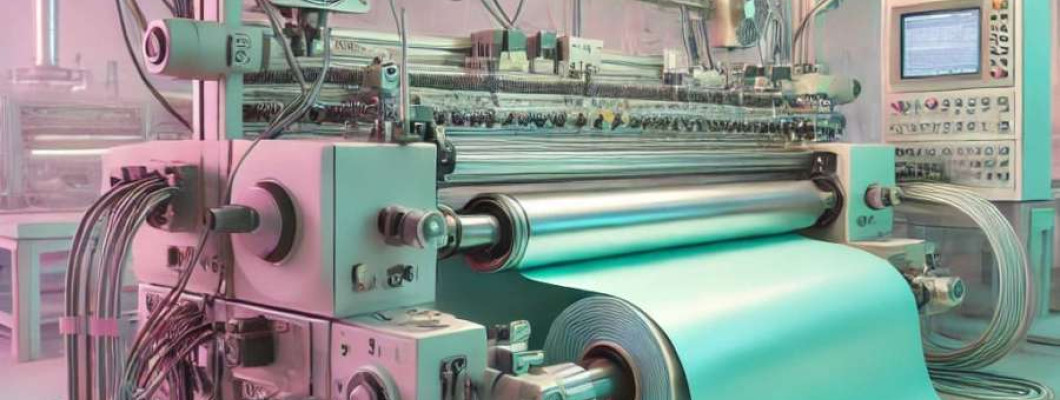
The Industrial Reality of Integrating A3 Roll DTF Printing into Scalable Operations
Introducing the A3 Roll DTF Printer T-shirt Printing Machine into a scalable business environment means confronting both visible and hidden infrastructure demands. Unlike flatbed printers or smaller desktop devices, this roll-to-roll system requires dedicated spatial, electrical, and climate-control infrastructures to sustain continuous, high-throughput operations. Industrial facilities aiming to scale production volume must anticipate the machine’s peak power consumption, thermal output, and environmental stability prerequisites to guarantee consistent quality and uptime.
Consider a mid-tier apparel manufacturing facility attempting to incorporate this printer into an existing production line. The printer’s continuous A3 roll feeding mechanism demands robust handling of long material lengths without tension anomalies or skew—reliability here correlates directly to maintaining print precision and throughput rates. The presence of an integrated drying or curing system introduces additional heat and airflow management complexities that often remain underestimated in initial setup phases.
Moreover, thermal management and power supply integration present formidable engineering obstacles. The printer’s heating elements, motor drivers, and control electronics collectively generate transient power spikes potentially disrupting nearby sensitive systems. Without proper electrical conditioning and segregation, production bottlenecks may occur, undermining overall line efficiency. Hence, the gap between simple plug-and-play expectations and the intricate infrastructure integration burden becomes markedly evident.
Power Distribution and Thermal Load of the A3 Roll DTF Printer
The printer operates with a nominal power rating of approximately 1500 Watts under peak conditions, primarily during heating phases that prepare the ink for transfer. Thermal dissipation includes convection from heating plates and forced airflow from embedded fans. An analysis using steady-state thermal models suggests heat flux densities approach 120 W/m2 localized around the curing zones during prolonged runs. Without adequate ventilation, ambient temperatures within confined printing rooms can rise by 5-8°C, impairing both operator comfort and electronic reliability.
A comparative power table below illustrates two hypothetical installation environments:
| Parameter | Standard Workshop Setup | Optimized Industrial Room |
|---|---|---|
| Power Supply Stability | Single 220V 10A Circuit | Dedicated 220V 20A Isolated Circuit |
| Thermal Management | Passive Ventilation | Active HVAC with Exhaust Fans |
| Production Uptime | 60-70% | 90-95% |
| Print Quality Fluctuations | High Variance (±5%) | Minimal Variance (±1%) |
Material Handling and Roll Precision Impact on Output Consistency
The roll feeding mechanism’s mechanical precision directly influences micron-level print accuracy. The A3 roll width corresponds to approximately 297 mm, and length can extend beyond 30 meters per roll. Maintaining consistent tension within ±0.2 N throughout the feed path prevents banding and ink misregistration that degrade the color depth and sharpness. Advanced tension sensors and servo-driven rollers reduce slippage, but require integration with facility-wide maintenance protocols to calibrate periodically.
In a high-throughput context, even a 0.5% variance in feed accuracy results in cumulative registration error over lengthy print runs, impacting final product uniformity. Facility operators must balance replacement frequency of feed rollers, regular sensor diagnostics, and ambient humidity control to mitigate substrate deformation.
Communication Protocols and Network Integration for Enterprise Monitoring
Network infrastructure must accommodate the printer’s automation and monitoring demands. The printer typically supports USB and Ethernet interfaces with proprietary communication protocols for real-time job status monitoring and fault diagnostics. Integrating these data streams into existing Manufacturing Execution Systems (MES) or Industrial Internet of Things (IIoT) platforms requires middleware compatible with common industrial protocols such as Modbus TCP or OPC-UA.
Failure to achieve seamless integration limits predictive maintenance capabilities and reduces responsiveness to printhead clogging or ink viscosity drift. This can increase mean time to repair (MTTR) and reduce overall equipment effectiveness (OEE). Robust firewall configurations and VLAN segmentation prevent unauthorized access while ensuring reliable data flow within the enterprise network.
Long-Term Infrastructure Costs and Scalability Considerations
Infrastructure integration extends beyond initial installation to include ongoing maintenance of power conditioning units, HVAC systems, and network routers. The machine’s lifecycle depreciation tied to these auxiliary systems must be factored into total cost of ownership (TCO) analyses. Scalability also demands consideration of spatial modularity; the printer requires a minimum footprint of 1.5 m by 3 m with clearance for roll loading and service access.
Expanding print capacity through parallel deployment requires proportional increases in electrical load capacity and environmental controls. Facilities not planned for expansion will encounter exponential retrofitting expenses when scaling up, influencing return on investment (ROI) timelines significantly.
Scenario Analysis Highlighting Key Infrastructure Impacts
1. Urban Boutique Print Shop Scaling to 500 T-shirts per Day
Here, limited HVAC and power capacity necessitate phased infrastructure upgrades. Without incremental adjustments, the printer risks overheating, causing downtime and diminished print quality. Spatial constraints also impede roll handling workflows, forcing operational inefficiencies.
2. Mid-Sized Apparel Manufacturer Pursuing Automated Production Lines
Advanced power distribution with surge protection and enhanced thermal management allows near 95% uptime. Integration with MES permits batch tracking and rapid fault resolution, facilitating just-in-time production models with fine substrate control.
3. Large Industrial Textile Facility Incorporating Multiple A3 Roll DTF Units
Here, dedicated electrical infrastructure, climate-controlled print bays, and centralized data monitoring converge to maximize yield and minimize unplanned stoppages. Modular system design supports easy roll changes and routine upkeep, optimizing labor allocation and throughput consistency.
Expert FAQ Addressing Advanced Technical Considerations
What are the primary electrical risks when integrating the A3 Roll DTF Printer into existing infrastructure?
Transient inrush currents during heater ramp-up can exceed circuit ratings, risking breaker trips. Furthermore, EMI emissions require shielding and grounding strategies to maintain stable operation of sensitive electronics nearby.
How does ambient humidity affect roll feeding accuracy and printhead longevity?
Elevated humidity levels (>60%) can cause substrate swelling, increasing friction and tension variability. Over time, this environmental stress leads to accelerated printhead nozzle clogging through ink density fluctuations and particulate contamination.
Can integration with MES platforms improve predictive maintenance?
Yes, real-time data streaming on print cycles, head temperature, and ink viscosity allows machine learning algorithms to preempt failure modes and optimize service intervals.
How does ventilation design influence print quality consistency?
Proper airflow prevents localized overheating and volatile solvent accumulation, which can otherwise cause ink drying inconsistencies and banding artifacts.
What maintenance protocols ensure consistent roll tension and alignment?
Scheduled calibration of servo motors controlling feed rollers, combined with automated tension sensor diagnostics, helps maintain feed precision. Coupled with ambient control to prevent substrate deformation, these practices preserve micron-level registration.
Strategic Verdict and Definitive Recommendation for Scalable Enterprises
The A3 Roll DTF Printer T-shirt Printing Machine stands as a technically sound solution for scalable businesses able to invest in robust infrastructure integration. Its capability for continuous roll-to-roll operation with A3 width substrate addresses medium-volume production targets with high color fidelity and operational reliability. Facilities equipped with dedicated power circuits, active thermal management, and integrated network monitoring can exploit the printer’s full potential, achieving uptime above 90% and print precision within ±1% tolerances.
Enterprises must approach deployment with a rigorous infrastructure integration strategy encompassing spatial planning, electrical conditioning, environmental controls, and IT connectivity. When these requirements are anticipated and engineered, the A3 Roll DTF Printer T-shirt Printing Machine proves a decisive asset for industrial-grade scalable garment printing.