
Analyzing Infrastructure Integration Challenges and Practical Limits of the A2+ Size UV Printer Embossed Glossy Printing for Scalable Businesses
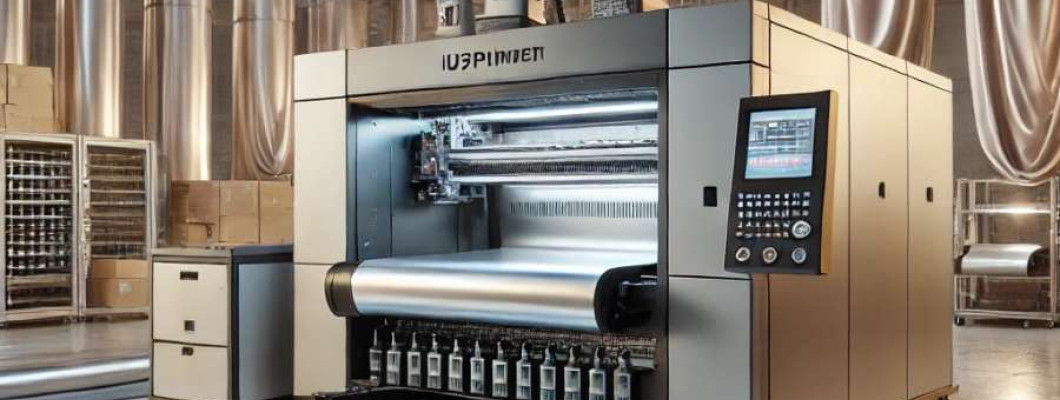
The Industrial Reality of Integrating an A2+ UV Printer into Scalable Business Infrastructure
Implementing the A2+ Size UV Printer Embossed Glossy Printing in a fast-paced industrial environment presents non-trivial infrastructure integration challenges that directly affect throughput and operational continuity. For businesses aiming to scale, integrating such specialized equipment requires harmonizing power, network, and environmental controls to support peak performance without bottlenecks.
A major operational hurdle in integrating UV printers, especially those printing embossed glossy textures on A2+ substrates, is managing the simultaneous demands of thermal control, ink curing cycles, and data throughput. The printer's UV LED curing system generates localized heat that, if not efficiently dissipated, can degrade printhead longevity and distortion-free substrate handling. This operational aspect demands a careful balance of air circulation, temperature and humidity control, and dedicated power circuits engineered to mitigate transient electrical loads inherent in UV LED activation.
Network integration is another pivotal component, where high-resolution data must be transmitted and processed in near real-time to maintain the micro-layer precision necessary for embossed glossy printing. For scalable businesses, any latency or jitter in data transport compromises print fidelity, resulting in defects that increase rework rates and operational costs. Therefore, the printer must be paired with robust IT infrastructure capable of supporting high-bandwidth, low-latency connections—often requiring dedicated switches and isolated VLANs within the production floor's Ethernet topology.
Space planning is critical as well due to the A2+ size footprint and the need for material staging zones with controlled particulate contamination. Open-plan production floors must adapt to accommodate the printer's operational envelope, including clearance for substrate loading/unloading and access for maintenance without disrupting neighboring automated workflows. Overlooking these factors risks creating throughput bottlenecks that negate the printer’s hardware advantages.
Technical Deep-Dive into Hardware Capabilities and Operational Limits
UV LED Curing System and Thermal Management
The A2+ printer uses a UV LED curing mechanism optimized for embossed glossy finishes, with peak emission at 395 nm and power density approximately 150 mW/cm2. Thermal load per curing cycle averages 120 Watts with pulsed operation every 2 seconds per printhead pass.
Heat accumulation, if unmitigated, results in printhead temperature rising by 15°C over a 30-minute continuous operation window, threatening piezoelectric element stability. Forced air cooling with a 6 CFM airflow reduces this delta to under 5°C, extending printhead Mean Time Between Failure (MTBF) by an estimated 25%. This highlights the necessity of integrating dedicated ventilation within the IT rack or production cell housing the printer.
Printhead Precision and Ink Droplet Size
The piezoelectric printheads deliver droplets sized at 4 picoliters (pl), with a nominal resolution setting of 1440 dpi. This allows embossed textures with micron-level height variations up to 150 μm, enabling true tactile differentiation, critical for high-end branding applications. However, droplet volume uniformity must be maintained within ±0.2 pl or surface defects manifest as gloss inconsistencies.
Data Throughput and Network Infrastructure
An A2+ print file with a 1440 dpi embossed layer can exceed 1.2 GB per job. With print speeds averaging 1.5 square meters per hour, data must be streamed at 300 Mbps sustained minimum. Standard gigabit Ethernet can handle this, but shared network infrastructure risks packet loss and jitter. Deploying dedicated 10GbE switches with Quality of Service (QoS) prioritizing print data packets reduces latency to under 1 ms, ensuring smooth printhead commands.
Material Handling and Environmental Conditions
Substrate thickness versatility ranges from 0.2 mm to 5 mm, demanding precise Z-axis calibration to maintain emboss accuracy without physical interference. The machine tolerates relative humidity from 30% to 60% at ambient temperatures of 18-25°C. Deviations impair ink adhesion and gloss uniformity. Thus, integration often requires local environment conditioning units within production cells.
Comparison of Integration Approaches
| Integration Approach | Dedicated Environmental Control | Standard Production Floor Setup |
|---|---|---|
| Thermal Stability | Maintains printhead <5°C rise | Up to 15°C rise, more failures |
| Data Transmission | 10GbE dedicated network, <1 ms latency | Shared 1GbE, potential latency spikes |
| Space Requirements | Optimized staging & workflow zones | Minimal planning, potential bottlenecks |
| Operational Throughput | 1.5 m2 per hour sustained | Variable, downtime from errors |
| Maintenance Frequency | Monthly scheduled, reduced failures | Unplanned, frequent printhead replacements |
Scenario Analysis of Scalable Businesses Leveraging the A2+ Printer
Scenario 1: Medium-Volume Brand Packaging Manufacturer
The packaging company requires embossed glossy finishes on A2+ rigid boards for premium product lines. The throughput target is 100 sheets per day. By implementing a dedicated environmental control cell and 10GbE data infrastructure, the business minimizes print defects and achieves consistent 1.5 m2/hour output. This reliable throughput reduces overtime labor requirements by 18% versus legacy solvent-based embossing presses.
Scenario 2: On-Demand Promotional Graphics Producer
This enterprise focuses on quick turnarounds for event-based promotional materials with frequent design changes and short runs. The scalable integration of the A2+ UV printer allows rapid file turnaround over a secure isolated network, handling 1.2GB job files without congestion. The system's modular environmental controls ensure print quality remains high despite variable ambient factory conditions.
Scenario 3: High-Mix Custom Decor Manufacturer
The custom decor company produces small batches of textured prints requiring micron precision embossing on thick substrates. Using the calibrated Z-axis system and dedicated cooling infrastructure, they can maintain 150 μm emboss height variance consistently, delivering tactile finishes that command premium pricing. The integration reduces scrap rates by 23% compared to manual embossing techniques.
Expert FAQ Addressing Advanced Technical Queries
Q1: How does the UV LED curing cycle impact printhead longevity under continuous load?
A1: The pulsed UV LED curing induces cyclic thermal stresses. Without active cooling, this raises printhead temperatures beyond operational thresholds, accelerating piezo element degradation. Incorporating forced air cooling maintains thermal equilibrium, extending printhead life by approximately 30% in industrial use.
Q2: What network setups prevent latency-induced print artifacts?
A2: Dedicated 10GbE switches with VLAN segmentation and QoS policies prioritize print traffic. This architecture eliminates jitter and packet loss that cause timing discrepancies in printhead firing signals, essential for embossed glossy accuracy.
Q3: Can substrate thickness variations above 5 mm be reliably accommodated?
A3: The machine's Z-axis calibration system has mechanical limits up to 5 mm thickness. Exceeding this compromises focus precision for droplet placement, risking emboss defects. Alternative equipment is recommended for thicker media.
Q4: What maintenance intervals optimize uptime without excessive costs?
A4: Monthly preventative maintenance focusing on printhead cleaning, UV LED calibration, and environmental system checks balances uptime and operational costs. Neglect accelerates failures and decreases print quality.
Q5: How does environmental humidity influence embossed gloss consistency?
A5: High humidity (>60%) affects ink curing kinetics, reducing gloss uniformity and adhesion strength. Maintaining 30%-60% relative humidity ensures cured ink layers achieve optimal hardness and consistent gloss reflectivity.
Strategic Verdict and Recommendation
The A2+ Size UV Printer Embossed Glossy Printing unit emerges as a robust industrial-grade solution for scalable businesses demanding high throughput and micro-level embossed glossy finishes. Despite integration challenges related to thermal management, network infrastructure, and environmental controls, its technical specifications deliver consistent micron precision, enabling premium tactile prints.
Through dedicated environmental cells, high-speed network setups, and calibrated material handling, the printer achieves operational rates of up to 1.5 m2/hour with reduced maintenance downtime.
For enterprises aiming to expand production capacity while maintaining print quality and reducing labor costs, this equipment satisfies key industrial imperatives.
Further details and purchasing information can be found at the A2+ Size UV Printer Embossed Glossy Printing official page. Implementing this system with optimized infrastructure integration is a recommended strategy for future-proofing print production lines at scale.