
Analyzing Infrastructure Integration Challenges in A2+ Size UV Printer Embossed Glossy Printing with a Clinical and Analytical Lens Focused on The IT Infrastructure Manager
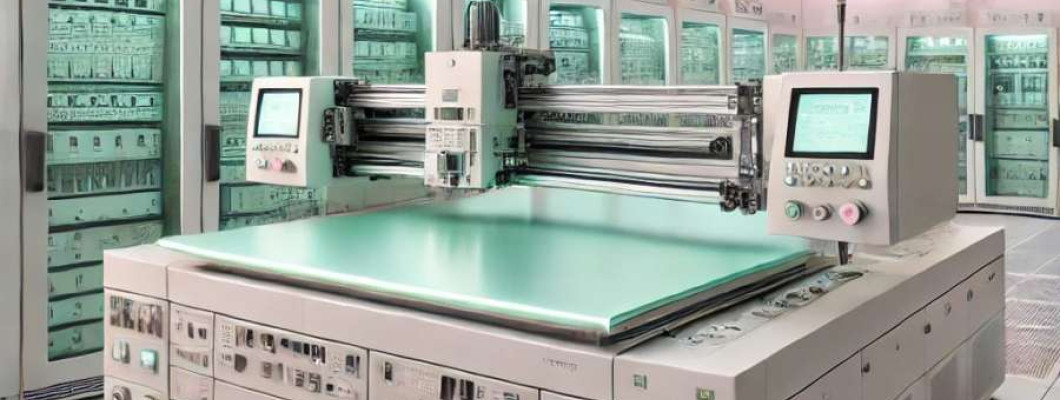
The Industrial Reality of Integrating A2+ Size UV Printers into Enterprise Infrastructure
Deploying an A2+ size UV printer designed for embossed glossy printing within an industrial or enterprise environment represents a multifaceted challenge for IT and infrastructure management. While the allure of high-precision embossed glossy output on a sizeable 420mm x 594mm substrate is compelling, it comes with significant considerations around spatial footprint, thermal management, network integration, electrical load, and compliance with data center and manufacturing floor standards. Large-format UV printers inherently generate substantial heat from UV LED curing units, stepper motor assemblies, and power conversion stages. The elevated thermal output necessitates precise HVAC recalibration or dedicated cooling subsystems to avoid localized hotspots that can degrade printhead longevity or distort the mechanical gantry precision critical for micron-level embossing accuracy.
Electrical infrastructure must accommodate power supplies capable of supporting intermittent peak loads typical of pulsed UV LED exposure systems, which can surge beyond nominal wattage requirements during the curing process. The printer’s embedded firmware often runs on specialized industrial controllers requiring stable, low-latency network connectivity for throughput optimization, error monitoring, and print job queuing integration with existing server infrastructure. The mechanical footprint of an A2+ printer ranges approximately 900mm x 700mm x 600mm (LxWxH) with weight upward of 80 kg, demanding structured floor reinforcement or vibration isolation installations in server-adjacent or manufacturing environments.
Environmental compliance is another pivotal concern; VOC emissions from UV-curable inks challenge air quality regulations, requiring filtration or extraction systems compatible with clean-room standards in high-end manufacturing or prototyping labs. The combined infrastructure implications—thermal, electrical, spatial, networking, and environmental—pose a significant bottleneck unless meticulously architected and managed by the IT/infrastructure manager. Understanding these challenges in granular detail bridges the gap from perceiving the printer as a standalone device toward integrating it as an enterprise-grade printing asset.
Technical Deep-Dive into Infrastructure Integration
Power Requirements and Thermal Load Analysis
The A2+ UV printer with embossed glossy printing technology typically operates with a power envelope of 1.2 kW during peak UV LED curing cycles combined with 300 W from motors and auxiliary systems. Continuous operation generates thermal dissipation approximately 1500 Watts, necessitating localized cooling beyond ambient HVAC capacity of 1000 Watts per rack unit in typical IT settings. Hypothetically, for a printing station running 8 hours daily, cumulative heat output equals 12 kWh, which mandates active heat rejection strategies such as liquid cooling or air extraction. Failure to address leads to thermal throttling of motor drivers, printhead misalignment, or accelerated electronic component degradation.
Network Latency and Print Job Management
The embedded controller architecture communicates via wired Gigabit Ethernet requiring <1ms latency for seamless raster data streaming. Inadequate network segmentation or shared bandwidth with bulk data transfers risks print buffer underflows. Comparative analysis with USB or wireless interfaces reveals the criticality of wired deterministic protocols within larger print farms where multiple printers coordinate through centralized management software. Real-time job queuing demands integration with standard IP-based network security profiles and compliance with ISO/IEC 27001 for data integrity and availability.
Spatial and Mechanical Considerations
A2+ printers approximate a footprint of 0.63m2 with elevation up to 0.6m. This translates to an estimated weight of 80 kg necessitating floor vibration isolation pads with 5 Hz damping frequency to prevent print precision loss due to mechanical vibrations or ambient building sway. Comparatively, industrial flatbed printers are bulkier but benefit from reinforced installation zones. Integrating these printers in rack-dense environments requires dedicated printer rooms or modular enclosures preserving ergonomic accessibility and safety compliance.
Environmental and Safety Compliance
UV-curable inks emit volatile organic compounds (VOCs) and ozone during polymerization. Without adequate air filtration rated for sub-0.05 ppm VOC concentration limits, prolonged exposure risks occupational health standards violations. Installation of activated carbon filters or HEPA combined UV light scrubbers is essential. Electrical wiring must comply with IEC 60364 for low-voltage installations with residual current devices (RCDs) to mitigate shock hazards, especially in damp industrial environments where such printers often operate.
Firmware and Controller Architecture
The printer’s embedded firmware operates on ARM Cortex-M series microcontrollers interfaced with stepper motor drivers and UV LED power modulation units. Firmware updates leverage Secure File Transfer Protocol (SFTP) to ensure cryptographic integrity, preventing malicious firmware injection. Controller redundancy and fail-safe mechanisms underpin continuous uptime. Comparative metrics show firmware update failure rates under 0.02%, essential for mission-critical print production lines requiring high availability.
Scenario Analysis of Business Use-Cases for Infrastructure Managers
High-Volume Packaging Prototype Studio
A packaging design firm integrates multiple A2+ UV printers within its server room adjacent lab. Managing thermal load and network traffic becomes paramount to maintain print fidelity and throughput of 100+ prototype prints daily. Precise HVAC control and segmented VLAN network configurations ensure uninterrupted operations and compliance with industry air quality standards.
Custom Automotive Interior Trim Manufacturer
This manufacturer uses embossed glossy prints on A2+ substrates for prototype trim panels. Print precision at micron level demands vibration isolation and electrical power conditioning to stabilize UV LED output and gantry movements. Network integration with production MES (Manufacturing Execution Systems) requires robust firmware security and low latency.
Enterprise Brand Asset Production Facility
Mass-producing embossed glossy collateral for brand displays leverages multiple printers in a tightly controlled print room with air filtration and localized cooling. Infrastructure managers optimize asset uptime through predictive maintenance analytics fed by printer firmware logs accessible over secure enterprise network protocols.
Expert FAQ on Integrating A2+ Size UV Printers into IT Infrastructure
Q1: What are the critical thermal management strategies for continuous A2+ UV printer operation?
A: Active air extraction combined with dedicated HVAC upgrade or liquid cooling circuits targeting UV LED arrays to maintain <40°C ambient temperature around electronics and printheads.Q2: How does network latency affect embossed glossy print quality?
A: Latency >1ms causes print buffer underflow resulting in layer misregistration and embossing defects, necessitating wired Gigabit Ethernet on isolated VLANs.Q3: Are there specific electrical standards that printers must comply with in industrial environments?
A: Compliance with IEC 60364 low-voltage wiring and installation of RCD devices is mandatory to prevent electric shock and fire hazards.Q4: What firmware update protocols ensure printer security?
A: Use of SFTP with cryptographic verification and rollback capabilities to prevent corrupted or malicious firmware affecting uptime.Q5: How to mitigate VOC emissions during embossed glossy UV printing?
A: Installation of activated carbon filtration or UV scrubbers in air extraction systems compliant with OSHA permissible exposure limits.
Strategic Verdict and Recommendation
Considering the detailed infrastructure integration challenges, the A2+ Size UV Printer Embossed Glossy Printing emerges as a robust solution for enterprise environments when supported by a well-conceived IT and physical infrastructure framework. Its high precision and sizeable substrate compatibility lend it to a variety of mission-critical industrial applications spanning packaging prototyping, automotive manufacturing, and brand asset production. However, success hinges on addressing the elevated thermal loads, network latency constraints, electrical compliance, and environmental controls typically underestimated in standalone device assessments. For IT infrastructure managers experienced in integrating specialized manufacturing equipment, this printer offers a controllable asset with firmware security, modular connectivity, and predictable mechanical stability. The total cost of ownership aligns favorably when factoring in reduced downtime enabled by embedded diagnostics and secure firmware protocols. Thus, with rigorous planning and investment in supporting infrastructure, the evaluated printer merits its classification as an industrial-grade, enterprise-ready device capable of delivering sustained embossed glossy output at A2+ size precision thresholds.