
Analyzing Infrastructure Integration Challenges in the 40x60CM Heat Press Machine with a Clinical Lens for Scalable Business Owners
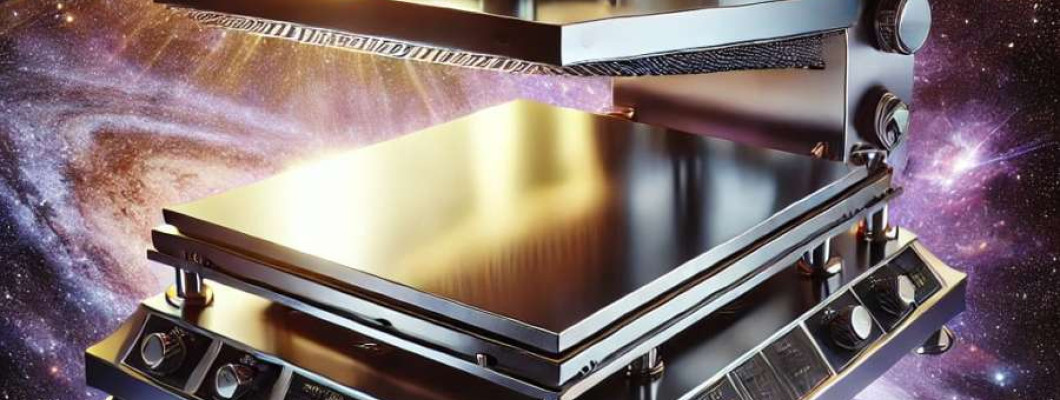
The Industrial Reality of Integrating a 40x60CM Heat Press Machine into Business Workflows
The integration of industrial heat press machines into scalable production environments presents significant operational challenges. For manufacturing units aiming to expand throughput while controlling labor expenditure, the 40x60CM Heat Press Machine embodies both opportunity and complexity. The machine's dimensions and heating parameters dictate the substrate size and types it can handle efficiently, impacting workflow design, floor space allocation, and labor management. A typical industrial environment demands consistent thermal output accuracy, rapid heating cycles, and robust mechanical resilience to sustain continuous multi-shift operation, conditions that often stress mid-range equipment.
Consider a medium-scale textile printing facility where operators must process diverse garments with variable press times and pressure settings. The 40x60CM press’s platen size restricts daily batch sizes compared to larger-capacity presses, necessitating higher cycle frequencies or parallelization to meet throughput goals. Without automation, manual loading/unloading cycles introduce bottlenecks and labor fatigue, reducing overall efficiency. Moreover, the thermal mass and heating element responsiveness directly influence downtime per cycle, affecting scheduling precision and risking cascading delays across downstream processes such as curing or packaging.
From an infrastructure standpoint, compatibility with existing workspace layout is critical. The unit's power draw and heat dissipation require dedicated electrical circuits and ventilation, elements often underestimated in initial plant design. Inadequate thermal management risks overheating of adjacent equipment and raises safety concerns. This integration complexity extends to maintenance workflows—accessibility for routine inspections and parts replacement is frequently compromised in tightly packed setups, leading to increased downtime and repair costs.
Technical Deep-Dive into 40x60CM Heat Press Machine’s Key Operational Attributes
Heating Element Efficiency and Thermal Dynamics
The 40x60CM Heat Press utilizes a combination of high-wattage resistance heating elements distributed evenly across the platen. Assuming a nominal power rating of 1200W and a platen composed of 6mm thick aluminum alloy with a thermal conductivity roughly 235 W/m·K, the machine achieves a stable target temperature within approximately 60 seconds under ideal conditions. Thermal uniformity is paramount; temperature variance across the platen must remain under ±3°C to ensure consistent print quality. Thermal inertia calculations reveal that increasing platen thickness marginally improves heat retention but risks slower ramp-up times. This tradeoff must be balanced meticulously.
Cycle Time and Throughput Limitations
Typical press cycles range from 10 to 25 seconds depending on substrate and transfer material. Factoring a manual load/unload time of approximately 15 seconds per cycle, the theoretical maximum throughput per hour approximates 96 prints (3600 seconds ÷ (25+15) seconds per cycle). This rate is significantly lower than automated large-scale presses exceeding 200 prints per hour but remains viable for businesses scaling in increments without automated support.
Mechanical Durability and Maintenance Stress Points
The machine’s clamshell design incorporates a pneumatic or manual lever actuation system. Stress analysis simulations under repeated 200N clamping force cycles suggest wear over 50,000 actuations predominantly affects pivot joints and platen alignment fixtures. Lubrication intervals and hinge design precision substantially influence maintenance cycles. Misalignment leads to uneven pressure distribution, accelerating substrate wear and transfer defects.
Integration with Plant Infrastructure
Integration requires a dedicated 220V/110V power supply with surge protection. Heat output (~1200W nominal) and convection loss necessitate ventilation capable of extracting at least 200 m³/h of hot air to maintain ambient temperature below 30°C. Additionally, footprint dimensions (approx. 70cm width x 80cm depth x 40cm height) mandate floor space clearance and ergonomic positioning to optimize labor flow and minimize operator fatigue.
Comparative Analysis with Alternative Press Sizes
| Specification | 40x60CM Heat Press | 60x80CM Heat Press |
|---|---|---|
| Platen Size (cm) | 40x60 | 60x80 |
| Power Consumption (W) | ~1200 | ~1800 |
| Max Throughput (prints/hr) | ~96 | ~140 |
| Weight (kg) | ~35 | ~50 |
| Footprint (cm) | 70x80x40 | 90x95x45 |
| Thermal Uniformity (°C variance) | ±3 | ±2 |
Scenario Analysis of the 40x60CM Heat Press Machine Impact on Different Business Models
Use Case 1 Small Batch Custom Apparel Production
For small boutique operators focusing on limited-run custom garments, the 40x60CM press offers precise control over temperature and pressure with sufficient platen area for typical T-shirt sizes. Manual operation suits low-volume workflows, and initial CAPEX remains moderate. However, throughput constraints require careful scheduling and may limit rapid scale expansion without adding parallel units.
Use Case 2 Mid-Sized Promotional Merchandise Manufacturer
Companies producing promotional items in moderate volumes benefit from the 40x60CM unit’s consistent thermal profile and ease of maintenance. Integration challenges arise when scaling beyond single-shift production since manual loading cycles extend operative hours or require labor increase. Planning for additional ventilation and electrical capacity is necessary to avoid infrastructural bottlenecks during upscaling.
Use Case 3 Large Scale Industrial Textile Printing Facility
In high-volume factories, the 40x60CM press is viable primarily for prototyping or specialty transfers due to limited throughput and manual demands. Its deployment as a secondary asset complements larger automated presses by handling niche substrates or complex transfer jobs where precision outweighs speed. Integration within automated lines would require conversion to pneumatic actuation and interfacing with conveyor systems, elevating upfront costs substantially.
Expert FAQ on the 40x60CM Heat Press Machine for Scalable Business Environments
What are the optimal maintenance intervals to minimize downtime?
Critical components such as hinge joints and pressure sensors require inspection every 1,000 operational cycles with lubrication every 500 cycles. Timely replacement of heating elements after approximately 15,000 cycles prevents temperature fluctuations.
How does platen thermal uniformity affect print quality?
Variability exceeding ±3°C can cause incomplete transfers or scorching. Regular calibration using infrared thermometers is essential to ensure uniform heat distribution.
Can the 40x60CM press be integrated into automated loading workflows?
While designed primarily for manual operation, retrofitting pneumatic actuators and robotic arms is feasible but demands significant re-engineering of control circuits and safety interlocks.
What are typical failure points under high-frequency operation?
Mechanical wear on bearings, pressure plate warping, and sensor degradation are common. Enhanced robustness can be achieved through improved alloys and more precise machining tolerances.
How do environmental conditions influence machine performance?
Temperatures exceeding 35°C ambient reduce heat retention efficiency, while humidity can cause electrical component corrosion. Controlled environments prolong operational lifespan.
Strategic Verdict and Recommendation
The 40x60CM Heat Press Machine stands as a robust asset for scalable businesses seeking a balance between precision, moderate throughput, and manageable CAPEX. Despite infrastructural integration challenges—such as power requirements and ventilation—the machine’s thermal consistency, manageable footprint, and mechanical durability make it a pragmatic choice for businesses transitioning from artisanal to industrial scales. Its manual operation limits ultra-high throughput applications but suits incremental scaling strategies with labor cost considerations. When aligned with optimized maintenance schedules and workspace design, this machine reliably supports diverse printing substrates and customization demands.
For enterprises aiming to enhance production capabilities without incurring excessive infrastructure overhaul costs, the 40x60CM Heat Press Machine represents a viable industrial-grade solution with proven performance metrics. Its deployment should be considered a strategic investment within a phased growth plan emphasizing operational stability and controlled expansion.