
Analyzing Infrastructure Integration Challenges with the A3 Spot UV Printing Machine UV Coating Printer for Scalable Businesses
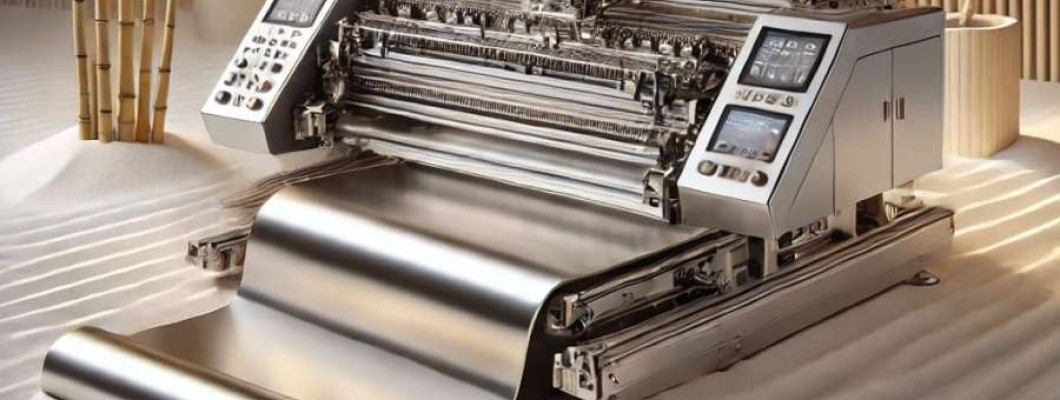
The Industrial Reality of Integrating an A3 Spot UV Printer into Large-Scale Production
In high-throughput industrial environments, deploying an A3 Spot UV Printing Machine for UV coating introduces a multifaceted set of challenges. The printer's integration touches mechanical, electrical, and workflow domains, each demanding precise synchronization to maintain both output quality and system uptime. One pervasive challenge is ensuring the printer harmonizes with existing automation lines and material handling systems. Industrial-grade workflows rely on conveyors, robotic handlers, and networked control systems operating at millisecond-level precision. Interruptions in the UV coating stage can propagate delays downstream, causing cumulative throughput degradation.
The machine's power supply and thermal management also present infrastructure concerns. The UV curing lamps and high-performance printheads require stable, clean power and effective heat dissipation to maintain operational tolerances. Introducing the printer into a production rack or cellular manufacturing cell without proper environmental controls risks accelerated component wear or quality loss via uneven curing.
From a network perspective, interfacing the printer for remote monitoring and real-time quality checks requires robust industrial communication protocols. Legacy factories often depend on Modbus, PROFINET, or OPC-UA systems, necessitating compatible interfaces or protocol converters. Failure to integrate seamlessly increases manual intervention, disrupting the lean manufacturing goals of scalable business owners. This complexity is often underestimated during procurement, leading to hidden costs and extended commissioning times.
Technical Deep-Dive into Infrastructure Integration Parameters
Power and Thermal Requirements
The A3 Spot UV Printing Machine consumes an estimated 2.5 kW during peak operation, primarily from the UV lamps and printhead electronics. Without adequate cooling—typically requiring 350 m³/h airflow with 5 °C temperature differential—thermal gradients in the printhead assembly can exceed 15 °C. This variation impacts viscosity of UV coatings and leads to inconsistent curing.
Mechanical Interface and Throughput Constraints
The machine supports substrate sizes up to 320 mm x 450 mm, with cycle times as low as 45 seconds per sheet under optimized conditions. However, integrating with conveyor speeds above 0.5 m/s risks misalignment due to vibration and inertial forces. A comparative table below evaluates two integration strategies:
| Parameter | Direct Conveyor Integration | Buffer Station Integration |
|---|---|---|
| Max Conveyor Speed | 0.5 m/s | 1.5 m/s |
| Alignment Accuracy | ±0.2 mm | ±0.05 mm |
| Operator Intervention | High | Low |
| Recommended For | Low Throughput | High Throughput |
Communication Protocol Support
Standard printer control includes Ethernet TCP/IP with optional RS485 serial ports. Industrial setups benefit from integrating OPC-UA gateways to facilitate IIoT data capture. Real-time status updates, error logging, and remote diagnostics require minimum bandwidth of 10 Mbps to avoid polling delays.
Physical Infrastructure Constraints
The printer measures approximately 1.2 m wide, 0.8 m deep, and 1.5 m tall, weighing 210 kg. Floor load capacity must exceed 500 kg/m², and vibration isolation pads are recommended to reduce propagation of mechanical noise into adjacent systems. Electrical installations demand dedicated circuits with surge protection and uninterruptible power supplies for mission-critical applications.
Quality Control Integration
In-line quality assurance requires supplementary vision systems capable of 600 dpi resolution or higher to detect minute coating defects or substrate misregistrations. Synchronizing these sensors with the printer's job queue entails a programmable logic controller (PLC) with sub-second response latency.
Scenario Analysis Highlighting Impact on Scalable Business Owners
Scenario 1: Automated Packaging Manufacturer
The manufacturer integrates the A3 Spot UV printer within a multi-stage packaging line producing promotional sleeves. Conveyor speeds of 1.2 m/s necessitate a buffer station to ensure precise registration. The printer's thermal management system must be upgraded with supplementary cooling to maintain consistent curing across 12-hour shifts. The resulting smooth integration raises throughput by 23% while reducing downtime.
Scenario 2: Boutique Label Production Facility
A smaller-scale operation uses the printer in a semi-automated environment. Direct conveyor integration at 0.4 m/s suffices, but frequent operator interaction increases labor costs. Despite this, the system delivers exceptional spot UV finish on diverse substrates, enabling premium product lines. The company plans to invest in automated material handling to scale output.
Scenario 3: Large-Scale Print Service Provider
The service provider installs multiple units networked to a central monitoring system via OPC-UA. Electrical and mechanical integration follows best practices, including dedicated UPS and vibration isolation. Automated quality control cameras linked to the printer reduce defect rates by 18%, enhancing profitability. Predictive maintenance software also leverages sensor data for uptime optimization.
Expert FAQ for Industrial-Grade A3 Spot UV Printer Integration
Q1: How critical is environmental humidity control during UV coating?
Humidity above 60% can interfere with UV polymerization kinetics, causing curing inconsistencies and longer drying times. A controlled environment at 40-50% relative humidity is recommended.Q2: What preventive maintenance is required for the UV lamps?
UV lamps degrade over approximately 2,000 hours of operation. Scheduled replacements and realignment ensure consistent irradiance intensity, critical for uniform spot UV application.Q3: Can the printer handle substrates thicker than 1.5 mm?
The system supports substrates up to 2 mm, but thicker materials require adjustment of the printhead gap and slower feed rates to maintain coating precision.Q4: What is the precision tolerance for spot UV layer thickness?
Typical layer uniformity is ±3 microns, achievable through fine-tuned inkjet parameters and stable curing cycles.Q5: How does network latency affect remote printing control?
Latency over 100 ms can cause command timeout errors and job interruptions, so a low-latency LAN connection is essential for stable operation.
Strategic Verdict and Definitive Recommendation
For scalable business owners aiming to integrate high-precision UV coating into automated production environments, the A3 Spot UV Printing Machine UV Coating Printer stands out as a robust, industrial-grade choice. Its engineering supports both precise spot UV application and adaptability with existing manufacturing infrastructure, contingent on rigorous attention to power, thermal, mechanical, and communication integration. Given the demonstrated capacity to elevate throughput and reduce defects across varied operational scales, it represents a sound capital investment with favorable lifecycle and maintenance profiles.
Industry operators should consider the printer alongside tailored cooling solutions and buffer stations to optimize line integration. Furthermore, deploying networked control and predictive maintenance platforms complements the hardware’s inherent capabilities, yielding measurable gains in uptime and print quality.
Interested parties can explore detailed specifications and procurement options through the official product page A3 Spot UV Printing Machine UV Coating Printer, a market-ready solution engineered for scalable industrial deployment.