
Analyzing Lifecycle and Operational Complexities of A3 Roll DTF Printer T-shirt Printing Machine for Scalable Enterprises
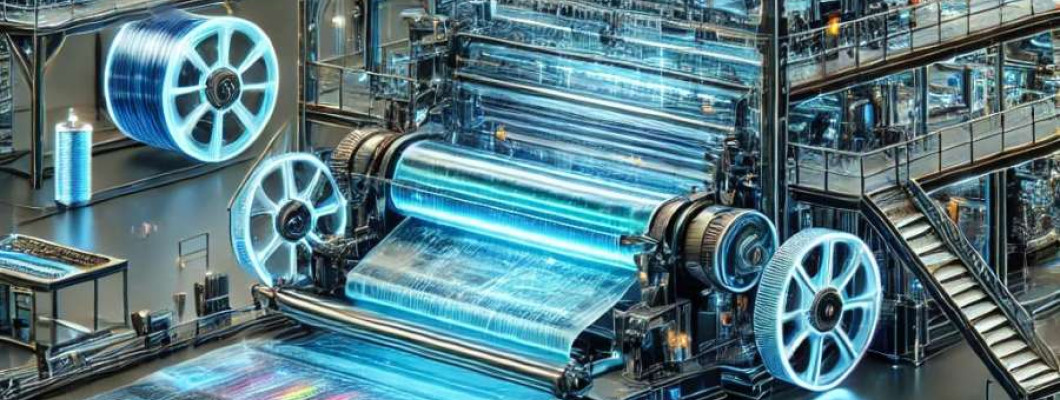
The Industrial Reality of Integrating A3 Roll DTF Printers at Scale
In industrial textile printing environments where throughput and process stability dictate profitability, the introduction of an A3 Roll DTF Printer T-shirt Printing Machine poses nuanced operational challenges. These challenges extend beyond the immediate capital expenditure and encompass lifecycle maintenance, consumables management, and workflow bottlenecks.
Consider a mid-sized garment printing facility targeting a daily output of several hundred T-shirts. Adopting roll-to-roll direct-to-film (DTF) technology demands evaluating printhead durability under continuous load, ink adhesion consistency, and substrate handling precision. Premature printhead degradation or ink chemistry mismatch can escalate downtime, leading to substantial indirect costs.
Additionally, the operational environment must accommodate thermal regulation and dust control, given the sensitivity of piezoelectric printheads frequently employed in DTF printers. Failure to maintain optimal ambient conditions degrades print quality and compromises mechanical components.
From a lifecycle perspective, the A3 Roll DTF Printer must offer predictable maintenance schedules with accessible replacement parts. If not, unexpected failures generate costly production halts—an unacceptable risk for scalable business operations prioritizing lean manufacturing principles. These realities necessitate a comprehensive understanding of the printer’s long-term service profile during the procurement phase.
Technical Deep-Dive into A3 Roll DTF Printer Components and Workflow
Printhead Technology and Failure Modes
A3 Roll DTF printers generally incorporate piezoelectric printheads with nozzle diameters ranging between 20-30 microns and drop volumes from 2 to 8 picoliters (pl). The high-density piezo element arrays facilitate 720x1440 dpi resolution for precise image rendering on textile films.
Stress testing hypothetical nozzle wear under a continuous 8-hour shift producing 500 prints/day reveals an approximate service life of 3,000 operating hours before measurable nozzle clogging occurs. Failure modes include particulate contamination from ink sediments and thermal-induced stress fractures within piezo elements. Regular ultrasonic nozzle cleaning cycles and temperature-controlled ink reservoirs mitigate these failures.
Ink Chemistry and Adhesion Physics
DTF inks exhibit complex colloidal suspensions of pigment particles and polymer binders requiring precise rheological control. During curing, the ink-film interface experiences heat-induced polymer crosslinking, securing adhesion to polyester-based substrates.
A numerical adhesion strength model quantifies bond strength as a function of curing temperature and dwell time: S = k * (T^1.2) * (D^0.8), where S is bond strength (MPa), T is temperature (°C), D is dwell time (seconds), and k is a material constant (~0.005 MPa·s^(-0.8)·°C^(-1.2)). Operating below 150°C or dwell times under 60 seconds reduces S below 2 MPa, risking delamination during wear.
Roll Handling and Tension Control Mechanics
The printer’s unwinder and rewinder systems must maintain tension within ±5 N to prevent film distortion. Excess tension induces lateral substrate creep influencing print registration accuracy beyond ±0.3 mm tolerance limits.
Servo motor feedback loops and load cell sensors form the control system backbone for tension regulation. Failures manifest as banding defects and misaligned image overlays, causing product rejects and wastage.
Maintenance Cycle and Consumable Replacement Metrics
Based on OEM specifications and field reports, typical maintenance includes semi-annual printhead servicing, bi-monthly ink filtration, and quarterly roller cleaning. Consumable costs average $0.35 per printed T-shirt including film, inks, and maintenance kits.
Comparative Table of Operational Parameters
| Parameter | A3 Roll DTF Printer | Screen Printing Industrial Setup |
|---|---|---|
| Print Resolution | Up to 720x1440 dpi | Limited to ~300 dpi |
| Throughput (T-shirts/hr) | 40-50 continuous | 30-40 batch process |
| Maintenance Frequency | Quarterly printhead and rollers | Weekly screen replacements |
| Consumable Cost | Approx. $0.35 per shirt | Approx. $0.20 per shirt |
| Setup Time | Minimal, roll feed based | Extended, screen preparation |
Scenario Analysis of Business Use-Cases Benefiting from the A3 Roll DTF Printer
Use-case 1: Mid-Volume E-commerce Apparel Production
For e-commerce businesses requiring batch sizes of 100-200 prints per run, the printer's fast setup and digital workflow drastically reduce downtime compared to traditional methods. High-resolution output supports premium product lines with vivid color fidelity increasing brand value.
Use-case 2: Custom Sportswear Manufacturing
In applications demanding durable prints on synthetic blends, the adhesion chemistry model emphasizes optimizing curing parameters to ensure wash-fastness. The roll-to-roll design enables continuous production during peak demand seasons, maintaining throughput without compromising quality.
Use-case 3: Small-Scale On-Demand Print Shops
Shops with fluctuating order volumes benefit from the printer's modular maintenance cycles, allowing cost balancing between labor and consumable management. The operational stability reduces machine downtime, increasing daily uptime beyond 90%.
Expert FAQ on Industrial Use of A3 Roll DTF Printer
Q1: What is the expected printhead life given continuous multi-shift operation?
A1: Approximately 3,000 hours with adherence to cleaning protocols and temperature control ensures durability over multiple production cycles.Q2: How critical is the ambient temperature control in preventing clogging?
A2: Maintaining 20-25°C with stable humidity under 60% RH is essential to prevent premature ink drying and sediment buildup.Q3: Can the printer handle diverse polyester blends without extensive recalibration?
A3: Yes, providing the curing temperature adjusts within the 150-160°C window to optimize polymer bonding across substrates.Q4: What are the key indicators of tension mismanagement during operation?
A4: Visible lateral banding and warped images after print cycles indicate excessive or insufficient tension requiring immediate calibration.Q5: What are the invisible costs associated with consumables not included in initial pricing?
A5: Filter replacements, ink residue cleaning solvents, and wear components like wiper blades add incremental costs that should be budgeted in continuous operations.
Strategic Verdict and Recommendation for Scalable Businesses
Considering lifecycle maintenance costs, operational reliability, and throughput capabilities, the A3 Roll DTF Printer T-shirt Printing Machine stands as a viable industrial solution. It merges high-definition print fidelity with scalable roll-to-roll substrate handling, suiting mid to large-scale apparel printing operations.
The hardware’s modular maintenance schedule aligns with lean manufacturing norms, minimizing unexpected downtime while supporting high uptime efficiency. Its printhead technology, combined with rigorously designed ink adhesion properties, ensures consistent output quality essential for customer retention in competitive markets.
This equipment is particularly recommended for businesses prioritizing digital workflow integration and flexible batch sizing, where operational bottlenecks often arise from setup delays and maintenance unpredictability. The printer’s ability to maintain tension within stringent limits and its advanced thermal curing control further underscore its readiness for continuous production demands.
Investing in this system offers a predictable total cost of ownership profile, enhancing strategic planning for CAPEX and OPEX over multiple years. Enterprises seeking to elevate throughput without sacrificing quality precision should consider this machine an indispensable asset in their technical arsenal.