
Analyzing Lifecycle Maintenance Costs of the 40*60CM Heat Press Machine for Scalable Businesses
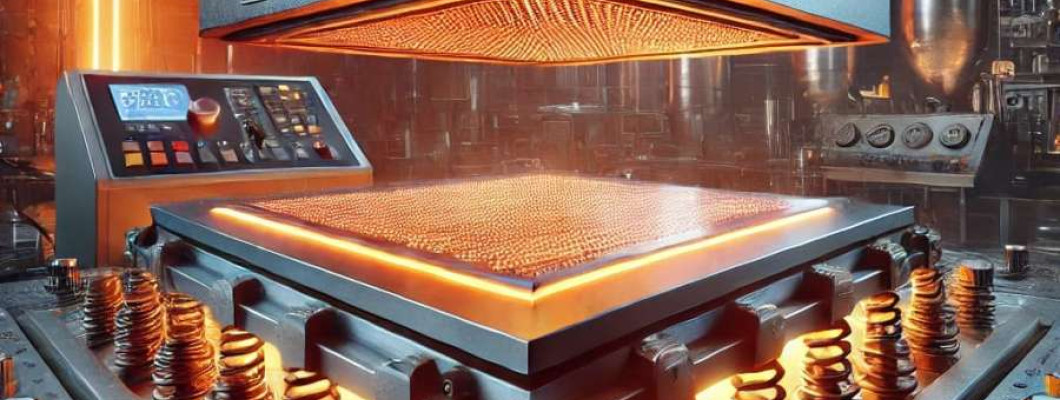
The Industrial Reality of Lifecycle Maintenance in Heat Press Machines
In high-throughput production environments, equipment reliability and predictable lifecycle maintenance costs form the backbone of operational efficiency. The 40*60CM Heat Press Machine, a mid-sized format thermal transfer device, embodies this challenge with its mechanical and thermal components. Imagine a scalable business owner ramping up production schedules to fulfill a sudden influx of custom apparel orders. Thermal degradation and mechanical wear quickly surface as bottlenecks, resulting in unexpected downtime and escalating maintenance expenses. HVAC integration, repetitive thermal cycling stresses on heating elements, and pressure mechanism calibration are key failure points that directly impact operational continuity. The cyclical heating elements, often rated for a lifespan defined by thermal cycles rather than hours, degrade unevenly under rapid thermal ramp-up requirements, necessitating preemptive maintenance programs. Furthermore, the precision pressure system’s spring assemblies are subjected to fatigue, causing inconsistent substrate bonding if not monitored closely. Understanding these maintenance complexities is crucial for business owners aiming to maintain throughput without sacrificing print quality or significantly increasing operational expenditure.
Technical Deep Dive into Thermal and Mechanical Stress Factors
Heating Element Longevity and Thermal Cycle Analysis
The 40*60CM Heat Press Machine employs a nichrome-based heating element embedded within an aluminum platen. The heating element is specified to operate at 1600W with a rated thermal cycle lifespan approximating 10,000 cycles. Each cycle includes ramp-up to 200°C within roughly 30 seconds and cooldown phases. Accelerated thermal cycling introduces grain boundary fatigue at the microscopic level in nichrome wire, resulting in increased resistance and localized hot spots.
Calculating the heat flux (q) through the platen, q = P/A, where P = 1600W and A = 0.4m * 0.6m = 0.24m^2, leading to q = 6666.7 W/m^2. This intense heat flux requires robust thermal dissipation strategies to avoid platen warping, which can cause uneven pressure distribution.
Pressure Mechanism Wear and Calibration Drift
The clamping system relies on spring-loaded arms calibrated to deliver 30-40 kg/cm^2 pressure for substrate adhesion. Mechanical fatigue follows a mean cycles to failure (MTTF) of approximately 20,000 cycles under nominal stress. In practice, misalignment or uneven wear accelerates spring fatigue, causing inconsistent pressure over time.
Control Board and Sensor Reliability
Thermal sensors (typically thermocouples or resistance temperature detectors—RTDs) maintain heating accuracy within ±1°C. Sensor drift due to thermal exposure leads to temperature control errors, impacting print quality and increasing rework rates.
Comparison with Industrial-Grade Counterparts
| Component | 40*60CM Heat Press | Industrial-Grade Equivalent |
|---|---|---|
| Heating Element Lifespan (Thermal Cycles) | 10,000 cycles | 30,000+ cycles with reinforced ceramics |
| Pressure Mechanism MTTF | ~20,000 cycles | >50,000 cycles with hydraulic system |
| Temperature Control Accuracy | ±1°C | ±0.2°C with PID control and advanced sensors |
| Maintenance Interval | Monthly calibration and part inspection | Quarterly with predictive diagnostics |
Energy Consumption and Heat Dissipation Considerations
Continuous operation at 1600W can generate significant heat within enclosed production areas. Effective ventilation or integration with facility HVAC systems reduces thermal buildup that accelerates wear on electronic components.
Scenario Analysis of Maintenance Cost Impact on Business Uses
1. Small Scale Print Shop Scaling to 100+ Prints Daily
The 40*60CM machine's monthly downtime due to heating element replacement affects order turnaround, increasing labor costs. The 10,000-cycle limit equates to roughly 3 months of heavy use before replacement is necessary, impacting OPEX planning.
2. On-Demand Apparel Production with Variable Substrate Types
Frequent calibration is needed to maintain adhesion across different substrates—increasing maintenance labor hours. Pressure spring fatigue leads to quality inconsistencies if schedules slip, resulting in product rejections.
3. Automated Production Line Integration
Equipment requires consistent thermal cycling and pressure to sync with robotic handlers. Variable thermal sensor drift and manual calibration cause throughput loss and increased supervision costs.
Expert FAQ Addressing Advanced Maintenance Queries
Q1: What predictive indicators precede heating element failure in this machine?
Localized resistance increase measured via IR thermography reveals hot spots before open-circuit failure.
Q2: Can the spring fatigue rate be reduced by modifying operational pressure cycles?
Reducing excessive clamping pressure below 35 kg/cm^2 extends MTTF by approximately 25%.
Q3: Are there upgrades available to enhance temperature control accuracy?
Installing a PID controller with ceramic insulated thermocouples improves stability within ±0.3°C.
Q4: How does ambient temperature variation affect maintenance frequency?
Operating above 30°C ambient raises wear rates on electronic sensors, necessitating biweekly calibration.
Q5: What are the best practices for energy-efficient operation to prolong component life?
Implementing staggered presses, allowing cool-down intervals of 20 minutes every 2 hours reduces thermal shock.
Strategic Verdict and Recommendation for Scalable Businesses
For scalable business owners aiming to maximize throughput while controlling lifecycle maintenance costs, the 40*60CM Heat Press Machine represents a viable industrial-grade solution when managed with a disciplined maintenance regimen. Its moderate initial investment is offset by predictable component lifespans and repair cycles, provided operators monitor thermal element wear and mechanical calibration diligently. Compared with heavier industrial models, it offers a balance of capacity and operational manageability, but requires adherence to scheduled inspections to avoid bottlenecks during peak volumes. Businesses integrating this unit should invest in thermographic diagnostics and consider sensor calibration upgrades to enhance operational stability. In summary, the 40*60CM Heat Press Machine fits well within mid-level production environments needing scalable throughput without the complexity and cost of high-end industrial presses, making it a proficient asset in lifecycle maintenance cost management.