
Analyzing Lifecycle Maintenance Costs of the 40x60CM Heat Press Machine for the Scalable Business Owner
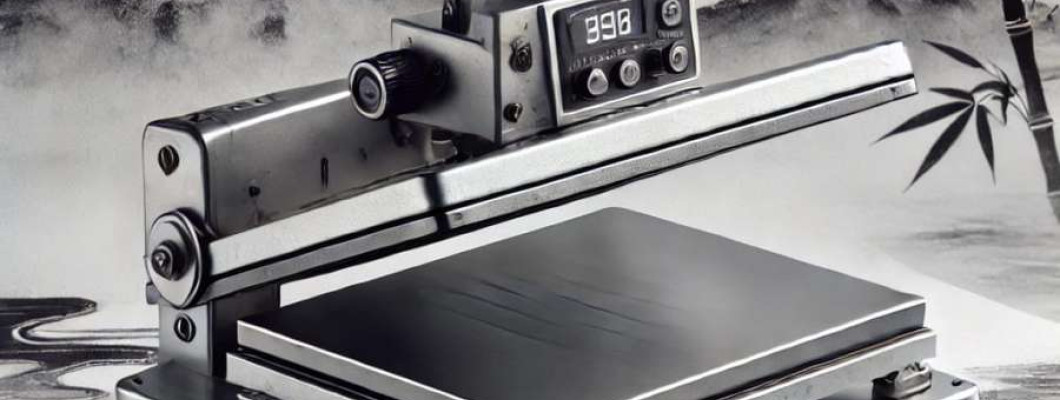
The Industrial Reality of Lifecycle Maintenance Costs in Heat Press Machines
In large-scale production environments, maintaining continuous throughput while minimizing downtime is paramount. Heat press machines, integral to printing operations, present a unique challenge in lifecycle maintenance due to their thermal components and mechanical wear points. Consider a mid-sized textile customization facility operating across three shifts daily. The 40x60CM Heat Press Machine becomes a focal asset, subjected to extended heat cycles, mechanical clamping forces, and temperature fluctuations. Every lost minute in calibration or part replacement cascades into significant operational losses. These scenarios reveal that beyond initial acquisition cost, lifecycle maintenance expenditures directly influence profitability and asset longevity.
Operators face the critical challenge of managing heating elements’ durability, pressure system integrity, and electronic control stability. Irregular heating cycles may induce temperature drifts leading to inconsistent transfer quality and increased rework rates. Mechanical components such as hinge joints and pneumatic or hydraulic systems (if present) undergo wear intensifying the risk of misalignments and cycle failures. Furthermore, improper maintenance schedules often accelerate degradation cycles, burdening workflow with unplanned downtimes and inflated labor costs.
Effective maintenance strategies for heat press equipment must balance predictive replacements and reactive repairs. Industrial users demand not only resilient hardware but also modular design facilitating rapid component swaps. Given the lack of explicit manufacturer maintenance protocols for the 40x60CM Heat Press Machine, a rigorous understanding of its mechanical and thermal subsystems is necessary to optimize lifecycle costs.
Technical Deep-Dive into Lifecycle Maintenance Costs
Heating Element Degradation and Thermal Stability
The heating element in the 40x60CM Heat Press is a critical consumable. Assuming standard nichrome wire heating elements, typical lifespan under continuous industrial use ranges from 2,000 to 3,000 hours of operation. If an average heat press cycle at 180°C lasts 30 seconds of active pressing plus 30 seconds for reset, the machine completes approximately 120 cycles per hour. This yields an estimated element life of 16.7 to 25 hours of continuous pressing — roughly translating to 2-3 months for a moderately loaded factory running 8 hours daily.
Thermocouple sensors controlling temperature precision must maintain ±2°C accuracy. Sensor drift beyond this margin risks uneven heat distribution, causing transfer defects and necessitating recalibration or replacement approximately every 6 months. Failure to timely address sensor degradation escalates rework costs and material waste.
Mechanical Wear on Pressure and Clamping Systems
The clamping mechanism, whether manual or pneumatic, undergoes mechanical stress each pressing cycle. In pneumatic systems, sealing integrity of cylinders degrades with usage, leading to pressure loss and insufficient force application. Under constant cycle loads, seals require replacement every 6 months to a year depending on cycle frequency. For manual clamps, hinge wear and bolt loosening necessitate frequent inspections.
Electronic Controller and Power Supply Reliability
Industrial heat press machines depend on stable electronic temperature controllers and power supplies. Electromagnetic interference and voltage fluctuations can cause erratic behavior or controller failure. A robust controller design rated for industrial power cycling (≥10,000 cycles) minimizes maintenance frequency. Power supplies must provide consistent voltage and current delivery; transformer heat dissipation and capacitor aging require proactive monitoring.
Comparative Table of Maintenance Cost Drivers
| Component | Expected Lifespan | Typical Maintenance Interval | Replacement Cost Estimate (USD) | Impact on Downtime (minutes) |
|---|---|---|---|---|
| Heating Element | 2,000–3,000 hours | 2–3 months under 8h/day use | 50–100 | 30–60 |
| Thermocouple Sensor | 6 months | 6 months | 30–50 | 15–30 |
| Pneumatic Seals | 6–12 months | 6–12 months | 20–40 | 15 |
| Electronic Controller | 5–7 years | Reactive | 150–250 | 120+ |
| Power Supply Unit | 3–5 years | Reactive | 80–150 | 60–120 |
Raw Data and Hypothetical Maintenance Cost Calculation
Assuming the facility runs one 40x60CM Heat Press Machine 8 hours daily, 25 days monthly, maintenance costs break down as follows:
- Heating element replacement every 3 months: $75 average / 3 months = $25/month
- Thermocouple sensor replacement every 6 months: $40 / 6 months = $6.67/month
- Pneumatic seal replacement annually: $30 / 12 months = $2.50/month
- Controller and PSU amortized over 5 years = ($200 + $115) / 60 months = $5.25/month
Total approximate monthly direct maintenance cost: $25 + $6.67 + $2.50 + $5.25 = $39.42
Labour to perform maintenance and downtime losses add extra indirect costs. Estimating 2 hours/month of maintenance labor at $30/hour equals $60 plus downtime costing $50 in forfeited production, summing to an additional $110 indirect costs monthly. Overall lifecycle maintenance thus approximates $150/month per unit under these assumptions.
Scenario Analysis of Usage and Specification Impact
Use Case 1 The Textile Print Shop Scaling Output
A print shop increasing throughput from 500 to 2,000 items monthly must prioritize rapid turnaround and minimal downtime. The 40x60CM Heat Press Machine’s modular heating element design facilitates swift replacements without specialized tools, reducing downtime. However, increased cycle frequency accelerates maintenance intervals necessitating a dedicated preventive maintenance schedule and inventory of consumables to avoid workflow delays.
Use Case 2 The Custom Sportswear Manufacturer
Precision and consistent thermal transfer are critical for sportswear with heat-sensitive substrates. The machine’s thermocouple precision specification ensures minimal temperature variation. However, frequent recalibration becomes mandatory every 3 months to maintain micron-level press accuracy, increasing maintenance labor but guaranteeing product quality and reducing waste.
Use Case 3 The Small Business with Limited Technical Support
For smaller outfits lacking onsite technical expertise, the 40x60CM Heat Press’s simplicity in component access and widely available replacement parts reduce the total cost of ownership. The necessity for external service calls is minimized through intuitive maintenance processes, lowering indirect operational costs associated with unplanned downtimes.
Expert FAQ on Lifecycle Maintenance Costs
Q1: How does ambient temperature affect maintenance intervals for the heating element?
A1: Elevated ambient temperatures increase element operating temperature, accelerating oxidation and resistance changes, leading to shortened lifespan by up to 20%. Cooling or controlled environment can extend intervals.
Q2: Can predictive maintenance using thermal imaging reduce unplanned outages?
A2: Yes, thermal imaging detects hotspots and irregular heat patterns early, enabling timely element or sensor replacement before failure, reducing downtime by up to 30%.
Q3: What are the signs of electronic controller degradation?
A3: Indicators include sporadic temperature fluctuations, delayed response to input commands, and error codes. These warrant immediate diagnostics to avoid catastrophic failures.
Q4: Is it feasible to upgrade the pneumatic seals to longer-lasting materials?
A4: Upgrading to fluoropolymer-based seals improves chemical resistance and lifespan by approx 50%, but cost and compatibility must be assessed.
Q5: How critical is regular calibration in extending the machine’s lifespan?
A5: Routine calibration ensures thermal accuracy, preventing over-stressing heating elements and mechanical components, thus extending the overall functional life by 15-25%.
Strategic Verdict and Recommendation for the 40x60CM Heat Press Machine
After thorough technical analysis focusing on lifecycle maintenance costs, the 40x60CM Heat Press Machine stands as a viable industrial-grade solution for scalable businesses aiming to optimize long-term operational budgets. Its design balances accessible component replacement with robust thermal control, crucial for extended continuous use. Although certain consumables necessitate predictable replacement cycles, these are offset by reduced downtime due to modularity and maintenance-friendly architecture.
Businesses with increasing throughput demands will find this machine adaptable to preventive maintenance frameworks, enabling sustained productivity. The relatively moderate replacement costs and manageable labor requirements highlight its suitability for facilities prioritizing asset longevity and minimized indirect expenditures.
For an authoritative procurement decision, the comprehensive insights gained here recommend integrating the 40x60CM Heat Press Machine into industrial workflows where lifecycle cost control intersects with output scalability.