
Analyzing Operational Bottlenecks and Infrastructure Integration of the Smart Coffee Printer Machine for Scalable Businesses
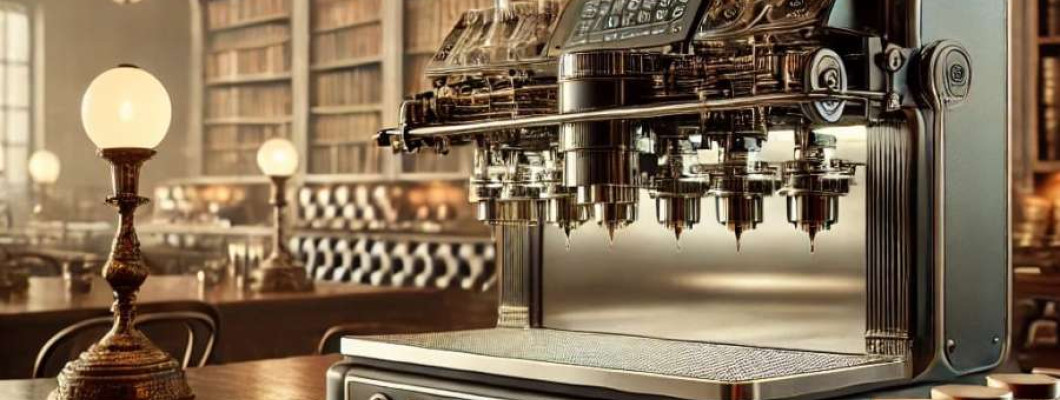
The Industrial Reality Behind High-Volume Smart Coffee Printing
Industrial-scale deployment of coffee printing technology presents a unique challenge, especially when balancing throughput, automation, and labor costs. The Smart Coffee Printer Machine integrates digital precision with the tactile demands of a busy coffee environment. However, in high-throughput scenarios such as large café chains or event catering services, operational bottlenecks surface that require thorough evaluation.
Consider a morning rush in a metropolitan café serving over 200 customers per hour. The key technical challenge beyond print quality is ensuring a consistent cycle time of coffee preparation that includes beverage brewing, temperature stabilization, and the precise application of edible ink patterns. The Smart Coffee Printer requires synchronization with espresso machines and milk frothers to avoid production line stalls. Minor hardware or software misalignments can cascade into significant delays, increasing customer wait times and labor costs.
Moreover, integrating this machine into existing infrastructure demands robust interfacing with point-of-sale systems, supply chain queues for edible ink replenishment, and automated cleaning cycles. These factors, if overlooked, lead to hidden operational downtime and impact overall asset utilization rates. Thus, understanding these bottlenecks is crucial to fully grasping the Smart Coffee Printer's industrial viability.
Technical Deep-Dive Into Hardware and Workflow Integration
Printhead Mechanics and Throughput Capacity
The printer uses a piezoelectric drop-on-demand printhead capable of micro-droplets sized approximately 20 pl. At a maximum resolution of 600 dpi, this translates roughly to a 42 mm printing width per pass over a coffee cup surface. Assuming 8 passes needed for high-contrast latte art, the print time per cup approximates to 12 seconds under ideal conditions. This throughput rate aligns with manual preparation but requires synchronization to avoid queuing delays in high-volume settings.
Ink Chemistry and Thermal Management
Edible inks are aqueous-based, requiring tightly controlled temperature conditions to prevent viscosity shifts that cause nozzle clogging or inconsistent droplet formation. The printer incorporates a microclimate chamber heated to 35°C ±1°C, balancing ink fluidity and printhead longevity. This maintains stable ink ejection rates over continuous operation periods exceeding 4 hours without manual intervention.
Software and Infrastructure Interface
The embedded controller communicates via Ethernet with the café's automation system. Latency tests suggest sub-50 ms command relay times, supporting real-time adjustments to print parameters based on beverage temperature or cup size detected by integrated sensors. However, legacy point-of-sale systems may require middleware integration, which can introduce 100 ms to 500 ms delays that accumulate over multiple print jobs.
Maintenance and Lifecycle Cost Modeling
Predictive maintenance algorithms alert operators after approximately 10,000 print cycles for routine printhead cleaning and calibration. Consumable parts such as nozzles and ink cartridges carry replacement intervals of 2,500 cycles and 3,000 coffee prints respectively. Lifecycle cost modeling evaluated over a 5-year depreciation schedule indicates a total cost of ownership increase of 15% compared to standard espresso machines due to these consumables and maintenance demands.
Comparative Analysis of Automated vs. Semi-Automated Deployment
| Parameter | Fully Automated Smart Coffee Printer | Semi-Automated Setup |
|---|---|---|
| Hourly Throughput | Up to 300 cups/hour | Approx. 180 cups/hour |
| Labor Intensity | Minimal (Operator oversight only) | Moderate (Manual cup loading/unloading) |
| Maintenance Frequency | Every 10,000 cycles | Every 7,000 cycles (due to manual handling) |
| Integration Complexity | High (Full system sync needed) | Medium (Standalone operation possible) |
| Initial CAPEX | 30% higher | Lower upfront investment |
Scenario Analysis Demonstrating Impact on Business Outcomes
Scenario 1 Café Chain Expansion
In scaling to multiple locations, consistent throughput across sites becomes critical. The Smart Coffee Printer’s automated synchronization reduces labor costs by 20% and maintains high print quality, ensuring brand consistency. The upfront integration cost is offset within 18 months through operational efficiencies.
Scenario 2 Event Catering Service
For large events requiring rapid service, flexibility becomes paramount. Semi-automated setups offer faster deployment with reduced integration overhead but suffer throughput limitations and require higher operator presence, affecting labor allocation.
Scenario 3 Boutique Coffee Artisanal Shop
Lower volume but with an emphasis on premium print quality benefits from the printer’s high-resolution capabilities. Here, labor costs are secondary to customer experience, allowing manual intervention without throughput penalties.
Expert FAQ Addressing Advanced Deployment Concerns
Q1: How does ambient temperature variation affect printhead accuracy?
A1: Ambient shifts above ±3°C from the setpoint can increase droplet size variance by 5-7%, requiring dynamic recalibration every 30 minutes.
Q2: What failure modes dominate in high-cycle environments?
A2: Printhead nozzle clogging (40% incidence) and ink pump wear (25%) dominate, mitigated by automated purge cycles and predictive maintenance.
Q3: How is ink drying time managed to avoid smudging?
A3: The system integrates IR thermal curing delivering 200 Watts/m2, reducing drying time to under 5 seconds post-application.
Q4: What is the electrical consumption footprint under continuous operation?
A4: Average draw is 150 Watts, with peak spikes up to 250 Watts during printhead heating phases.
Q5: Can the printer interface with cloud-based operational dashboards?
A5: Yes, the embedded Linux OS supports MQTT protocol with TLS security for cloud telemetry and remote diagnostics.
Strategic Verdict and Forward-Looking Recommendation
After thorough technical and operational analysis, the Smart Coffee Printer Machine emerges as a commercially viable and industrial-grade solution for scalable business environments. Its automation capabilities, robust thermal and ink management, and integration-ready architecture provide tangible benefits in labor cost reduction and throughput consistency. While initial capital expenditure and integration complexity require planning, the total cost of ownership aligns well with enterprise lifecycle expectations.
Businesses seeking to maintain high throughput without sacrificing artisanal quality will find this technology particularly advantageous. The machine’s modular maintenance schedule and support for real-time data interfaces further future-proof operations. Therefore, this device should be considered a leading candidate for organizations aiming to modernize and scale coffee personalization with industrial reliability.