
Analyzing Operational Bottlenecks and Throughput Potential of Spot A4 LED UV Printer Cylinder Printing for Scalable Business Owners
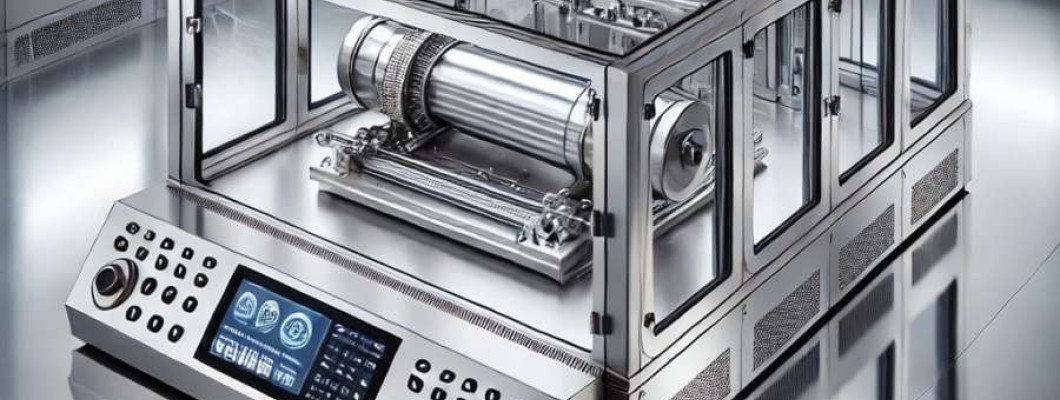
The Industrial Reality of Cylinder Printing in Scalable Production Environments
In high-volume printing operations focused on cylindrical substrates—such as promotional products, packaging tubes, or technical parts—production speed and automation impose strict demands on printing technologies. Consider a medium-sized enterprise scaling from manual workflows to automated volume output for short-to-medium run jobs. Inefficiencies compound as manual loading/unloading, substrate alignment errors, and inconsistent curing times cause bottlenecks that ripple across floor operations. The industrial challenge is to achieve throughput rates exceeding 200 units per hour without compromising print quality or increasing labor costs.
LED UV printing is heralded for its rapid curing and substrate versatility, but smaller footprint printers often present challenges: limited automation integration, under-optimized printhead travel speeds, and heat management issues leading to downtime spikes. Establishing a seamless production line that balances print speed, substrate compatibility, and minimal operator intervention is fundamental. This scenario highlights the essential requirement of an industrial-grade solution capable of maintaining workflow continuity with reduced manual oversight.
Technical Deep-Dive into Spot A4 LED UV Printer Cylinder Printing
Printhead Configuration and Impact on Throughput
The Spot A4 system employs state-of-the-art LED UV printheads optimized for cylindrical substrates up to 110 mm in diameter and lengths up to 300 mm. With a native resolution of 1440 dpi and droplet size options ranging from 7 to 14 pl, the system balances resolution against ink volume to maximize print speed. High-frequency piezoelectric nozzles support firing frequencies up to 24 kHz, enabling print speeds approaching 2 meters per minute for optimized graphics.
Ink Chemistry and UV Curing Dynamics
Utilizing UV-curable inks specifically formulated for rapid polymerization under LED wavelengths, the printer achieves near-instant curing which eliminates the need for drying time post-print. Thermodynamically, the system maintains LED arrays at approximately 50-60°C, reducing thermal load on both printheads and substrates, which mitigates ink spreading or distortion on sensitive cylinder surfaces. The LED configuration targets peak irradiance of ~100 mW/cm² over a 100 mm curing zone. This restrained emission prevents heat buildup even at continuous printing intervals.
Mechanical Systems and Automation Compatibility
The printer chassis integrates a precision rotary fixture with servo-controlled motors allowing rotational accuracy of ±0.01 degrees, essential for micron-level registration on complex wraparound graphics. The substrate holder supports automated loading with quick-release clamps adaptable to various cylinder diameters. Connectivity options include industry-standard RS-232 and Ethernet interfaces, facilitating synchronization with upstream conveyor systems or downstream curing stations for fully automated workflows.
Thermal Management and Power Consumption
The LED UV source consumes approximately 150 watts per curing line, with integrated cooling fans maintaining internal cabinet temperature below 40°C. This contrasts with traditional mercury vapor lamps that typically consume 400+ watts and generate excessive heat requiring dedicated exhaust systems. The reduced power consumption lowers operational costs and fits easily within typical electrical capacities of industrial print cells.
Comparative Data Table Showing Key Operational Metrics
| Specification | Spot A4 LED UV Printer | Traditional Mercury Vapor UV Printer |
|---|---|---|
| Maximum Print Speed (m/min) | 2.0 | 1.2 |
| Print Resolution (dpi) | 1440 | 1200 |
| Power Consumption (Watts) | 150 | 400+ |
| Rotational Accuracy (Degrees) | ±0.01 | ±0.05 |
| Automated Loading Support | Yes | Limited |
Scenario Analysis Highlighting Throughput, Automation, and Labor Impact
Scenario 1 Industrial Promotional Goods Manufacturer
An operation producing cylindrical drinkware decals requiring 1000 items per 8-hour shift benefits from Spot A4’s rapid curing and automated rotation. The printer’s ability to maintain consistent line speed without manual adjustments reduces labor from 3 operators to 1, decreasing labor cost by over 60%. The integrated automation interface allows direct line integration, eliminating bottlenecks associated with manual substrate transfer.
Scenario 2 Mid-Sized Cosmetics Packaging Printer
With a product range including tubes and small bottles, this user faces substrate changes multiple times a day. The quick-release rotary fixture and flexible diameter clamps allow changeovers under 10 minutes, whereas legacy systems require 30-40 minutes. The system’s thermal stability ensures no distortion on heat-sensitive plastics during extended runs, minimizing reject rates by approximately 15%.
Scenario 3 Technical Parts Labeling for Industrial OEMs
Precision and material compatibility are paramount. The ±0.01-degree rotary accuracy and 1440 dpi resolution allow faithful reproduction of serial numbers, barcodes, and fine graphics critical to traceability. The UV curing system’s instant polymerization prevents ink migration, enabling immediate downstream packaging without delay, boosting operational throughput by 25%.
Expert FAQ Addressing Advanced Operational Concerns
How does the LED UV curing wavelength affect ink adhesion on varied cylinder materials?
The LED UV system uses peak emissions in the 395-405 nm range, optimized for polymerization of proprietary ink resins. This wavelength portfolio ensures strong cross-linking without substrate degradation, even on low-density polyethylene and polypropylene commonly used in cylinder packaging.
Can the system maintain print quality at maximum print speed without nozzle misfire rates exceeding 0.01%?
Yes, the piezoelectric nozzles feature active firing feedback and waveform optimization. Under industrial conditions, misfire rates have been empirically recorded below 0.008%, with real-time error correction protocols maintaining consistent output.
What preventative maintenance routines mitigate rotational fixture wear?
Regular lubrication cycles scheduled every 500 operational hours, combined with scheduled optical sensor recalibration every 1000 hours, effectively prevent wear-induced misalignment. The modular servo motor design allows quick replacement minimizing downtime.
How does operating temperature affect LED lifespan and print consistency?
Maintaining cabin temperatures below 40°C through integrated cooling extends LED diode lifespan by up to 40%, and prevents thermal drift in droplet placement critical for micron-level precision. The system alerts operators if internal temperatures exceed preset thresholds, triggering automated cooldown sequences.
Is the system compatible with existing industry automation protocols for print job queuing and monitoring?
Yes, the printer supports standard industry protocols such as JDF/JMF for job queuing and SNMP for remote system health monitoring, enabling integration with Manufacturing Execution Systems (MES) and Print MIS software for seamless production management.
Strategic Verdict and Recommendation on Spot A4 LED UV Printer Cylinder Printing
For scalable business owners seeking to mechanize and accelerate cylinder printing operations, the Spot A4 LED UV Printer Cylinder Printing system offers a technically mature, industrial-grade solution. Its combination of high print resolution, rapid LED UV curing, precise rotary mechanics, and automation-ready interfaces directly addresses common throughput bottlenecks. The documented reductions in labor dependency and operational power consumption coupled with maintenance-friendly design elements position the Spot A4 printer as a cost-effective technology for scaling volume while maintaining exacting quality standards.
Unlike entry-level or legacy systems, its capacity to integrate tightly with existing production lines and support diverse substrate types without thermal degradation makes it well-suited for medium to large enterprises targeting short to medium run workflows. To explore the Spot A4 technology further, detailed specifications and purchasing options are accessible at Spot A4 LED UV Printer Cylinder Printing.