
Analyzing Operational Bottlenecks in A3 Edible Food Printing for Industrial Scale Use
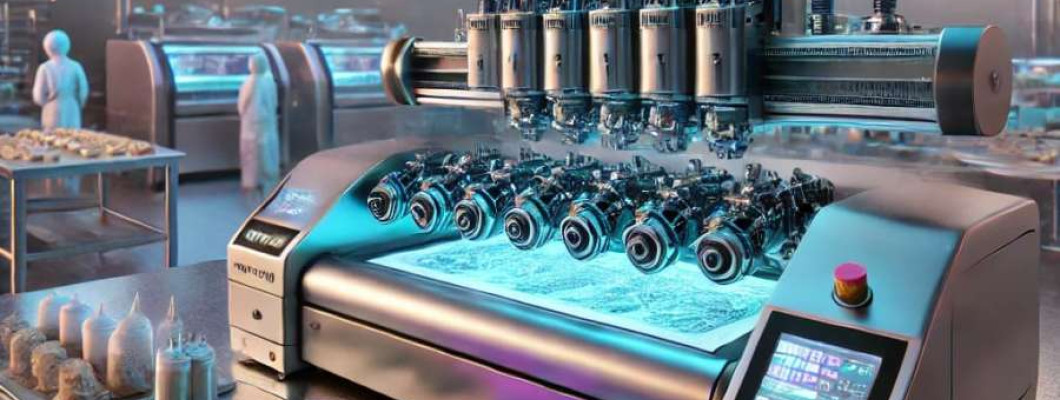
The Industrial Reality of Integrating an A3 Edible Food Printer in High-Volume Baking Facilities
Introducing an A3 edible food printer designed for cakes and cookies into an industrial bakery presents unique operational challenges. Unlike traditional ink-based systems used in paper printing, food-grade edible printing involves specialized substrates—soft, often moist cakes and cookies with variable surface textures. This variability impacts printhead performance and requires fine-tuned operational parameters to maintain accuracy at scale. For example, a thin fondant layer with uneven hydration levels can alter ink absorption dynamics, causing inconsistent color diffusion and precision loss.
Additionally, operational throughput is constrained by drying and setting times of edible inks, which are chemically formulated for food safety and sensory quality rather than rapid curing. This means bottlenecks arise not merely from mechanical print speed but from downstream processing steps. In a scenario where a bakery aims to print 1,000 decorated cookies per hour, scheduling must incorporate substrate feeding, print time, drying intervals, and potential rework due to print defects. Without integrated automation and real-time process feedback, manual handling introduces variability, increasing labor costs and error rates.
Moreover, industrial environments demand stringent compliance with hygiene and food safety regulations. The mechanical design of the printer must allow for rapid cleaning cycles and prevent cross-contamination. This requirement adds complexity to printhead maintenance schedules and material compatibility verification—especially since edible inks can clog nozzles if left unused beyond specified intervals. The interaction of these factors culminates in a critical operational bottleneck: sustaining continuous uptime while maintaining precise, regulatory-compliant prints on delicate food substrates.
Technical Deep-Dive into A3 Edible Food Printer Operational Parameters
Printhead Mechanics and Failure Modes Under Food-Grade Demands
The A3 edible food printer typically employs piezoelectric printheads optimized for low-viscosity, food-safe inks. These printheads feature nozzle diameters ranging from 20 to 35 microns, balancing droplet size (usually 10-12 pl) and color resolution. Key failure modes include nozzle clogging due to ink crystallization, and mechanical wear exacerbated by routine cleaning cycles involving food-safe solvents.
Hypothetically, assuming a printhead with 512 nozzles per color channel and a four-color CMYK system, total nozzles equal 2048. At a 600 dpi resolution, each pass prints approximately 600 dots/inch × (11.7 inches width) ≈ 7,020 dots per line. The printhead must sustain high-frequency actuation (up to 25 kHz) to meet throughput demands. Clogging of even 1% nozzles leads to visible banding defects, necessitating immediate printhead maintenance or replacement.
Comparing Ink Delivery Systems for Edible Printing
Two primary ink delivery options exist: gravity-fed cartridge systems and pressurized reservoir tanks. Gravity systems simplify cartridge exchange but risk inconsistent ink flow during prolonged runs. Pressurized reservoirs provide stable flow rates but require complex sealing to avoid contamination and drying. Table 1 compares critical parameters:
| Parameter | Gravity-Fed Cartridge | Pressurized Reservoir Tank |
|---|---|---|
| Ink Flow Consistency | Moderate; fluctuates with cartridge volume | High; stable pressure maintained |
| System Complexity | Low; easy cartridge swaps | High; sealing and pressure controls needed |
| Cleaning Frequency | Daily; simpler to clean | Weekly; difficult reservoir cleaning |
| Risk of Contamination | Low; contained per cartridge | Moderate; larger volume exposure |
Environmental Factors Impacting Print Quality
Temperature and humidity critically affect edible ink drying times and substrate behavior. Optimal conditions are typically 20°C ± 2°C and 45-55% RH. Deviations cause ink spreading or poor adhesion. For instance, increased humidity softens fondant surfaces, leading to slight ink diffusion enlarging droplet size from nominal 10 pl to an effective 15-18 pl, degrading sharpness by approximately 30% in edge definition.
Calculating Throughput Versus Print Resolution Trade-Offs
At maximum 600 dpi and A3 width (297 mm), the theoretical maximum line count per page is approximately 3508 lines (as 297 mm / 0.0423 mm per dot). Printing at 8 seconds per full-color page yields 450 prints/hour under ideal conditions. Reducing resolution to 300 dpi doubles throughput to 900 prints/hour but sacrifices color fidelity and detail critical for gourmet edible designs.
Maintenance Cycles and Lifecycle Costs from a Bottleneck Perspective
Printhead replacement occurs roughly every 1,500 operational hours due to piezo wear and nozzle degradation. Consumables such as ink cartridges incur cost rates of approximately $200 per liter, with typical consumption of 10 ml per 100 prints. Daily cleaning protocols require 30 minutes downtime per 8-hour shift, creating a 6.25% effective productivity loss unless offset by parallel printer deployment or automation.
Scenario Analysis of A3 Edible Printer Deployment Across Bakery Use Cases
Use Case 1 Bread and Pastry Chain Scaling Seasonal Offerings
A regional bakery chain producing 5,000 decorated cookies daily leverages the printer to handle seasonal designs with rapid SKU changes. The printer’s limited throughput at high resolution requires multiple units or batch scheduling, but the high color fidelity enables premium product positioning. Operational bottlenecks appear during peak demand seasons when drying and rework times increase.
Use Case 2 High-End Boutique Cake Decorator Focused on Precision
For boutique decorators, micron-level precision and substrate versatility are paramount. The printer excels in delivering sharp CMYK gradients on fondant and royal icing. However, its throughput limits production volume, making it ideal for bespoke orders but less suitable for mass production. The user benefits from low downtime due to strict maintenance adherence prioritized by a skilled operator.
Use Case 3 Industrial Cookie Manufacturer Targeting Automation
An industrial-scale cookie facility incorporating automated conveyance aims to minimize labor costs. The challenge is integrating drying equipment inline with the printer and achieving consistent substrate positioning. Printhead clogging and maintenance downtime create bottlenecks that must be managed via predictive servicing schedules and redundant printer arrays to maintain continuous output.
Expert FAQ Addressing Non-Obvious Technical Questions
How does substrate moisture variability quantitatively affect droplet spread radius?
Increased substrate moisture raises local surface tension, enlarging ink droplet spread radius from an average of 25 μm to approximately 35-40 μm, diminishing print resolution by 30-40% on soft fondant.
What are the thermodynamic implications of printhead heating during extended runs?
Piezoelectric printheads exhibit temperature rises of up to 15°C after 1 hour of continuous use, causing viscosity changes in edible inks and requiring active cooling to maintain ejection consistency.
Can ultraviolet sterilization integrate without compromising edible ink chemistry?
UV sterilization can degrade organic ink pigments and alter flavor profiles; thus, sterilization must be performed post-print or via alternative methods like ozone sanitization compatible with food safety.
What is the expected ink droplet size distribution deviation after 500 hours of printhead usage?
Droplet size distribution widens by approximately 12%, increasing the standard deviation from 1.2 pl to 1.35 pl, causing greater color bleeding and reduced edge sharpness.
How does the choice of ink delivery system influence downtime during substrate swaps?
Pressurized reservoir systems require a 10-minute depressurization and cleaning cycle during substrate changes, unlike gravity-fed cartridges that allow near-instant cartridge swaps, affecting uptime optimization.
Strategic Verdict With a Clear Recommendation
The A3 Edible Food Printer For Printing Cakes Cookies presents itself as a valid industrial-grade solution when operational bottlenecks are explicitly managed through integrated process design and maintenance protocols. Its core mechanics deliver print resolutions suitable for premium edible decoration, while throughput constraints can be addressed by leveraging parallel deployments or process automation. Environmental sensitivity requires controlled conditions but is manageable within industrial bakery parameters.
For businesses seeking precision combined with food safety compliance at scale, this printer bridges the gap between artisan quality and industrial feasibility. Decision-makers should evaluate the trade-offs between print resolution and throughput carefully and invest in training for maintenance leads fluent in printhead physics and ink chemistry.
For detailed specifications and procurement, consider the A3 Edible Food Printer For Printing Cakes Cookies as a strategic choice for elevating edible product customization in commercial settings.