
Analyzing Operational Bottlenecks in A3 Roll DTF Printer T-shirt Printing Machine for Scalable Business Efficiency
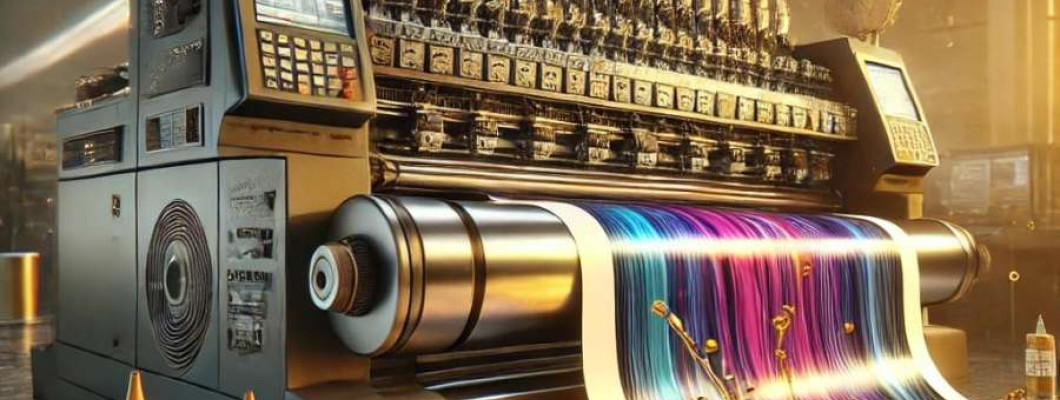
The Industrial Reality of Operating an A3 Roll DTF Printer in High-Volume Production
Within commercial textile printing, capacity constraints and workflow interruptions are persistent challenges that can throttle scalability. The A3 Roll DTF Printer T-shirt Printing Machine presents a sophisticated approach to direct-to-film (DTF) printing, yet even systems designed for industrial use face operational bottlenecks that impact throughput and labour costs. For scalable business owners, the balance between print speed, substrate handling, and automated workflow integration becomes paramount when scaling beyond prototype or small batch runs. Imagine a print shop tasked with delivering 500 custom T-shirts daily. Despite a theoretically high dpi and colour fidelity, print cycle timing, roll feed consistency, and ink drying stages collectively influence net output. Identifying where these bottlenecks occur—whether in media transport mechanics, printhead firing synchronization, or post-print curing—defines potential productivity ceilings and labour allocations. Underestimating these factors risks unexpected downtime, increased operator intervention, and compromised delivery timelines.
Extending daily uptime while minimizing manual adjustments is not trivial, given mechanical wear and ink chemistry interactions that manifest over long production cycles. A granular understanding of these constraints is essential for scalable operations that demand consistent, error-free runs. This paper addresses key operational bottlenecks inherent to the A3 Roll DTF Printer T-shirt Printing Machine and how they affect throughput, allowing businesses to optimize labour costs and automation potential.
Technical Deep-Dive Into Bottlenecks That Define Throughput and Labour Efficiency
Printhead Kinetics Versus Roll Feed Mechanism
The synchronization between the printhead movement and roll feed mechanics dictates the real-world print speed. The A3 printer employs piezoelectric printheads with drop volumes commonly ranging from 4 to 12 pl (picoliters). The micro-drop precision ensures sharp output, but higher droplet counts per inch increase print time exponentially.
Suppose the printhead velocity is 100 mm/s with 720 dpi horizontal resolution and the roll feed advances 0.035 mm per pass vertically. Given these metrics, the maximum print speed without banding can be approximated by:
Print Speed (sheets/hour) = (Feed Rate (mm/s) / Sheet Length (mm)) * 3600
Where sheet length is traditionally 420 mm for A3 paper. Any mechanical lag in feeding the roll or latency in printhead droplet firing results in printhead misalignment, causing quality degradation and physical jamming.
Ink Drying Time Versus Continuous Operation
DTF inks require precise curing stages to ensure adhesion and wash fastness. Without integrated infrared (IR) or UV curing inline, printed rolls may accumulate and require separate drying steps. This drying bottleneck introduces queuing and storage requirements. Typical drying time ranges between 1 and 3 minutes per sheet, significantly impacting throughput.
Integrating continuous drying via IR lamps rated around 600 Watts per meter can reduce this bottleneck, but power consumption and heat management then become operational concerns.
Roll Handling and Media Tension Control
Roll diameter variance introduces tension fluctuations affecting media flatness across the printing area. Uneven tension beyond ±5 N can cause feed slippage or media distortion, necessitating recalibration or manual intervention. The A3 Roll DTF Printer’s tension system must maintain stable torque application via servo motors under variable roll weight scenarios (up to 10 kg rolls typical).
Ink Consumption and Cost Efficiency Analysis
The typical ink consumption for full-colour prints is approximately 300 mL per 100 A3 sheets with CMYK plus white channels. Ink refill frequency directly influences machine downtime. Strategic ink management with bulk supply systems can reduce labour but requires upfront CAPEX for feeders and contamination control.
Wear and Maintenance Cycle Quantification
Printhead nozzles degrade with particulate accumulation and chemical exposure, especially with DTF-specific inks containing adhesive polymers. Mean Time Between Failures (MTBF) averages 800 hours under continuous operation, implying a preventive maintenance window every 3–4 weeks in high-volume settings. Downtime for printhead cleaning or replacement must be factored into capacity planning.
| Parameter | A3 Roll DTF Printer (Standard Setup) | Optimized Inline Automation Setup |
|---|---|---|
| Print Speed (sheets/hour) | 30–40 | 50–60 |
| Media Tension Stability (N) | ±5 | ±2 |
| Ink Drying Time (per sheet, sec) | 90–180 | 30–60 |
| Maintenance Interval (hours) | 800 | 1200 (with advanced filtration) |
| Ink Consumption (mL/100 sheets) | 300 | 280 (with optimized profiles) |
Scenario Analysis Across Distinct Business Use-Cases
Medium-Sized Apparel Manufacturer Focusing on Batch Customization
For an apparel manufacturer producing limited-run promotional T-shirts, the primary bottleneck lies in manual roll loading and drying. Labour costs escalate when print jobs under 100 units require reconfiguring print settings and media feeds. By leveraging the A3 Roll DTF Printer’s modular design, integrating automated roll feeders and IR drying units can push throughput from 30 to 55 sheets/hour, effectively halving labour time per batch.
Print Shop Scaling Up to E-Commerce Fulfillment
E-commerce apparel fulfillment centers demand rapid turnaround with consistent quality. The stringent timing requires minimized downtime and high uptime reliability. Implementing a preventive maintenance schedule based on the A3 printer’s 800-hour MTBF, combined with staff training on printhead care, significantly reduces unexpected failures. Media tension monitoring sensors further enhance unattended operation capability, reducing operator intervention frequencies by up to 40%.
Artisan High-Detail Customization Studio
Though throughput is less critical, precision and colour integrity dominate priorities. The printer’s micro-drop technology delivers up to 720 dpi resolution but lengthens print time to 45 seconds per sheet compared to faster settings. Here, throughput bottlenecks are accepted for superior output, and labour cost impact is minimized through batch scheduling rather than continuous run modes.
Expert FAQ About A3 Roll DTF Printer Operational Bottlenecks
Q1 What are the primary mechanical failure points in continuous A3 DTF printing?
Frequent failure points include media feed rollers, printhead nozzle clogs from polymer ink buildup, and tension control servo motor drift. Preventive maintenance and real-time tension monitoring mitigate these risks.
Q2 How does ink chemistry influence daily uptime in DTF printing?
DTF ink polymers are prone to settling and drying prematurely inside nozzles. Proper agitation and filtration systems improve uptime by maintaining fluid viscosity and preventing clogging.
Q3 What environmental factors accelerate printhead wear in roll-fed DTF printers?
High ambient temperatures and dust exposure increase polymer residue buildup on nozzles, requiring more frequent clean cycles and reducing MTBF.
Q4 Can the drying stage be eliminated in industrial settings?
Integrated inline curing with IR or UV lamps reduces external drying but requires careful thermal management and can increase power consumption exponentially.
Q5 How does batch size affect operational bottlenecks in roll-fed DTF printing?
Smaller batches increase manual handling frequency, raising labour costs and potential error rates. Larger batches benefit from automated feeds and continuous runs, improving ROI.
Strategic Verdict and Recommendation for Scalable Businesses
The A3 Roll DTF Printer T-shirt Printing Machine offers a viable industrial-grade solution distinctly positioned for scalable business owners who must balance throughput, automation, and labour costs. While inherent operational bottlenecks exist in feed mechanics, ink drying, and maintenance cycles, these can be effectively managed through targeted automation integration and process standardization. The flexibility of the system allows adaptation to both medium batch promotions and high-scale e-commerce fulfillment with minimal capital outlay compared to large-format screen printing alternatives.
For those seeking to maximize print speed without sacrificing quality, investment in inline drying and tension control upgrades is essential. The maintenance profile aligns with industry norms, and the printhead durability supports continuous operation when paired with appropriate preventive servicing.
Overall, the A3 Roll DTF Printer T-shirt Printing Machine is recommended as an effective, scalable solution designed to meet the stringent demands of commercial textile printing environments. Its blend of technical capability and modular upgrade paths positions it as an asset capable of sustainably scaling throughput and reducing operational bottlenecks.