
Analyzing Operational Bottlenecks in Industrial Heat Press Machines for Scalable Businesses
The Industrial Reality of Scaling Heat Press Operations
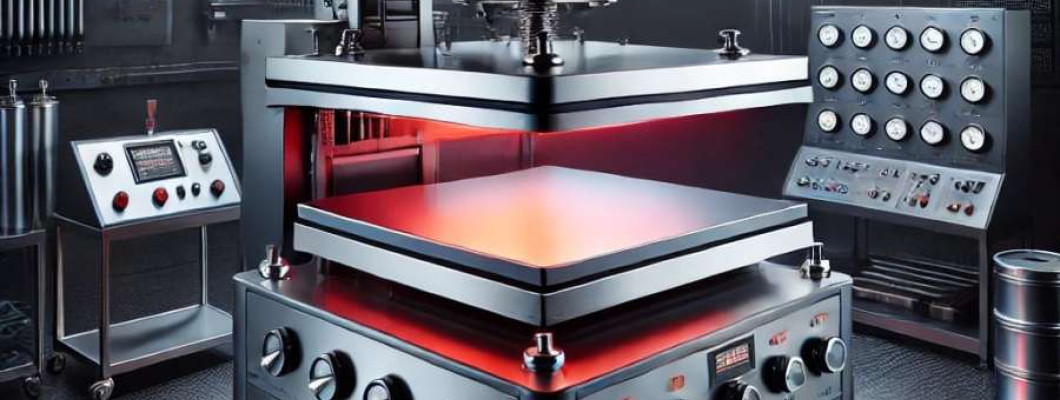
In a fast-paced production environment, the integration of a 40*60CM heat press machine introduces numerous operational complexities. Businesses aiming to scale throughput must meticulously manage thermal cycles, operator-induced variability, and machine durability under continuous use. Industrial-grade heat press machines, unlike smaller DIY alternatives, must sustain repetitious heat and pressure applications without significant downtime or quality deviation. Here, the heat press's core technical capabilities intersect sharply with real-world constraints: thermal equilibration time, platen uniformity, and the mechanical endurance of its clamping mechanism. As production scales from dozens to hundreds of press cycles daily, these parameters become critical bottlenecks. Any deviation in platen temperature by even ±5°C can adversely affect heat transfer kinetics, jeopardizing substrate adhesion strength or causing ink discoloration on textiles.
Furthermore, the physical size of the 40*60CM platen is a double-edged sword. While it facilitates larger-format imprinting, it introduces challenges in achieving consistent pressure distribution across the entire surface. Uneven pressure zones can result in partial adhesion failures or uneven curing of sublimation inks, directly impacting repeatability and product quality. Mitigating this requires precision-engineered pressure adjustment systems and robust calibration protocols, which add layers of maintenance complexity and operator training requirements. From a throughput perspective, the heat-up and cool-down cycles contribute to production latency. Without sophisticated thermal management, these cycles limit operational uptime, forcing businesses to balance press cycle frequency against long-term component integrity.
In practice, heat press machines operating in industrial environments frequently encounter wear on pneumatic clamping units or electronic temperature controllers, leading to unplanned service interruptions. Additionally, the human factor—operator handling, substrate placement accuracy, and timing execution—intensifies these bottlenecks, especially in high-volume contexts where labor costs directly influence profitability. These constraints establish a demanding operational framework where equipment reliability, precision, and maintenance predictability define the success of scaling heat press workflows.
The Technical Deep-Dive into Heat Press Machine Functionality and Bottlenecks
Thermal Dynamics and Platen Specifications
The 40*60CM platen size roughly corresponds to 2400cm2 of active heating area. Uniform temperature distribution across this platen is essential. Assuming a platinum RTD sensor feedback loop controls the embedded heating elements, the thermal variance (ΔT) across different platen zones should not exceed a maximum of 3°C to maintain adhesion consistency. Using the heat equation Q = m * c * ΔT, where 'm' represents platen mass (typically 10–12kg in heavy steel alloy platens) and 'c' the specific heat capacity of the platen material (about 0.5 kJ/kg·K for steel), maintaining a stable temperature setpoint of 180°C within ±3°C demands a heating power input of approximately 1200W with optimum insulation.
Pressure Mechanism and Clamping Force Analysis
The mechanical clamping usually delivers forces in the 10–25 kg/cm2 range, vital for proper heat transfer to flexible substrates like polyester or cotton. For a 40*60cm platen (2400 cm2), the total required force lies between 24,000 kg and 60,000 kg·cm2, which translates to roughly 240–600kg of downward force distributed evenly across the platen. Pneumatic or mechanical springs achieve this force, each with different durability and adjustment challenges. Pneumatic systems require consistent air pressure (6–8 bar) and are vulnerable to air leaks, whereas mechanical springs wear over time, decreasing clamping reliability.
Cycle Time and Throughput Capacity
Typical press cycles for textile sublimation or heat transfers range from 10 to 60 seconds. However, the cooldown phase between cycles often extends the total cycle time to 90–120 seconds when using conventional thermostats and passive cooling. Active cooling methods or dual-press setups can halve cooldown times, doubling throughput but increasing CAPEX and infrastructure complexity.
Maintenance Implications and Lifecycle Costs
Maintenance frequency hinges on cumulative operational hours. Critical components such as heating elements, pressure sensors, electronic controllers, and platen surfaces typically require inspection or replacement every 1,000–1,500 operational hours. Given an average press cycle of 2 minutes, this corresponds to ~30,000 press cycles before major maintenance. Reactive maintenance costs and downtime during component failure significantly impact overall equipment effectiveness (OEE) in production lines.
Hardware Comparisons and Alternative Approaches
| Feature | Pneumatic Clamping System | Mechanical Spring Clamping |
|---|---|---|
| Force Consistency | High, adjustable via air pressure | Moderate, decreases over time |
| Maintenance Complexity | Requires air supply and leak monitoring | Lower, but spring fatigue is a problem |
| Initial Cost | Higher due to compressors and valves | Lower upfront cost |
| Operational Noise | Moderate | Low |
| Scalability | Better for automated lines | Less suitable for automation |
Scenario Analysis Demonstrates How Specs Impact Business Outcomes
Scenario One: Medium-Scale Garment Production Facility
A company producing custom sportswear requires 200 garments per 8-hour shift. Using the 40*60CM heat press machine with pneumatic clamping and active temperature control ensures consistent prints with minimal rejects. However, cooldown time constraints require two machines operating in tandem to meet throughput demands without sacrificing quality. Investment in maintenance contracts reduces unscheduled downtime to below 2% monthly.
Scenario Two: Boutique Customization Shop
Smaller volume (30–50 pieces daily) but requiring substrate versatility (cotton, polyester, leather). The large platen size enables creative freedom for different print sizes. Mechanical spring clamping suffices due to lower throughput, reducing complexity and operational noise, though requiring more frequent manual calibration.
Scenario Three: High-Volume Promotional Product Manufacturer
Production exceeding 500 units daily with uniform substrates such as polyester t-shirts. This environment demands maximum uptime and minimal operator intervention. Pneumatic clamping systems integrated into automated conveyor lines allow continuous operation. Lifecycle maintenance is scheduled proactively, and thermal management systems are optimized with active cooling to minimize idle times.
Expert FAQ for Advanced Operational Understanding
Q1: How does platen material affect thermal consistency?
The platen’s thermal conductivity and specific heat capacity critically influence heat distribution. Steel alloys with high thermal conductivity minimize temperature gradients but increase cooldown times due to larger heat retention.
Q2: What role does substrate thickness play in cycle timing?
Thicker substrates require longer heating durations to reach adhesion temperatures throughout the material depth, directly extending cycle times and reducing throughput if not compensated by higher platen temperatures.
Q3: Can active cooling systems reduce total cycle time effectively?
Yes, integrating forced air or liquid cooling directly below or around the platen can cut cooldown periods by up to 50%, improving throughput but adding complexity in maintenance and power requirements.
Q4: How do pneumatic leaks impact operational stability?
Leaks cause pressure drops leading to insufficient clamping force. This inconsistency results in print quality issues and higher reject rates, making routine air line inspections essential.
Q5: What are the typical failure modes of heating elements in heat press machines?
Common failures include resistance wire burnout, insulation degradation causing shorts, and thermal sensor drift. These failure modes reduce heating efficiency and increase energy consumption, necessitating early detection systems.
Strategic Verdict Directly Addresses Operational Bottlenecks
The assessed 40*60CM Heat Press Machine presents a robust, industrial-grade option tailored for scalable businesses requiring dependable throughput and precise thermal control. Despite inherent bottlenecks such as thermal cycle latency and clamping force variability, its modular design supports pneumatic or mechanical clamping choices aligned with specific operational demands. Technical parameters suggest that with proper maintenance and environmental control, the machine achieves high uptime and repeatability suitable for medium to high-volume production settings.
Considering lifecycle maintenance intervals and throughput capacity, this heat press delivers a balanced CAPEX and operational cost profile, making it a strategic asset for scaling businesses aiming to maintain print quality and reduce labor-induced inconsistencies. Integration flexibility allows automation compatibility, further mitigating human factor bottlenecks.
Interested professionals can explore detailed technical specifications and procurement details via the 40*60CM Heat Press Machine listing. This platform is positioned as a definitive solution for industrial heat transfer applications where machinery reliability, thermal precision, and operational scalability are mission-critical.