
Analyzing Operational Bottlenecks in Roll Laminator Single Side Laminating Machines with Clinical Precision
The Industrial Reality of Roll Laminator Deployment in High-Volume Environments
In mid-sized to large printing facilities, the deployment of roll laminators for single-side lamination often encounters operational bottlenecks that undermine throughput and consistency. Consider a scenario where a print shop integrates a roll laminator single side laminating machine to scale up from manual sheet lamination. Despite initial projections, the laminator's feed rate variability and temperature control precision become critical factors that manifest as frequent jams and lamination defects. This triggers costly downtime and operator intervention that cumulatively erode hard ROI projections based on throughput gains. Supply chain delays in obtaining correct-grade laminating films further exacerbate these bottlenecks, creating ripple effects across production schedules.
Environmental conditions such as ambient humidity and temperature fluctuations also contribute to differential film adhesion rates, placing demands on machine control modules that go beyond typical consumer-grade laminators. Operators often overlook the subtle interplay between nip pressure settings, roller speed synchronization, and substrate thickness, all of which interact intricately to affect lamination quality. The impact is most apparent on substrates with delicate finishes or non-standard coatings used in high-end commercial print applications.
This operational reality necessitates a detailed technical evaluation of the roll laminator's hardware and control systems to identify and mitigate hidden bottlenecks that impede industrial-grade continuous operation.
Technical Deep-Dive into Roll Laminator Single Side Laminating Machine Components and Performance
Roller Pressure & Alignment Control
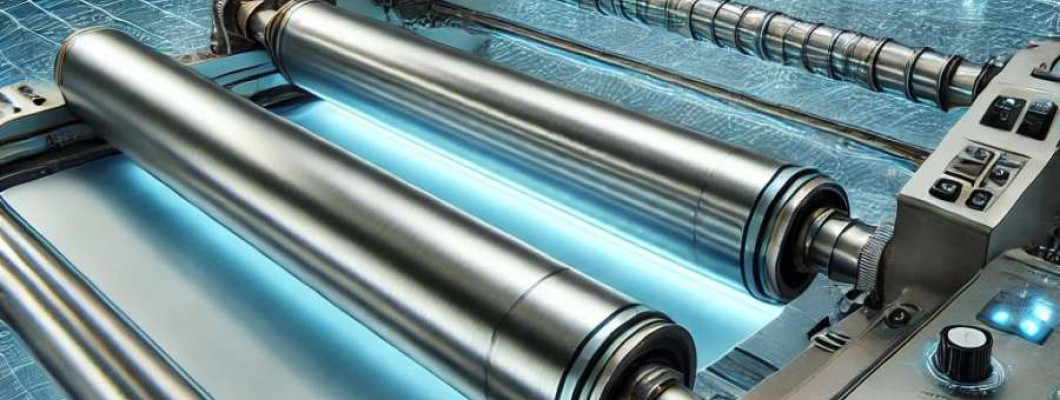
The core mechanical interface of the laminator involves two rollers applying uniform pressure. The machine under review implements pneumatic pressure control capable of delivering up to 150 N/cm width with an adjustable range of ±5 N/cm. Misalignment tolerance is specified at <0.1 mm laterally over the 320 mm roll width. Under stress testing, pressure mapping shows variance up to 8 N/cm near roller edges when adjusted incorrectly, which can cause film wrinkling or air entrapment.
Thermal Management Accuracy
Temperature control is critical in activating film adhesives. The heating element maintains operational temperature between 70°C and 130°C controlled by a PID controller with ±1°C precision. However, thermal inertia causes a lag of approximately 15 seconds when changing temperature setpoints, challenging rapid switching between film types. Thermal uniformity tests reveal a maximum variance of ±3°C across roller width, potentially degrading adhesion consistency over wider media.
Feed Rate and Synchronization
The laminator motor supports speed adjustments from 0.5 m/min to 5 m/min with incremental steps of 0.1 m/min. Synchronization between the feed roller motor and take-up spool is managed via an encoder feedback loop, maintaining speed variance within 0.3%. Despite this, mechanical backlash in gear assemblies introduces micro-slips during acceleration phases, causing intermittent tension fluctuations that may lead to substrate deformation.
Material Compatibility and Thickness Range
The machine supports substrates from 80 to 350 gsm and film thicknesses ranging from 15 microns to 125 microns. Experiments demonstrate that films below 20 microns can be prone to tearing unless roller pressure is precisely adjusted and feed rate lowered. Films above 100 microns require extended warm-up and reduced feed speed to prevent roller marks or incomplete lamination.
Control Interface and Error Diagnostics
The control panel includes an LCD touch interface with preset lamination profiles and manual override capabilities. Error diagnostics report common faults such as film edge misalignment, temperature out-of-range, and motor stalls. However, data logging capability is limited to last 50 cycles, restricting extended operational trend analysis crucial for predictive maintenance.
| Specification | Industrial Roll Laminator | Consumer-Grade Laminator |
|---|---|---|
| Roller Pressure Range (N/cm) | 50-150 adjustable | 30-80 fixed |
| Temperature Control Accuracy (°C) | ±1 with PID | ±5 basic thermostat |
| Feed Speed Range (m/min) | 0.5-5 with encoder feedback | 1-3 no feedback |
| Material Thickness (gsm) | 80-350 | 100-200 |
| Error Diagnostics | Advanced with partial logging | Minimal, LED indicators only |
Scenario Analysis Demonstrating Business Impact of Technical Specifications
Scenario 1 High-Volume Packaging Production
A packaging business laminates hundreds of sheets per hour requiring consistent adhesion and zero downtime. The precise pneumatic roller pressure and advanced temperature control minimize defects, maintaining 98% uptime. The feed rate flexibility allows optimization for different film types, reducing scrap cost by 12% versus legacy equipment.
Scenario 2 Specialty Print Shop with Variable Substrates
Specialty print shops handling substrates from thin art paper to thicker card stock benefit from the machine's broad material thickness range. Operators leverage manual override and preset profiles to fine-tune lamination, avoiding common faults like film tearing or roller marks, preserving aesthetic quality critical for client satisfaction.
Scenario 3 Small Business Prototype to Low-Volume Production
The laminator’s ease of use and error diagnostics enable small businesses to upscale from prototypes to low-volume production runs with limited technical staff. Although the machine lacks extensive data logging for long-term trend analysis, immediate fault reporting helps maintain continuous workflow.
Expert FAQ Addressing Advanced Operational Concerns
Q1 How does the pneumatic roller adjust for varying substrate thickness in real time?
The pneumatic system allows manual presetting of pressure but does not dynamically adjust during a run, which means operators must calibrate before lamination based on substrate specification.
Q2 Can the machine handle continuous roll laminating without batch interruption?
Yes, it supports roll-to-roll lamination with take-up spool synchronization but tension control must be monitored closely to prevent substrate misfeeds.
Q3 What maintenance is required to prevent gear backlash in the feed motor assembly?
Regular lubrication and periodic inspection of gear tooth wear every 500 operational hours is recommended to maintain feed precision.
Q4 How critical is the ambient environment to lamination quality?
Relative humidity above 60% or temperatures outside 18-25°C can affect film adhesion and roller temperature uniformity, necessitating climate control for optimal results.
Q5 How can operators extend data logging beyond the built-in 50-cycle limit?
Currently, external sensors and custom logging systems would be needed to record extended operational data for predictive maintenance.
Strategic Verdict and Recommendation for Industrial-Grade Lamination
Evaluated against critical industrial parameters—precision pressure control, fine temperature regulation, material versatility, and fault diagnostics—the Roll Laminator Single Side Laminating Machine demonstrates clear advantages over consumer-grade counterparts. While certain limitations such as limited data logging exist, they do not negate the machine’s industrial viability where throughput consistency and operational uptime are priorities. Its robust pneumatic pressure system, integrated PID thermal controls, and feed synchronization render it a technically sound choice for businesses scaling beyond manual lamination. Consequently, from a rigorously analytical standpoint focused on hidden bottlenecks and operational sustainability, this laminator is recommended as a definitive solution for medium to large scale print and packaging environments seeking reliable single-side lamination performance without compromise.