
Analyzing Operational Bottlenecks in the 40x60CM Heat Press Machine for Scalable Business Integration
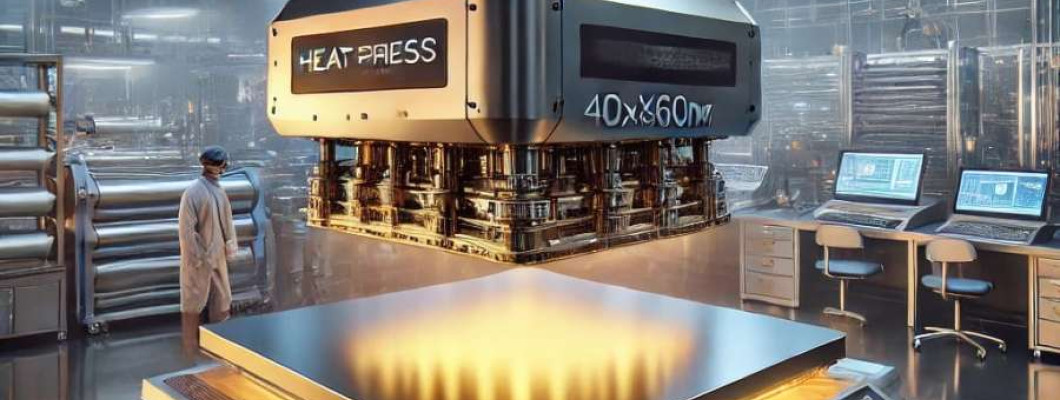
The Industrial Reality of Integrating a 40x60CM Heat Press Machine into High-Volume Production
In a mid-sized textile printing workshop aiming for daily throughput exceeding 200 units, the introduction of a 40x60CM heat press machine represents a critical junction between manual craftsmanship and semi-automated industrial output. Operators face intense pressure to manage rapid job cycling while maintaining uniform heat distribution and precise pressure application within a constrained time window. Failures in thermal equilibrium or mechanical reliability can cascade into costly bottlenecks affecting delivery schedules and workforce allocation.
One prevalent challenge emerges from the machine's thermal ramp-up and cooldown periods, which, if not optimized, prolong job-to-job transition times significantly. In scenarios where operators must handle varying substrate thicknesses or complex transfer materials, achieving consistent platen contact pressure without inducing substrate deformation becomes paramount. This scenario underscores the necessity for precise human factor engineering integrated with mechanical robustness to sustain throughput without quality degradation.
Moreover, the limitations in temperature uniformity across the 40x60cm platen surface directly influence transfer fidelity, especially in applications demanding micron-level precision in color gradients or multi-layer prints. Here, operational bottlenecks manifest as rework cycles or accelerated wear on heating elements, both of which compound downtime and inflate maintenance costs.
Technical Deep-Dive into Heat Press Machine Operational Dynamics
Heat Distribution and Thermal Inertia
The core platen dimension of 400 mm by 600 mm presents a substantial thermal mass. Assuming a platen thickness of 20 mm aluminum alloy with a specific heat capacity of approximately 0.9 J/g·K and density of 2.7 g/cm³, the thermal energy required to raise temperature from ambient 25°C to operational 180°C is:
Energy = mass × specific heat × temperature rise
Calculating platen volume: 0.4 m × 0.6 m × 0.02 m = 0.0048 m³ = 4800 cm³
Mass = 4800 cm³ × 2.7 g/cm³ = 12,960 g
Energy = 12,960 g × 0.9 J/g·K × (180°C - 25°C) = 12,960 × 0.9 × 155 = 1,810,320 J
This energy must be delivered efficiently via embedded heating elements. The power rating, typically in the range of 1000 to 1500 W for this size, governs heat-up time: assuming 1500 W, theoretical minimum heat-up time is 1,810,320 J / 1500 J/s = 1207 seconds (~20 minutes), although in practice insulation and heat losses extend this.
Pressure Mechanics and Substrate Compliance
Consistent pressure of 3-6 bar is common in textile transfers. For a platen area of 0.24 m², this corresponds to a total force of 7,200 to 14,400 N. The pressure application mechanism must maintain even distribution to prevent hotspots and substrate deformation.
Operational Bottlenecks and Throughput Constraints
Cycle time per transfer includes heat-up, press duration, and cooldown if multiple materials with varying temperature requirements are used. Empirically, press duration ranges 30-60 seconds. Cumulatively, with heat-up and cooldown cycles factored in, an average throughput rate for a single machine falls between 60-100 units per 8-hour shift under optimized conditions.
Maintenance Frequency and Lifecycle Cost Impact
Heating element degradation, platen surface wear, and pressure spring fatigue represent common failure points after approximately 2,000 operational hours. Replacement costs for heating elements average USD 150, with labor adding an additional USD 50 per service. Proactively scheduling maintenance minimizes downtime and preserves consistent output quality.
Comparative Hardware Analysis
| Specification | Standard 40x60CM Heat Press | Industrial Automated Heat Press |
|---|---|---|
| Platen Size (mm) | 400 × 600 | 800 × 1200 |
| Heat-Up Time (Minutes) | 20-25 | 10-15 |
| Max Pressure (N) | ~14,400 | ~30,000 |
| Cycle Time per Unit (Seconds) | 60 | 30 |
| Maintenance Interval (Hours) | 2000 | 4000+ |
| Power Consumption (W) | 1500 | 3000+ |
Scenario Analysis Highlighting Business Use-Case Impacts
Small Batch Custom Apparel Production
For boutique clothing producers focusing on limited editions or seasonal designs, the 40x60CM heat press machine offers adequate platen size for single-item transfers. The bottleneck here lies in manual loading and heat-up times, which constrain daily output to roughly 80-100 units. However, cost of ownership and footprint align well with the artisanal production environment.
On-Demand Corporate Merchandise Printing
Companies producing branded merchandise with rapid SKU changeovers benefit from the machine's quick pressure adaptability and platen dimensions. Despite longer heat-up requirements, the machine achieves flexibility and moderately scalable throughput when paired with a skilled operator workforce.
Mid-Range Industrial Textile Transfers
In scaling production lines beyond 200 units per day, reliance on a single 40x60CM heat press becomes a bottleneck. Parallel deployment of multiple units or transitioning to larger industrial heat presses is advisable. Lifecycle maintenance schedules and downtime management become critical to avoid production halts.
Expert FAQ Addressing Advanced Operational Questions
What materials influence the platen heating efficiency most significantly?
Aluminum alloy platens provide optimal thermal conductivity, but substrate materials with high thermal mass or low thermal conductivity require longer pressing durations or higher pressures to ensure transfer fidelity.
How does platen surface coating affect transfer quality and maintenance?
Non-stick coatings reduce transfer residue adhesion, prolong platen life, and minimize cleaning cycles; however, coatings degrade over time, necessitating periodic recoating or replacement to maintain output consistency.
What are the critical parameters for pressure calibration in multi-layer substrate printing?
Pressure uniformity across the platen, combined with substrate compressibility and heat sensitivity, dictates calibration settings. Using force sensors or pressure mapping tools enhances repeatability across batches.
How does ambient environmental temperature impact machine performance?
Ambient temperature fluctuations influence heat-up times and platen temperature stability. Controlled environments or enclosure systems mitigate these effects, stabilizing operational parameters.
What predictive maintenance strategies optimize uptime for heat press machines?
Monitoring real-time parameters such as platen temperature variance, pressure feedback, and operational cycles using embedded sensors supports condition-based maintenance, reducing unplanned downtime.
Strategic Verdict and Recommendation for the 40x60CM Heat Press Machine
Given the operational analysis, the 40x60CM heat press machine emerges as a technically capable and financially viable option for scalable businesses seeking medium throughput with controlled capital expenditure. While inherent thermal inertia and maintenance intervals impose certain bottlenecks, the device balances platen size, power consumption, and pressure mechanics effectively for small to mid-level production runs.
Investing in this machine offers a pragmatic solution for enterprises with throughput demands up to 100 units per shift, especially when integrated into a workflow with trained operators and preventive maintenance protocols. For expansion beyond this scale, strategic deployment in multiples or phased upgrades to industrial-grade systems is advisable.
The machine's specifications and operational footprint position it as a definitive tool for scalable business owners aiming to optimize labor costs and throughput without disproportionate CAPEX. Interested professionals can review technical details and procurement options by visiting the official product page 40x60CM Heat Press Machine.