
Analyzing Operational Bottlenecks in the A3 Roll DTF Printer T-shirt Printing Machine for Scalable Business Owners
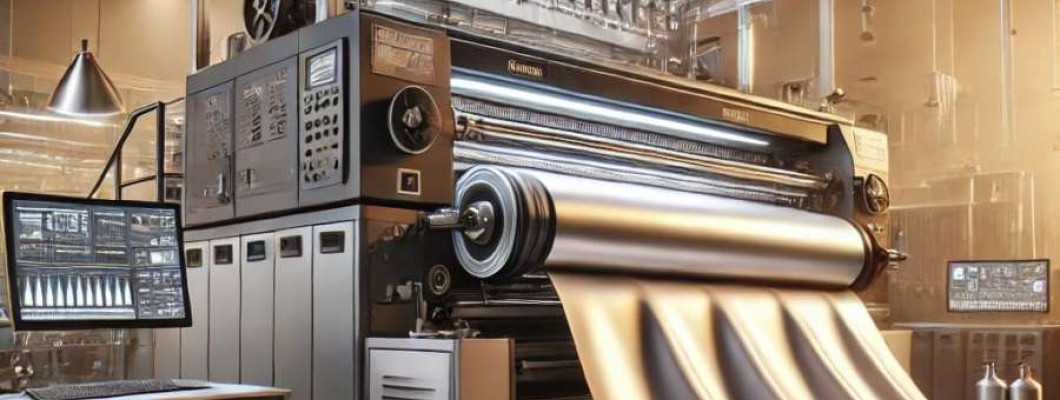
The Industrial Reality of High-Throughput DTF Printing Operations
In modern scalable apparel printing businesses, throughput efficiency and minimizing downtime are critical. The A3 Roll DTF Printer T-shirt Printing Machine operates in contexts where rapid, consistent output is demanded, often exceeding hundreds of prints per day. However, transitioning from flatbed or manual DTF printing to a roll-based architecture introduces unique operational bottlenecks that require keen understanding. High-speed continuous feeding mechanisms foster impressive output rates but impose challenges on ink drying times, print alignment precision, and roll tension management. For example, print speed exceeding 1.2 meters per minute exposes the printer to potential batch inconsistencies due to micro-shifts in substrate feeding or environmental fluctuations influencing ink curing kinetics.
Moreover, labor overhead requires careful calibration to sustain a hands-off workflow. Unattended operation during extended runs heightens the risk of printhead clogging or substrate misfeeds, especially without integrated real-time monitoring systems. Scaling production line automation involves careful orchestration of this printer’s hardware with upstream and downstream processes such as pretreatment spraying, curing ovens, and post-print finishing stations. Failure to address these integration and workflow bottlenecks can erode operational margins and negate the theoretical capacity gains the machine hardware presents.
Technical Deep-Dive into Performance and Bottleneck Mechanics
Printhead Longevity Versus Throughput Intensity
The A3 Roll DTF Printer typically incorporates piezoelectric printheads optimized for pigment ink jetting. High throughput demands push these printheads toward accelerated firing cycles, increasing thermal and mechanical wear. A calculated estimate shows that at a nominal firing frequency of 9 kHz per nozzle and 240 nozzles per color channel, continuous operation over a 10-hour shift approaches 7.7 billion actuations daily. This level of operation requires consideration of printhead replacement intervals potentially as frequent as every 3-4 months in heavy-duty contexts, impacting both CAPEX and downtime.
Ink Drying Dynamics and Thermal Management
DTF requires ink drying before the transfer film reaches the heat press. The roll feed mechanism combined with embedded hot air drying units must maintain substrate temperature uniformity within ±3°C to avoid ink bleeding or cracking. At print speeds near 1.2 m/min and 1440 dpi resolution, the drying unit wattage often ranges between 300-500 W, balancing energy consumption and drying efficacy. Insufficient drying leads to bottlenecks from smudging defects requiring reprints, while over-drying risks substrate warping that disrupts registration accuracy.
Roll Tension Control System and Feed Synchronization
A critical failure point appears in the tension control system that regulates the unwinding and rewinding of the polyester film roll. The printer employs servo-driven motors linked to tension sensors maintaining constant force typically around 0.3-0.5 Newtons. Deviations above 0.7 N risk film stretching, while sub-0.2 N values produce slack, causing skew in high-precision prints. The control algorithm’s response time below 20 milliseconds ensures real-time adjustment; however, environmental variations such as ambient humidity changes (±10%) affect film elasticity and tension feedback, necessitating ambient conditioning within industrial print environments.
Comparison of Roll-Based Versus Flatbed DTF Architectures
| Specification | Roll-Based DTF (A3 Roll DTF Printer) | Flatbed DTF Printer |
|---|---|---|
| Maximum Print Width | 330 mm (A3 size) | Up to 500 mm or more |
| Print Speed | Approx. 1.2 meters/min | 0.5 meters/min |
| Substrate Handling | Continuous roll feed, suited for mass production | Sheet-fed, better for short runs and rigid substrates |
| Throughput Efficiency | High - lowers manual intervention | Moderate - requires frequent manual loading |
| Operational Bottlenecks | Roll tension, drying uniformity, printhead wear | Media alignment, platen uniformity, slower speed |
Ink Chemistry Impact on Maintenance and Print Quality
DTF inks used in this printer are typically pigment-based with polymer additives ensuring adhesion and elasticity on textiles. Ink viscosity in the range of 8-12 cP at 25°C enables smooth jetting without clogging. However, high pigment concentration (up to 6% wt) combined with rapid print cycles can accelerate nozzle blockage if filtration is insufficient. Routine maintenance cycles incorporating ultrasonic cleaning and ink recirculation are mandated every 50 operational hours to preserve output quality and reduce downtime.
Scenario Analysis for High-Throughput Apparel Printing Businesses
Scenario 1: Rapid Batch Production for Retail Apparel Lines
A mid-size apparel factory aims to ship 1000 custom T-shirts per day with consistent color accuracy. The A3 Roll DTF Printer’s continuous roll feed allows smooth 8-hour printing shifts with minimal operator input. However, precise temperature and humidity controls in the print room become essential to avoid drying-related defects, demanding investment in industrial HVAC systems. The bottleneck lies in synchronization with heat-press stations where throughput must match the printer to avoid backlogs.
Scenario 2: On-Demand Print for E-Commerce Custom T-shirts
Small batch sizes with varied designs require rapid turnaround. The quick changeover capabilities of this printer support variable artwork on continuous rolls. However, frequent substrate changes and calibration for color management increase operator touch time, affecting overall throughput. Integrating automated substrate loading and color profiling software mitigates these limits, highlighting the printer’s modular adaptability for scaling.
Scenario 3: Industrial Production with Multi-Line Integration
A large facility deploys multiple A3 Roll DTF Printers in parallel to maximize throughput. The primary bottleneck shifts to maintenance scheduling since simultaneous downtime can halt the entire line. Centralized monitoring systems interfacing with each printer’s sensor array enable predictive maintenance, reducing unexpected failures. With average uptime exceeding 92%, the printers meet aggressive production targets efficiently.
Expert FAQ on Operational Bottlenecks and Technical Constraints
Q1: How does ambient humidity affect the roll feeding mechanism?
Increased humidity softens polyester film, which can alter tension feedback and cause slipping or stretching, requiring ambient controls within ±5% RH.Q2: What are the critical thresholds for printhead nozzle degradation?
Nozzle failure rates exceeding 5% per printhead section substantially degrade image quality; replacement is advised once printing defects exceed 0.1 mm positional accuracy errors.Q3: Can drying wattage be optimized dynamically during print jobs?
Yes, integrating real-time moisture sensors with PID controllers for the drying unit can adjust wattage between 250-500 W dynamically, enhancing energy efficiency and print quality.Q4: How important is the servo control loop response time for tension management?
Sub-20 ms response is critical to avoid lag-induced substrate skew, especially at speeds exceeding 1 m/min; slower responses lead to cumulative print misalignment.Q5: What maintenance cycle duration balances uptime and print quality?
A maintenance interval every 50 hours including nozzle cleaning and ink filtration replacement optimizes continuous operation while preserving image fidelity.
Strategic Verdict and Recommendation for Scalable Businesses
The A3 Roll DTF Printer T-shirt Printing Machine emerges as a viable industrial-grade solution for scalable apparel printing businesses aiming to balance throughput with quality and operational continuity. Despite inherent technical bottlenecks such as roll tension management and printhead wear, the printer’s design allows for integration into automated workflows that minimize labor costs and maximize uptime. Businesses prepared to invest in environmental controls and predictive maintenance benefit from this printer’s continuous roll-feed capability, which significantly outperforms flatbed alternatives in throughput efficiency for textile applications.
For enterprises focused on cost-effective scaling and modular expansion, the robustness of this printer’s core mechanical and thermal systems supports long production runs without sacrificing color fidelity or substrate versatility. Prospective users should consider pairing this technology with centralized monitoring and automation software to mitigate bottlenecks identified, achieving sustained operation above 90% uptime.
More detailed information and purchase options can be reviewed directly from the official manufacturer page for the A3 Roll DTF Printer T-shirt Printing Machine, confirming its strategic fit for medium to large-scale textile printing enterprises.