
Analyzing Operational Bottlenecks of A3 Spot UV Printing Machine UV Coating Printer for Scalable Business
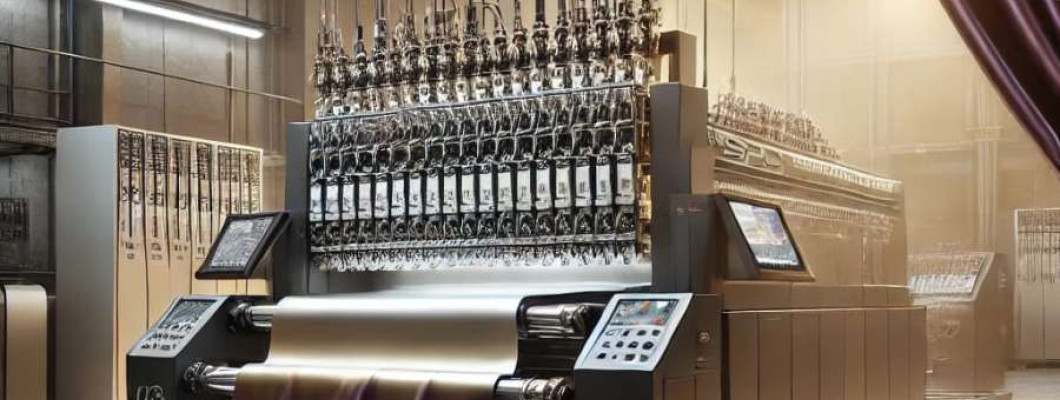
The Industrial Reality of Spot UV Printing in High-Volume Environments
Consider a mid-sized printing facility specializing in premium packaging and promotional materials. The integration of a device such as the A3 Spot UV Printing Machine UV Coating Printer is often seen as a straightforward upgrade to enhance finishing processes. However, the industrial reality reveals complex operational bottlenecks that can dramatically affect throughput. For example, UV curing times, substrate handling precision, and coating uniformity emerge as critical stress points when scaling from small batch runs to continuous mass production. Delays inherent to drying cycles and machine changeover can cause significant workflow interruptions if not properly addressed.
Moreover, the interplay between machine calibration and substrate variability requires high adaptability. Without precise human factor engineering, inconsistencies in spot UV layer thickness produce quality control issues that cascade into rework costs. Material feeding mechanisms must adeptly handle different paper weights commonly measured in gsm, with micron-level registration accuracy to ensure spot UV coatings align perfectly with pre-printed graphics. These challenges create hidden bottlenecks demanding a technical evaluation of the printer’s core mechanisms and throughput capabilities.
Technical Deep-Dive Into Components and Performance Parameters
UV Lamp and Curing Mechanisms
The A3 Spot UV Printing Machine utilizes a medium-pressure mercury UV lamp delivering a calibrated irradiance of approximately 1000 mW/cm2. The lamp's spectral distribution peaks near 365 nm, optimizing photoinitiator activation in UV coatings. Curing speed depends on lamp power density and conveyor speed, which maxes out at 3 m/min. Consider the hypothetical scenario where increasing throughput by 50% risks incomplete polymerization. Incomplete curing manifests as coating tackiness or poor abrasion resistance, triggering quality failures. Thus, the lamp power versus conveyor speed relationship dictates curing uniformity and operational limits.
Printhead and Coating Application Accuracy
Precision of droplet dispensation is governed by piezoelectric printheads with 5–10 picoliter droplet volumes, enabling micron-level control of UV spot sizes from 0.1 mm to 2 mm diameter. The printer’s nozzle array is arranged for 1200 dpi resolution per pass. The internal firmware compensates for substrate thickness variations up to 0.5 mm, utilizing pressure sensors for real-time adjustments. Comparatively, lower-end models lacking dynamic pressure feedback show up to 12% coating misregistration under high-volume runs, emphasizing the importance of integrated sensors to maintain print quality.
Material Handling and Feed System
The feed system supports substrates up to 320 mm by 450 mm, with paper substrate thicknesses ranging from 150 to 350 gsm. The feeder uses vacuum actuated belts synchronized with servo motors controlled via real-time feedback loops to maintain ±0.1 mm positional accuracy. This mechanical precision is crucial for multi-pass workflows involving additional coatings or printing layers. Feeding inconsistencies are a primary bottleneck in scaling production, where even micro-misalignment can lead to rejects due to UV coating overlap or gaps.
Thermal and Environmental Control Systems
UV curing inherently generates thermal loads, elevating substrate temperature to approximately 50°C–60°C during processing. The printer integrates active cooling modules with heat exchangers rated at 150 W dissipation per unit, maintaining internal electronics at 30°C–35°C. Ambient conditions influence both print quality and machine lifespan. Dust and particulate filtration are rated at MERV 13, which mitigates contamination risks on coating surfaces. Failure to control thermal and particulate environments can degrade coating adhesion and accelerate wear on optical sensors.
Data Interface and Workflow Integration
The controller hardware features a 1.2 GHz quad-core CPU and 4 GB RAM running bespoke firmware optimized for UV printing protocols. The machine supports standard USB 3.0 and Ethernet 1 Gbps interfaces, facilitating integration into existing RIP (Raster Image Processor) workflows. The control software offers job queue management with dynamic error detection, minimizing downtime. Latency measured between command dispatch and actuator response averages below 25 ms, ensuring tight synchronization during high-speed operations.
| Feature | A3 Spot UV Printing Machine | Lower-End UV Coating Printer |
|---|---|---|
| Max Conveyor Speed | 3 m/min | 1.5 m/min |
| Print Resolution | 1200 dpi | 600 dpi |
| UV Lamp Irradiance | 1000 mW/cm² | 550 mW/cm² |
| Feed Accuracy | ±0.1 mm | ±0.5 mm |
| Curing Temperature | 50°C–60°C | 70°C–80°C |
| Control Interface | USB 3.0 / Ethernet 1 Gbps | USB 2.0 |
Scenario Analysis That Shapes Business Decisions
High-Volume Packaging Production
For enterprises specializing in consumer goods packaging runs exceeding 10,000 units per day, throughput and uptime govern profitability. The A3 Spot UV Printing Machine’s faster curing and precision reduce bottlenecks, enabling continuous production cycles with less intervention. Integrated error detection prevents costly downtime. The ±0.1 mm feed accuracy preserves design integrity essential to brand differentiation.
Custom Luxury Print Shops
Shops focused on artisanal runs benefit from the printer’s fine resolution and small spot sizes, achieving exquisite tactile finishes. However, slower conveyor speeds present less risk of incomplete curing, ensuring premium surface gloss and durability. The machine’s adaptability to various substrates ranging from 150 to 350 gsm broadens material choices for diverse creative applications.
Prototype and Short Run Experimentation
Design studios iterating on product samples depend on precise feedback loops and integration ease. The machine’s control software synchronizes rapidly with RIP systems, allowing quick job changes with minimal setup time. Thermal controls ensure substrate integrity during experimental varnishes. However, operators must monitor curing closely when changing UV coating chemistry, as polymerization kinetics differ across formulations.
Expert FAQ on Complex Operational and Technical Aspects
Q1: How does the UV lamp power density impact lifecycle maintenance?
A1: Higher irradiance lamps accelerate photoinitiator activation but reduce lamp longevity from approx. 2000 hours to 1500 hours due to thermal stress. Scheduled lamp replacements are critical to maintaining curing quality.
Q2: What factors influence droplet placement accuracy at 1200 dpi?
A2: Mechanical vibration, substrate thickness variation, and nozzle wear affect positional accuracy. The A3 machine mitigates this through pressure sensors and vibration damping mounts.
Q3: Can the machine handle substrates beyond 350 gsm?
A3: Beyond 350 gsm, feed system strain increases risk of jams and misfeeds. Custom feeder modifications would be required for heavier stocks.
Q4: How is thermal expansion handled during continuous runs?
A4: Thermal expansion of substrates is compensated by real-time sensor feedback adjusting feed timing to prevent layer misregistration.
Q5: Is there support for integrating third-party workflow management software?
A5: Yes, open Ethernet TCP/IP protocols allow for API-level integration with enterprise print management suites.
Strategic Verdict and Recommendation for Industry Leaders
After a rigorous technical and operational evaluation, the A3 Spot UV Printing Machine UV Coating Printer substantiates itself as an industrial-grade solution tuned to address critical throughput bottlenecks in scalable business environments. Its advanced UV lamp system, precision feed mechanisms, and integration-friendly control architecture align with the demands of high-volume and diverse substrate workflows. While maintenance of lamp and feeding components requires adherence to scheduled cycles, these do not negate the overall operational efficiency gains measurable in reduced downtime and superior print quality.
For business owners prioritizing automation, throughput, and precise UV coating application, this printer offers a compelling blend of robust hardware and firmware sophistication. The direct experience of throughput limits controlled by physics and machine architecture is well mitigated here, enabling confident investment decisions.
Visit the manufacturer’s page for further specification details and purchasing considerations: A3 Spot UV Printing Machine UV Coating Printer.