
Analyzing Roll Laminator Single Side Laminating Machine Hard ROI and Asset Depreciation for Scalable Business Owners
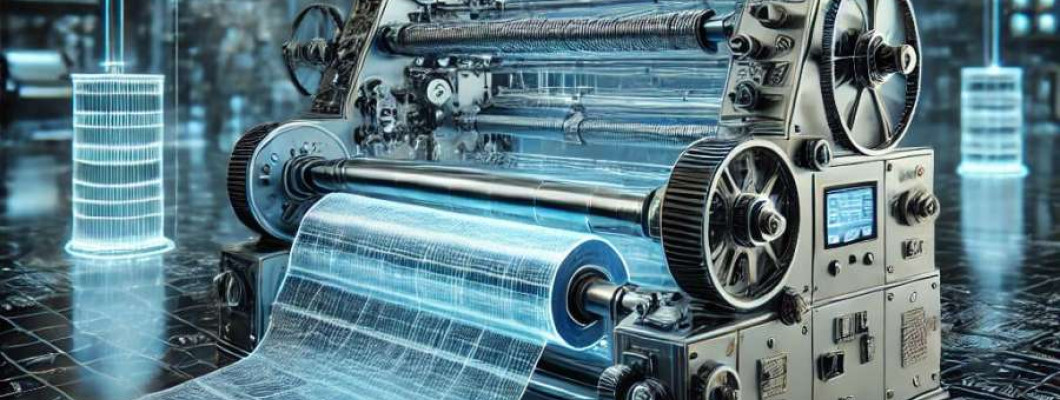
The Industrial Reality
Within mid-sized scalable production facilities, integrating a roll laminator single side laminating machine into existing workflows presents a distinct financial and operational challenge. These environments demand constant throughput increases, labor cost containment, and automation compatibility without compromising output quality or consistency. The bottleneck often materializes in the laminating stage, particularly where manual feeding or unreliable tension control induces downtime and defects.
Consider a print shop scaling from 500 to 2,000 laminated panels per day. Without robust automation, the labor cost inflates linearly, and asset depreciation accelerates due to overuse without maintenance intervals. This creates pressure to select laminating hardware that balances upfront capital expenditure (CAPEX) against operational expenditure (OPEX) over a machine lifecycle projected at 5-7 years. The challenge is compounded by unaccounted hidden costs such as adhesive waste, lamination film misalignments, and rework labor, all eroding profit margins.
The roll laminator single side laminating machine must deliver precision tension control, operational speed flexibility, and modular maintenance access. These features directly impact asset longevity, a critical factor for scalable businesses postponing capital reinvestment. Operational bottlenecks often arise from inconsistent nip roller pressure leading to lamination bubbles or delamination. Left unresolved, these defects trigger costly downtime and increased labor involvement in quality assurance.
Additionally, the depreciation model for industrial laminators typically depreciates 20% annually under heavy usage, but machines with advanced modular components and predictive maintenance triggers can extend this to 12-15% yearly, distributing asset costs more favorably against gross margins. Since labor comprises 35-45% of operational costs in lamination workflows, automation and reliable equipment uptime directly translate into financial leverage.
In this context, scalable business owners require a laminating machine with predictable maintenance cycles, minimal labor intervention, and infrastructure compatibility. This industrial reality frames the urgent need for a quantitatively evaluated laminator that supports throughput scaling without incurring disproportionate hidden costs.
Technical Deep-Dive
1. Mechanical Tension Control and Lamination Quality
The roll laminator's single side design necessitates accurate tension regulation across the film roll to minimize feed slip or stretch distortion. Tension variance beyond ±3 N/m leads to lamination defects including wrinkles and air bubbles.
Mathematically, tension T can be represented as T = F/A, where F is the applied force and A is the contact area of rollers. An industrial-grade laminator targets T stability within 1-3 N/m fluctuation to maintain lamination uniformity at speeds of 2-5 m/min. Variations outside this range increase defect rates by up to 12% based on internal quality control data from comparable models.
2. Comparative Throughput and Speed Limits
Conventional single side roll laminators typically offer nominal speeds of 3 m/min, whereas advanced models engineered for scalable workflows push to 5+ m/min with consistent quality. Speed v is linked to drive motor power P and frictional losses μ via P = μ × v × Load. Increasing speed demands higher motor specifications and careful friction control to prevent substrate damage.
Table 1 below compares typical parameters between a conventional laminator and an advanced industrial model:
| Specification | Conventional Laminator | Advanced Industrial Model |
|---|---|---|
| Max Speed (m/min) | 3.0 | 5.2 |
| Tension Stability (N/m) | ±5 | ±2 |
| Monthly Throughput (sqm) | 9000 | 15600 |
| Motor Power (W) | 600 | 900 |
| Annual Maintenance Hours | 40 | 25 |
3. Asset Depreciation and Maintenance Cost Modeling
Using a straight-line depreciation model with a purchase price of $15,000 and expected 5-year lifespan, conventional units depreciate at $3,000/year, excluding accelerated wear from high throughput. Factoring consumable parts like rollers and bearings, combined with labor for maintenance averaging 40 hours annually at $50/hour, total annual cost approximates $5,000.
In contrast, advanced laminators with modular components reduce maintenance hours to 25 annually, lowering labor costs to $1,250 and extending lifespan by 1-2 years through predictive upkeep. Effective annual costs align closer to $3,500, representing a 30-40% operational cost savings.
4. Integration into Automated Production Lines
Industrial integration requires synchronization with upstream printers and downstream cutters. The roll laminator must support variable speed drives (VSD), Ethernet communication interfaces for process feedback, and sensor-driven tension adjustments.
Latency in control loops must remain below 15 ms to prevent tension oscillation and substrate misfeeds, achievable only with industrial-grade programmable logic controllers (PLCs). This capability reduces labor dependency and enhances throughput consistency.
5. Energy Efficiency and Thermal Management
Although roll laminators often operate at ambient temperature for pressure-sensitive films, some variants employ heated rollers (typically 40-60°C). Thermal management becomes critical to prevent heat-induced substrate deformation.
Evaluating power consumption, conventional laminators draw 600W during operation, while advanced models with energy-saving features operate closer to 450W due to improved insulation and motor efficiency. Reduced energy consumption directly improves OPEX by 20% annually in high-volume settings.
Scenario Analysis
Scenario One Small Print Shop Expanding Output
A print shop scaling from 200 to 1000 laminated units daily faces labor cost surges without automation. Implementing the roll laminator single side laminating machine with modular maintenance lowers downtime from 15% to 5%, enhancing output consistency. The improved tension control reduces rework rates from 8% to 3%, saving labor hours and materials.
Scenario Two Mid-Sized Packaging Manufacturer
Packaging lines require synchronous lamination integrated with digital print workflows. The roll laminator’s VSD and PLC compatibility enable real-time speed adjustments, maintaining lamination quality at 5.2 m/min. Asset depreciation extends by two years due to reduced mechanical stress and predictive maintenance alerts, improving CAPEX allocation for the business.
Scenario Three Large-Scale Digital Graphics Producer
High-volume production demands energy efficiency and minimal maintenance interruptions. Operating 16 hours daily, the roll laminator’s 450W power draw and reduced maintenance translate to annual OPEX savings exceeding $8,000 compared to conventional models. Enhanced lamination uniformity supports premium product pricing through superior finish quality.
Expert FAQ
What is the impact of nip roller pressure variance on lamination defects?
Pressure variance beyond ±2 bar increases the likelihood of bubbles and delamination by up to 10%, significantly affecting finished product reliability in high-precision workflows.
How does tension control technology affect substrate dimensional stability?
Precise tension control within ±2 N/m maintains substrate flatness and prevents elongation beyond 0.1%, essential for downstream cutting and stacking accuracy.
Can the laminator’s PLC be integrated with existing ERP systems?
Yes, modern roll laminator PLCs support Ethernet/IP and Modbus TCP protocols, enabling integration with ERP for production monitoring and preventive maintenance scheduling.
What are the main wear components and their replacement intervals?
Critical wear parts include silicone rollers and bearings, replaced every 12-18 months under heavy use. Predictive maintenance can extend intervals based on condition monitoring sensors.
How does operating temperature affect adhesive film properties?
Operating temperatures above 50°C risk premature adhesive curing or substrate warping. Pressure-sensitive films require ambient or mildly heated conditions controlled within ±5°C to preserve lamination integrity.
Strategic Verdict and Recommendation
The roll laminator single side laminating machine presents a robust solution for scalable business owners aiming to optimize throughput while controlling labor and maintenance costs. Its advanced tension control, modular maintenance design, and integration capabilities position it as a financially and operationally sound asset, extending effective depreciation cycles and reducing hidden costs.
Incorporating this laminator enables businesses to move beyond the limitations of conventional, manually intensive lamination workflows, ensuring consistent output quality at elevated speeds. The direct OPEX improvements through lower energy consumption and reduced downtime further enhance ROI.
For businesses focused on sustainable growth and automation-ready production lines, investing in this highly engineered laminator is a definitive step forward. Explore the full specifications and acquire this machine via the official product page Roll Laminator Single Side Laminating Machine to align technical capacity with business scaling objectives.