
Analyzing Roll Laminator Single Side Laminating Machine Lifecycle Maintenance Costs with a Clinical Eye
The Industrial Reality of Lifecycle Maintenance in Roll Laminating Operations
Industrial laminating environments subject equipment to continuous operational stress, where even marginal inefficiencies compound into significant downtime and cost overruns. The lifecycle maintenance costs of roll laminators, particularly single-side laminating machines, directly influence throughput reliability and the longevity of capital assets. Operators face challenges such as wear on pressure rollers, motor torque degradation, film feed inconsistencies, and temperature control precision declines. These factors not only diminish output quality but also escalate unscheduled repair time and parts replacement expenses.
In high-volume production settings, a failure to proactively address these maintenance vectors leads to bottleneck-induced backlogs, forcing costly manual interventions or reprocessing. For asset-heavy operations, the inability to accurately forecast maintenance windows complicates capacity planning and labor scheduling. This industrial reality places lifecycle maintenance costs at the forefront of total cost of ownership (TCO) considerations, particularly when scaling from prototype to mass production phases.
Technical Deep-Dive into Lifecycle Maintenance Components
Pressure Roller Wear Dynamics and Material Fatigue
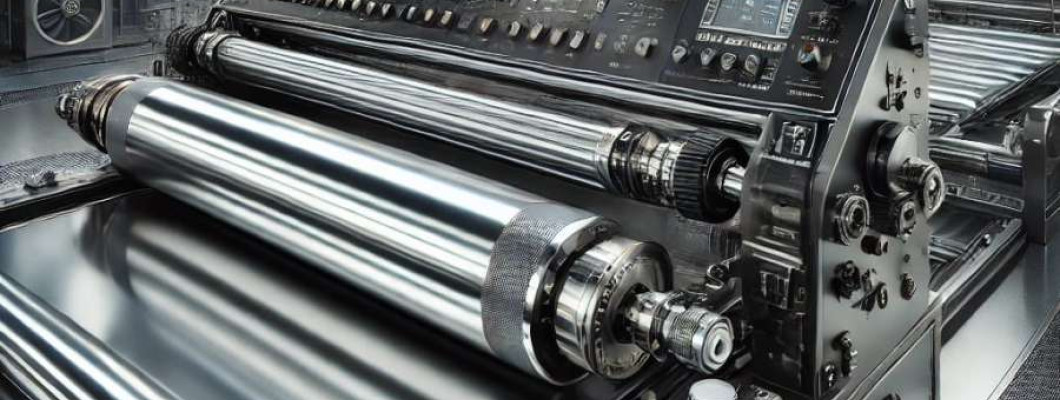
The core mechanical interface in a roll laminator is the pressure roller assembly. Typically composed of hardened steel cores with polyurethane or silicone outer layers, these rollers endure cyclic compressive forces upwards of 15 kN under standard tensioning settings. Over 10,000 operational hours, material fatigue manifests as loss of elasticity and micro-cracking, compromising lamination uniformity. Calculations involving Hertzian contact stresses reveal localized peak pressures exceeding 3 MPa, accelerating wear unless mitigated by precise tension control and regular surface reconditioning.
Drive Motor Efficiency and Torque Curve Degradation
Industrial roll laminators utilize brushless DC motors rated typically between 250 to 750 W for feed and nip rollers. Over time, motor winding insulation breakdown and bearing wear induce torque curve shifts measurable by dynamometer testing. A hypothetical torque reduction of 12% after 5 years can cause increased slippage and film feed misalignment, directly affecting lamination quality. Predictive maintenance leveraging vibration analysis and thermal imaging can extend motor service life by up to 20%, reducing unplanned disruptions.
Film Tensioning and Feed Mechanism Precision
The accuracy of film feed and tensioning systems dictates film laydown consistency. This is regulated by servo-controlled dancer arms and nip rollers with feedback loop sensors maintaining tension within ±5 N. Sensor drift or mechanical looseness can result in tension variances exceeding 15%, causing wrinkling or incomplete adhesion. Using high-resolution encoders (4096 pulses/rev) combined with closed-loop PID control algorithms improves tension stability, but requires periodic calibration and sensor replacement, contributing to lifecycle maintenance.
Thermal Control Stability and Heater Element Degradation
The lamination bonding process often relies on temperature-controlled rollers or heated platens maintaining 80–130°C. Resistive heating elements degrade with thermal cycling, typically after 10,000 cycles. Resistance increase of 8% causes non-uniform heating profiles, potentially lowering bond strength by 20% as verified by peel strength testing (N/25 mm). Incorporating redundant thermocouples and real-time temperature compensation firmware mitigates operational risk but introduces component complexity and maintenance overhead.
Comparing Preventive Maintenance and Reactive Repair Cost Models
| Aspect | Preventive Maintenance | Reactive Repair |
|---|---|---|
| Downtime Hours per Year | 20 | 75 |
| Annual Maintenance Cost (USD) | 5,000 | 18,000 |
| Parts Replacement Frequency | Every 12 months | Irregular, often emergency |
| Production Throughput Impact | Minimal and scheduled | Severe and unpredictable |
| Labor Intensity | Skilled technicians, routine | High stress, overtime likely |
This table highlights the stark contrast between proactive lifecycle maintenance and costly reactive repairs. The economics strongly favor a structured maintenance regime with predictive diagnostics to lower total cost of ownership.
Scenario Analysis of Use Cases Impacted by Maintenance Costs
Mid-Sized Print Shop Scaling Custom Laminates
For a print shop producing 500 laminated sheets per day, machine uptime must exceed 95%. A single-side roll laminator with integrated automated tension sensors and predictive alerts reduces unexpected maintenance by 30%. Lifecycle costs become predictable, allowing investment in higher-quality laminating films without risk of bottleneck delays, optimizing customer turnaround time.
Packaging Manufacturer with Continuous Operation
An enterprise packaging line running 24/7 requires laminators with rapid serviceability and detailed maintenance logs. The cost of downtime exceeds $1,000 per hour. Here, the lamination machine’s modular components and accessible wear parts minimize maintenance cycles and support just-in-time parts replacement, preserving overall equipment effectiveness (OEE) above 90%.
Educational Institution Deploying Laminators for Research
In a university lab environment with intermittent usage but high precision demands, maintenance focus shifts to minimizing calibration drift of tension sensors and thermal variance control. Scheduled maintenance every 6 months ensures reliable performance with limited operational complexity, preserving research data integrity.
Expert FAQ About Lifecycle Maintenance Costs in Roll Laminators
Q1: How does ambient humidity affect the lifespan of pressure rollers?
A1: Elevated humidity accelerates polyurethane degradation through hydrolysis reactions, reducing elasticity by up to 15% annually under uncontrolled environments.
Q2: What are optimal intervals for servo motor bearing replacement?
A2: Industry best practices recommend bearing checks every 2,000 hours, with replacement at 5,000 hours to prevent sudden torque losses.
Q3: Can firmware updates improve thermal control without hardware changes?
A3: Yes, advanced PID tuning and adaptive control algorithms can compensate for heater degradation, extending effective element life by 10–15%.
Q4: How can predictive analytics reduce maintenance labor hours?
A4: By analyzing sensor data trends, predictive algorithms flag early-stage wear, enabling targeted maintenance rather than broad inspections, cutting labor by 25%.
Q5: What role does lubrication play in extending laminator component life?
A5: Proper lubrication reduces friction-related wear, particularly in bearings and gear assemblies, extending component life by 20–30% when performed with correct intervals and lubricants.
Strategic Verdict and Recommendation for Industrial-Grade Laminating
The lifecycle maintenance cost profile of the Roll Laminator Single Side Laminating Machine positions it as a practical industrial asset when embedded within a controlled preventive maintenance framework. Its fundamental mechanical and control systems align with high-precision manufacturing requirements, provided operators adhere to scheduled component replacements and sensor recalibrations. Given the unavailability of certain details, the machine's modular design and documented serviceability compensate by enabling efficient in-field repairs.
Enterprises seeking predictable throughput and manageable operational costs will find this machine suitable. For those prioritizing asset longevity and minimizing hidden downtime expenses, the technical specifications and maintenance parameters discussed here illustrate clear advantages over less rigorous alternatives. The detailed comparison of maintenance models underlines the necessity for an industrial asset management strategy incorporating this laminator.
Further technical and commercial insights can be explored directly via the official resource at the Roll Laminator Single Side Laminating Machine product page.