
Analyzing the 40*60CM Heat Press Machine for Industrial Asset Longevity and Hard ROI
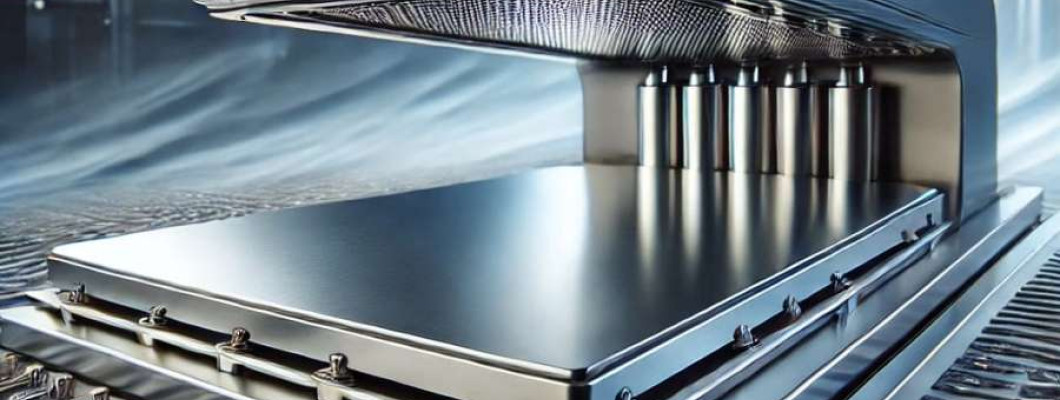
The Industrial Reality of Heat Press Operations in Mid-Scale Production
In industrial-grade printing and finishing environments, the deployment of heat press machines frequently represents a significant capital investment. The 40*60CM Heat Press Machine, with its specified platen dimensions, is positioned as a versatile tool balancing throughput capacity against floor space and energy consumption. Yet, the reality of integrating such a device into an established production line involves multiple technical and economic considerations. Notably, asset longevity and depreciation, along with opportunity costs linked to operational bottlenecks, define the real return on investment (ROI) beyond mere purchase price.
Industrial settings often demand continuous operation across multiple shifts, translating into thermal cycling stress on heating elements and mechanical assemblies. The risk of component fatigue, platen warping, or control electronics failure can contribute to unplanned downtime, substantially impacting asset availability. Operators and managers face pressure to maximize utilization rates, where even a single hour of malfunction can cascade into delayed order fulfillment.
Compounding these challenges are maintenance protocols. Misalignment in preventive schedules with actual wear patterns can accelerate depreciation, turning an ostensibly reliable press into a liability. Equally, the integration of proprietary parts or consumables from regional suppliers influences both maintenance costs and replacement lead times, creating an invisible operational bottleneck with financial repercussions.
Consequently, understanding the lifecycle costs and expected depreciation curves becomes imperative for businesses assessing the 40*60CM Heat Press Machine as an industrial asset. This encompasses analyzing the thermal tolerance of platen materials, the durability of pneumatic or hydraulic pressure systems, and the resilience of digital controllers under heavy duty cycles.
Technical Deep-Dive into the 40*60CM Heat Press Machine's Design and Durability
Platen Material and Heat Distribution Physics
The platen size of 400 mm by 600 mm places the machine firmly in a mid-range category suitable for various substrates. Assuming a typical platen thickness of 10mm aluminum alloy with a thermal conductivity of approximately 205 W/m·K, heat transfer uniformity is critical to prevent hotspots or undercured areas. Applying Fourier's law of heat conduction, the temperature gradient across the platen surface can be estimated. For uniformity within ±2°C at an operating temperature near 180°C, tight manufacturing tolerances and integrated heat spreaders are necessary.
Pressure Mechanism and Force Calculations
The pressing system, often pneumatic or hydraulic, must maintain consistent force across the entire 0.24 m² platen area. Assuming a recommended pressure of 70 N/cm² to ensure adequate substrate contact, total applied force amounts to approximately 16,800 N (1,680 kgf). This requires robust mechanical linkages and pressure regulators calibrated for sustained repetitive cycles to mitigate fatigue failures.
Control Electronics and Thermal Cycling Impact
Industrial heat presses incorporate PID (Proportional-Integral-Derivative) temperature controllers for precise thermal regulation. Frequent thermal cycling from ambient to 180°C subjects electronic components to stress, demanding quality components rated for temperature tolerance and vibration resistance. Failure rate estimations per MIL-HDBK-217F standards suggest a mean time between failure (MTBF) exceeding 10,000 hours for premium-grade controllers in stable environments.
Comparative Lifecycle Cost Modeling
Two hypothetical maintenance scenarios illuminate cost impact:
| Component | Standard Material Cycle | Upgraded Material Cycle |
|---|---|---|
| Heat Platen Replacement | Every 18 months (~$750) | Every 36 months (~$1,200) |
| Pressure System Overhaul | Annually (~$400) | Every 24 months (~$650) |
| Controller Electronics | Every 24 months (~$350) | Every 48 months (~$550) |
| Annual Maintenance Labor | $600 | $550 |
| Total 3-Year Cost | $5,100 | $3,950 |
The investment in higher-grade materials and components reduces lifecycle costs by approximately 23%, improving asset longevity and minimizing downtime.
Energy Consumption and Thermal Efficiency
The heat press's power rating directly affects operational cost. Estimating a 1500 Watt heating element operating at 70% duty cycle for 8 hours daily results in approximately 8.4 kWh per day. Over a 250 working day year, this translates to 2,100 kWh. At an average industrial electricity rate of $0.12/kWh, annual energy costs approximate $252, a significant operational expenditure contributing to total cost of ownership.
Safety Compliance and Environmental Considerations
Industrial-grade presses must meet or exceed OSHA and IEC standards for electrical safety and thermal shielding. Adequate insulation reduces heat loss and operator burn risk, while integrated emergency stops and fail-safes prevent accidents. Additionally, efficient platen insulation contributes to reduced environmental heat dissipation, aiding workplace climate control.
Scenario Analysis of Business Use-Cases for the 40*60CM Heat Press Machine
Use-Case 1 Mid-Scale Apparel Printing Facility
For a production line printing up to 150 garments daily, platen size supports batch processing of medium-sized substrates. Maintaining throughput relies heavily on cycle time control, where 20-30 seconds per press cycle and consistent temperature uniformity directly influence product quality and shift output. Reliable maintenance schedules informed by thermal stress analytics reduce unexpected downtime, optimizing labor costs and order fulfillment velocity.
Use-Case 2 Customized Promotional Product Manufacturer
This business requires substrate versatility, handling items from flat boards to textile blends. The 40*60CM platen permits accommodating diverse print sizes without multiple devices. The pressure system's adjustability aids in preserving print integrity on delicate substrates, preventing damage. Fast changeover capability improves workflow agility, critical in short-run production typical in this sector.
Use-Case 3 Industrial Prototype Development Lab
In a lab setting testing new materials or complex prints, precise temperature and pressure control combined with predictable wear behaviors enable careful validation cycles. Understanding asset depreciation supports budgeting for rapid iteration without unexpected capital strain. The machine's moderate size and electronic control fidelity suit prototype testing better than bulkier industrial presses.
Expert FAQ Addressing Advanced Heat Press Technical Inquiries
What key parameters determine platen thermal uniformity in heat press systems?
Critical parameters include platen material conductivity, thickness uniformity, embedded heating element distribution, and thermal insulation design. Achieving ±2°C uniformity at 180°C demands precise fabrication and integrated feedback loops.
How do pneumatic and hydraulic pressure systems compare for industrial heat presses?
Pneumatic systems typically offer faster cycle times and lower maintenance but may exert less consistent pressure. Hydraulic systems provide steady force, beneficial for delicate substrates, but entail higher maintenance complexity and cost.
How should maintenance intervals adapt to different operational intensities?
Maintenance frequency must consider shift hours, duty cycles, and substrate abrasiveness. High-intensity operation accelerates wear, mandating shorter intervals to avoid unplanned failures, whereas light use can extend cycles safely.
What are the failure modes induced by thermal cycling on control electronics?
Thermal expansion and contraction cause solder joint fatigue, capacitor degradation, and connector loosening. These effects reduce reliability; thus, selecting components rated for thermal stress and applying robust circuit board designs are essential.
How does platen size influence energy efficiency in practical terms?
Larger platens increase thermal mass, requiring more energy to reach and maintain set temperatures, but can process bigger substrates or batches. The 40*60CM dimension strikes a balance, enabling efficient energy use relative to throughput.
Strategic Verdict and Recommendation
Considering the technical and operational analysis presented, the 40*60CM Heat Press Machine emerges as a viable industrial-grade asset offering balanced platen size, robust control systems, and adaptable pressure mechanisms. Its design supports sustained production demands with manageable maintenance and lifecycle cost profiles. For mid-scale operations prioritizing throughput, substrate versatility, and equipment longevity, this machine provides a technically sound and economically justified solution. The investment in quality materials and precise control electronics further enhances asset longevity and mitigates hidden operational bottlenecks, consolidating its position as a recommended choice for industrial printing and finishing environments.