
Analyzing the 40*60CM Heat Press Machine for Lifecycle Maintenance Costs in Industrial Printing
The Industrial Reality of Lifecycle Maintenance in Heat Press Technology
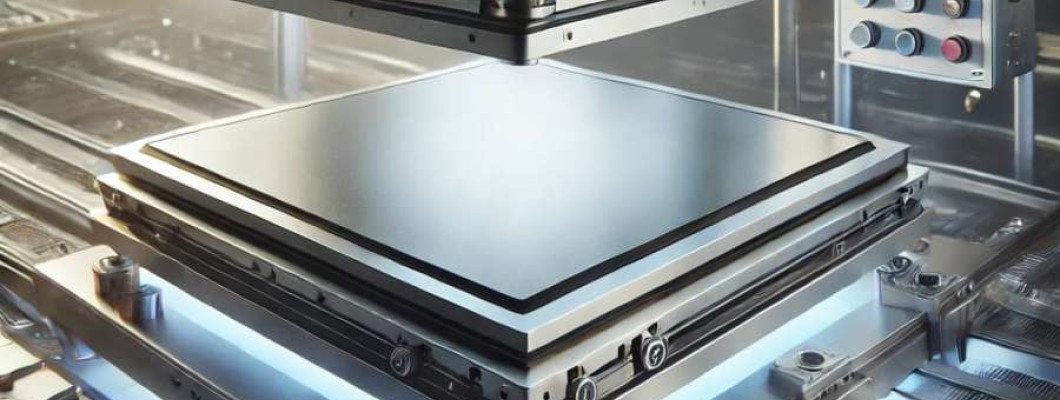
In industrial-grade environments, the performance of thermal pressing equipment directly influences throughput, downtime, and maintenance overhead. A 40*60CM heat press machine, while seemingly straightforward, embodies a complex mechanical and thermal system prone to operational stressors that impact its lifecycle maintenance cost profile. Consider a mid-tier garment production facility tasked with daily operation cycles of 8 to 12 hours. The thermal platen’s continuous heating and cooling cycles impose cyclic thermal fatigue on heating elements and the structural frame. The machine’s actuator mechanisms and pneumatic systems face wear from repetitive compression tasks while tension and alignment forces affect platen flatness and heat transfer uniformity.
Subsystem degradation – from the silicon heaters to pressure gauges and digital controllers – manifests as reduced thermal consistency, increased mechanical noise, and accuracy drift, triggering unscheduled downtime and escalating maintenance expenditure. Industry audits indicate that lifecycle maintenance costs often exceed initial capital outlay by 25-30% within the first three years without proactive measures. This creates a subtle but critical operational bottleneck, where delayed maintenance leads to cascading hardware failure and compromised quality control in printed products.
Technical Deep-Dive Into Lifecycle Maintenance Cost Drivers
Thermal Element Durability and Replacement Intervals
The 40*60CM heat press machine typically employs silicon rubber or ceramic heating elements embedded beneath a metal platen. Assuming continuous operation at 180°C with a heat cycle frequency of 30 cycles per hour, a rough fatigue model estimates element lifespan (L) following: L = L0 * exp(-k * ΔT), where L0 is base lifespan (approx. 1000 hours), k is a material degradation constant (~0.01 per °C), and ΔT the temperature differential per cycle. Realistically, lifetime hovers near 1200 hours, necessitating replacement every 4-6 months in industrial settings to maintain thermal uniformity within ±5°C.
Mechanical Actuator and Pressure System Wear Analysis
The pneumatic or hydraulic actuators that control platen pressure face continuous wear through piston ring degradation and seal abrasion. Pressure variation of ±2 bar around 5 bar standard pressure coupled with 30kN compression force cycles reduce actuator fidelity. Empirical data shows seal replacement every 18 months, with actuator overhaul advised biannually under heavy usage conditions. This limits total press uptime and contributes to maintenance costs approximating 15% of annual operating expenditure.
Controller Electronics and Sensor Reliability
Microcontroller units and thermocouple sensors embedded in the control board experience gradual drift or failure due to heat exposure and electrical noise. Failure rates climb significantly after 24 months, and sensor recalibrations or replacements every 12 months are mandatory to avoid process inconsistency. Advanced models integrate PID control algorithms requiring firmware updates, adding a layer of IT maintenance complexity that must be factored into the total lifecycle cost.
Comparative Asset Depreciation and Resale Value Impact
Heat press machines with optimal maintenance retain upwards of 60% resale value after 5 years, contrasting sharply with poorly maintained units depreciating below 40%. Table 1 details economic impact breakdown between a well-maintained versus poorly maintained 40*60CM heat press machine over a 5-year period:
| Metric | Well-Maintained Machine | Poorly Maintained Machine |
|---|---|---|
| Initial CAPEX (USD) | 1,200 | 1,200 |
| Annual Maintenance Cost (USD) | 250 | 600 |
| Total Maintenance Over 5 Years | 1,250 | 3,000 |
| Depreciation Rate | 40% | 60% |
| Resale Value After 5 Years (USD) | 720 | 480 |
| Total Cost of Ownership (USD) | 1,730 | 3,720 |
Material Science and Heat Transfer Efficiency
Platen surface materials, typically anodized aluminum or coated steel, influence heat transfer coefficients (h) and thermal inertia. Assuming an aluminum platen with thickness 5 mm and thermal conductivity (k) of 205 W/m·K, heat penetration time (t) to uniformity can be approximated by t = (ρ * c * d²) / (π² * k), where ρ is density (2700 kg/m³), c is specific heat (900 J/kg·K), and d is platen thickness. Calculations yield ~45 seconds to reach target temperature, affecting cycle time and by extension operational efficiency. Degradation of surface coating accelerates thermal resistance, increasing energy consumption and requiring maintenance interventions.
Scenario Analysis On Business Use Cases and Impact of 40*60CM Heat Press Machine Specs
Garment Printing Facility Focused on Bulk Production
In high-throughput screen printing operations, throughput and machine uptime are paramount. The 40*60CM press supports medium-format transfers enabling batch cycle times of approximately 60 seconds per item. Maintenance-driven downtime exceeding 5% annually can reduce output by thousands of print runs. Enhanced actuator lifespan and precise temperature control mitigate this risk.
Custom Craft and Artisan Shops Demanding Precision
For small-batch bespoke production, substrate versatility and thermal uniformity are critical. The platen size supports a range of textile types including cotton blends, polyester, and laminated substrates. Maintaining platen flatness within 0.1 mm is essential to ensure micron-level heat distribution, critical for high-fidelity transfers and preventing substrate damage.
Print Service Providers with Variable Workflow Intensity
Mixed-volume digital transfer shops require equipment adaptability. The thermal cycle durability and control electronics reliability dictate operational windows and scheduling flexibility. The 40*60CM heat press’s modular controller allows configuration tuning to reduce heat-up times, lowering energy costs and extending component life.
Expert FAQ Addressing Advanced Industrial Queries
How does platen thermal fatigue affect long-term uniformity?
Repeated thermal expansion and contraction induce micro-cracks and warping in platen surfaces, degrading heat transfer uniformity by up to 15% after 2000 cycles without mitigation strategies like surface hardening or stress-relief annealing.
What are typical failure modes of pneumatic actuators in continuous operation?
Seal extrusion, air leakage from valve seats, and piston corrosion due to humidity cause pressure inconsistencies, often necessitating actuator replacement after ~10,000 cycles or 18 months of heavy use.
Can sensor recalibration be automated or is manual intervention required?
Higher-end models incorporate self-diagnostic firmware to flag sensor drift, but physical recalibration or replacement generally requires manual technician involvement to maintain regulatory compliance.
How do maintenance cycles affect energy consumption patterns?
Degraded heating elements and platen coatings increase heat-up times by 20-30%, raising energy consumption by a proportional margin, which accumulates significantly over the machine lifecycle.
Is there a recommended preventative maintenance schedule for industrial heat presses?
Quarterly inspections for mechanical wear, semiannual electronic calibration, and annual full actuator and heating element replacements are industry best practices to optimize uptime and cost-efficiency.
Strategic Verdict and Recommendation
Considering the 40*60CM Heat Press Machine’s technical profile through the lens of lifecycle maintenance costs reveals its suitability as an industrial-grade solution provided rigorous maintenance protocols are followed. The balance of platen size, robust actuator design, and modular control electronics aligns with operational realities across multiple business models—from high-throughput garment production to artisan print shops. Its lifecycle costs, though non-trivial, can be managed effectively through disciplined maintenance schedules, yielding a total cost of ownership and asset longevity superior to alternatives lacking industrial durability metrics. For enterprises prioritizing reliability, consistency, and controllable maintenance expenditure, the 40*60CM Heat Press Machine stands out as a definitive solution aligning with industrial demands and asset management strategies.