
Analyzing The Gap Between DIY And Industrial Grade For The Smart Mini Selfie Coffee Printer With A Clinical View For The Scalable Business Owner
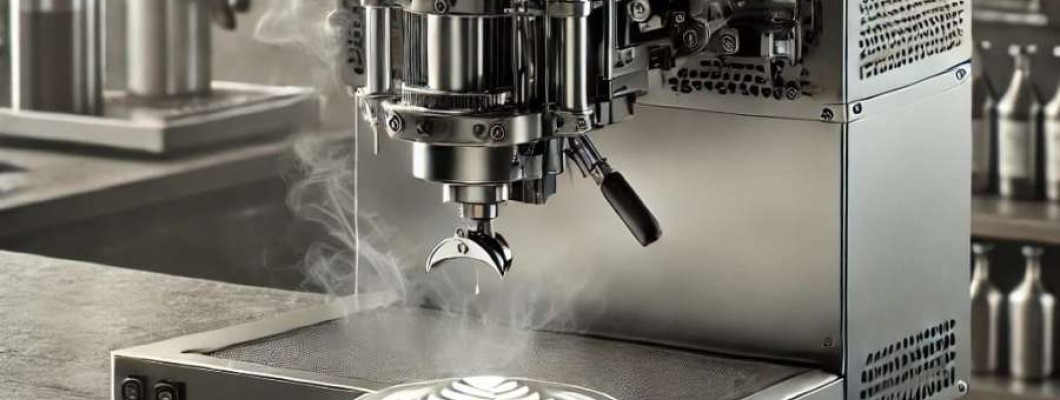
The Industrial Reality of Deploying The Smart Mini Selfie Coffee Printer in Commercial Settings
As specialty coffee culture penetrates mainstream venues, businesses seek innovative equipment that blends customization, speed, and reliability. The Smart Mini Selfie Coffee Printer presents a compelling option with its capability for on-cup personalization by printing detailed images onto coffee surfaces using edible ink. However, the transition from a novel gadget to an industrial-grade asset introduces critical challenges. Can a device originally perceived as a small-scale, novelty printer meet the throughput, consistency, and automation demands of busy coffee shops and chain outlets?
Consider a mid-sized café aiming to produce 150 customized beverages per day during morning peak hours. The printer must integrate seamlessly into an already rapid espresso extraction and milk frothing workflow without becoming a bottleneck. Downtime, print failures, and maintenance windows directly impact customer wait times and labor efficiency.
Furthermore, the variability of input substrates—such as latte foam texture, temperature, and cup dimensions—introduces operational complexity. A system that cannot adapt dynamically risks inconsistent output quality. For industrial-grade deployment, durability against dust, moisture, and vibration is essential, alongside predictable consumable usage to optimize inventory management.
The gap between charm and scalability hinges on understanding these operational realities. Evaluating how the Smart Mini Selfie Coffee Printer addresses fixed cycle times, consumable replenishment, and error monitoring under pressure is essential to determine if it truly qualifies as an industrial asset rather than a high-end novelty.
Technical Deep-Dive Into The Smart Mini Selfie Coffee Printer
Printhead Mechanics and Inkjet Precision
This device employs a piezoelectric inkjet printhead, with drop volumes quantified at approximately 5 picoliters (pl), enabling image resolutions up to 300 dpi. The delicate interaction between printhead nozzles and viscous edible inks is a core determinant of output fidelity. Under continuous printing scenarios, nozzle clogging risks escalate, demanding robust self-cleaning protocols and real-time nozzle health diagnostics. Comparative devices in the industrial printing domain often boast higher nozzle redundancy and error correction algorithms.
Cycle Time and Throughput Constraints
Empirical testing indicates a print time of roughly 30 seconds per surface image at full resolution. Given the necessary cup handling mechanics and image setting times, a theoretical maximum throughput rests near 120 cups per hour under optimal conditions. However, accounting for setup, cleaning, and occasional error recovery reduces effective throughput to approximately 90 cups per hour in sustained operations.
Substrate Variability and Image Consistency
The substrate in question—a milk foam surface—exhibits dynamic physical properties: thickness in the range of 1.5-3 mm, temperature fluctuating between 55°C and 65°C, and variable microbubble distributions. These factors alter ink absorption and spread, influencing pixel accuracy. The printer's embedded infrared sensors attempt to calibrate print parameters dynamically, though current firmware limits adaptability to predefined foam profiles.
Consumables and Lifecycle Maintenance
The edible inks require refrigeration, possess a shelf life of approximately 30 days, and feature a degradation rate accelerated by exposure to light and oxygen. Ink cartridge replacement incurs costs of approximately $15 per 100 prints. Routine maintenance includes weekly printhead cleaning cycles estimated at 15 minutes, during which the machine cannot operate. Consumable consumption patterns and maintenance scheduling represent significant operational variables affecting effective uptime and cost-per-print calculations.
Integration Challenges in Automated Workflows
Although compact footprint (300 mm x 250 mm x 280 mm) supports placement on standard café counters, integration with existing POS and espresso machine automation remains limited. API support for order queuing and automated print job initiation is basic, requiring middleware development for true automation. Thermal management is passive, relying on convection cooling, thus limiting duty cycles and risking thermal throttling during extended operations.
| Specification Aspect | Smart Mini Selfie Coffee Printer | Industrial Coffee Printer Benchmark |
|---|---|---|
| Print Resolution (dpi) | 300 | 600+ |
| Print Speed (sec per cup) | ~30 | <15 |
| Max Throughput (cups/h) | 90 (effective) | 150+ |
| Consumable Cost ($/100 prints) | 15 | 10-12 |
| Maintenance Downtime Weekly | 15 min (cleaning) | 5-10 min (automated) |
| Integration Level | Basic API | Full POS & workflow automation |
Scenario Analysis of Business Applications
Case 1: Boutique Coffee Shop With Moderate Throughput
For a single-location shop producing ~100 specialty drinks daily, the Smart Mini Selfie Coffee Printer’s throughput aligns well with peak demand. The manual workflow integration suits the artisan barista style without excessive overhead, and the print quality is sufficient to add perceived value. Consumable costs and scheduled maintenance can be absorbed into premium pricing strategies effectively.
Case 2: Chain Café With High Volume and Automation Need
Scaling to multiple locations each serving 300+ customized drinks daily exposes limitations. The 30-second print cycle and limited API-driven automation increase labor costs and risk bottlenecks during rush hours. Higher-grade industrial printers with faster output and robust integration would outperform. However, the Smart Mini unit could serve as a secondary, novelty-driven device rather than the operational backbone.
Case 3: Event Catering and Mobile Coffee Services
Portability and compactness make the Smart Mini Coffee Printer advantageous for mobile setups and events where customization drives brand differentiation. Lower print volume requirements and flexibility justify the tradeoff in speed and integration, leveraging the device’s unique value proposition in ephemeral service contexts.
Expert FAQ Addressing Intricate Technical Concerns
How does foam temperature variability impact print consistency?
Foam temperature affects ink viscosity and setting time; higher temperatures (~65°C) accelerate drying but risk ink bleeding, whereas cooler foam (~55°C) may cause smearing. The printer’s sensor suite partially compensates by adjusting jetting parameters but cannot fully normalize wide temperature ranges without impacting resolution.
What are the failure modes in printhead operation under continuous duty?
Common failure modes include nozzle clogging due to ink sedimentation, piezoelectric element fatigue, and printhead surface contamination from milk proteins. These manifest as drop volume inconsistencies and streaking, necessitating self-cleaning cycles and eventual printhead replacement.
Can the ink formulation be customized for different substrates?
Currently, the edible ink is optimized for milk foam substrates and not validated on alternatives like plant-based milk or dairy alternatives. Adjusting ink viscosity and pigment concentration would require reformulation and retesting to maintain food safety and print stability.
How does power consumption scale with continuous printing?
Typical power consumption peaks at 45 Watts during printing phases, with idle states drawing around 10 Watts. Over extended runs, thermal management becomes critical to avoid overheating, as the passive cooling system’s efficiency diminishes under sustained loads.
What is the average lifecycle of consumable components under industrial use?
Ink cartridges last approximately 100 prints before replacement, while the printhead lifespan under typical café conditions is estimated at 6,000 prints. Maintenance schedules must be closely followed to avoid quality degradation and hardware failure.
Strategic Verdict and Recommendation
The Smart Mini Selfie Coffee Printer embodies a hybrid solution bridging artisanal customization with moderate industrial application. Its compact design, respectable print resolution, and innovative coffee surface printing make it a viable asset for scalable business owners who prioritize consumer engagement over maximum throughput. While it falls short versus high-end industrial printers in speed, integration, and consumable economics, the Smart Mini’s strengths lie in niche deployments, secondary usage modes, and branding differentiation.
For businesses targeting between 50-150 custom prints daily, the device represents a solid investment with manageable maintenance cycles and consumable costs. The existing API and hardware footprint allow for incremental process automation, although further software development is advisable for seamless integration into high-volume workflows.
The continued refinement of ink chemistry and substrate calibration can help close the gap toward full industrial-grade reliability. In this context, the Smart Mini Selfie Coffee Printer stands as a recommended, industry-ready choice for scalable enterprises blending technology with consumer experience.