
Analyzing The Gap Between DIY And Industrial Grade In A3 DTG Printer T Shirt Printing Machine For Scalable Business Owners
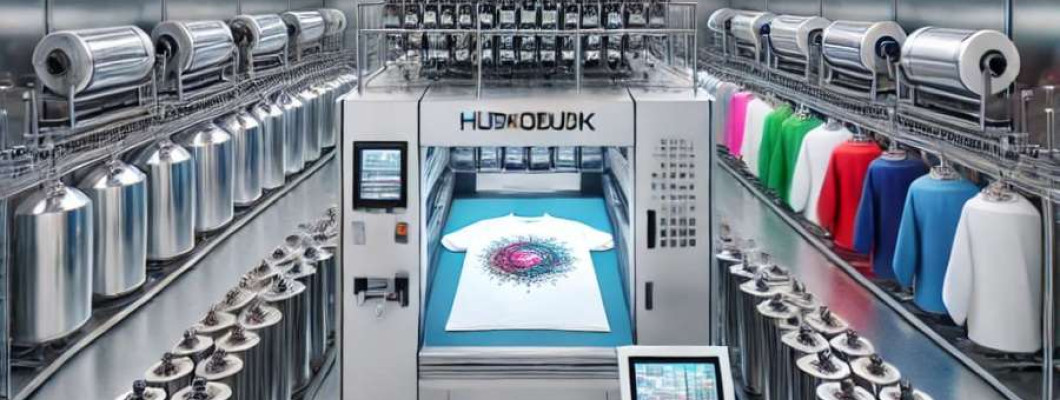
The Industrial Reality of Integrating A3 DTG Printers into Scalable Operations
Businesses transitioning from small-scale or DIY t-shirt printing to industrial-grade production face multifaceted challenges that impact throughput, labor efficiency, and consistency of output. The A3 DTG Printer T-shirt Printing Machine emerges as a potential solution bridging this gap. However, operational realities such as print speed, automated workflow integration, and daily uptime heavily influence its suitability for scaling.
Consider a mid-sized apparel business aiming to increase output from 50 to 500 units per day while maintaining high print fidelity. DIY solutions often lack automation features and long-run reliability, introducing bottlenecks in labor allocation and machine downtime. Industrial-grade alternatives promise higher durability, precision printing, and scalable throughput but come with increased CAPEX and maintenance complexity that must be critically evaluated.
Operational bottlenecks often surface during continuous print runs: printhead wear, ink delivery system clogging, and substrate handling inconsistencies all affect ongoing productivity. For scalable business owners, understanding how the A3 DTG Printer mitigates these issues while optimizing labor and automating print queues is vital for informed investment decisions.
Technical Deep-Dive into the A3 DTG Printer's Industrial Viability
Printhead Technology and Output Precision
The A3 DTG Printer employs piezoelectric drop-on-demand printheads with 1200 dpi native resolution. The drop volume is approximately 12 picoliters, enabling fine detail reproduction and vivid color saturation on cotton-based textiles. In comparison, DIY models typically offer lower dpi (600-900 dpi) and larger droplet sizes, resulting in softer edges and less precise gradients.
Assuming an A3 print area of 297 mm x 420 mm, the printer can theoretically achieve a print time of 2 minutes per shirt at standard quality settings, translating to a maximum throughput of approximately 270 shirts per 9-hour shift under ideal conditions. However, real-world factors such as substrate placement and ink drying cycles reduce effective throughput closer to 200 shirts per shift.
Automation and Workflow Integration
The printer supports automated job queuing via USB and Ethernet, enabling connection to centralized print management software. This reduces manual intervention in submitting print jobs, significantly cutting labor costs associated with operator time. This contrasts with many DIY solutions requiring manual file transfers and frequent operator adjustments.
Integration with conveyor systems for substrate loading/unloading remains external to the printer itself but is facilitated by standardized dimensions and communication protocols. This allows scalable businesses to incorporate the printer into semi-automated production lines.
Material Handling and Substrate Versatility
The A3 DTG Printer specializes in cotton fabrics but can accommodate blends up to 50% polyester with specialized pre-treatment. The platen size supports garments up to 350 mm wide and 450 mm long, sufficient for most standard t-shirts and sweatshirts. The flatbed design ensures consistent substrate thickness and eliminates warping-related print quality degradation.
Ink Chemistry and Consumable Maintenance
The printer utilizes water-based pigmented DTG inks optimized for colorfastness and wash durability certified to AATCC standards. Ink consumption averages 1.8 ml per A3 print, impacting cost per unit. The system incorporates an automatic nozzle cleaning cycle every 24 hours of inactivity, minimizing clogging and printhead failures.
Consumable replacement intervals average 3000 prints per ink cartridge, balancing operational cost with print volume. This contrasts with DIY printers where inconsistent ink formulations increase clogging frequency and unpredictable color shifts.
Energy Consumption and Thermal Management
Operating at approximately 220 Watts during printing and 50 Watts in standby mode, the printer requires minimal HVAC adjustments for thermal management compared to industrial direct-to-garment systems operating at 1.2 kW. This reduces infrastructure complexity and supports installation in smaller production facilities.
| Specification | A3 DTG Printer T-shirt Printing Machine | Typical DIY DTG Printer |
|---|---|---|
| Max Print Resolution | 1200 dpi | 600-900 dpi |
| Max Throughput (shirts/9h shift) | ~200 (accounting for workflow) | 50-70 |
| Ink Volume per Print | 1.8 ml | 2.5 ml |
| Nozzle Cleaning Frequency | 24 hours idle auto-clean | Every 8-12 hours or manual |
| Energy Consumption | 220 Watts printing | 200 Watts printing |
Scenario Analysis for Scalable Business Owners
Scenario 1: Boutique Apparel Brand Expanding to Mass Production
The brand needs to print 300 shirts daily with high color fidelity. The A3 DTG Printer's automation and throughput substantially reduce labor overhead compared to manual printers, enabling a lean workforce of 2 operators. Print quality consistency ensures premium positioning.
Scenario 2: Event Merchandise Supplier with Variable Orders
Flexibility is key for orders fluctuating between 50 and 500 pieces. The printer's quick job switching and Ethernet-based queue management allow rapid turnaround without setup delays, improving responsiveness and customer satisfaction.
Scenario 3: In-House Corporate Branding Production
With predictable daily demand of ~150 shirts, the printer integrates within existing shipping workflows. Low energy consumption minimizes facility overhead and fits into a midsize production footprint without HVAC upgrades.
Expert FAQ for Operational and Technical Assurance
Q1: How does the printer handle ink viscosity changes in varying ambient humidity?
A1: The ink delivery system incorporates temperature and humidity sensors adjusting piezo voltage to maintain droplet consistency, minimizing print defects during environmental fluctuations.
Q2: What is the downtime associated with platen changeover during batch printing?
A2: The flat platen is designed for quick release and replacement, averaging 45 seconds per changeover, supporting multi-style batch runs with minimal throughput disruption.
Q3: Can the printer firmware be updated remotely to enhance performance?
A3: Yes, networked connectivity allows secure remote firmware updates, facilitating incremental feature improvements and bug fixes without onsite technician visits.
Q4: What predictive maintenance data can be extracted to prevent unexpected component failure?
A4: The printer logs nozzle firing frequency, ink consumption, and cleaning cycles. Integration with monitoring software enables threshold-based alerts for printhead cleaning or replacement.
Q5: How does the printer's color gamut compare to conventional screen printing?
A5: While screen printing can deliver more saturated solids, the A3 DTG supports a wider color gamut range in photographic reproductions, with delta E < 3 color accuracy, appealing to complex multicolor designs.
Strategic Verdict and Recommendation
For scalable business owners seeking to transition from manual or DIY DTG printing to an industrial-grade solution, the A3 DTG Printer T-shirt Printing Machine offers a compelling balance of throughput, precision, and workflow automation. It effectively addresses operational bottlenecks related to printhead maintenance, substrate handling, and job queue management while maintaining energy efficiency and minimal facility impact.
The technical specifications, including 1200 dpi resolution, 2-minute print times per A3 shirt-sized substrate, and onboard automated cleaning cycles, significantly reduce operator dependency and increase uptime. This positions the printer as a viable asset for scaling production volumes into the hundreds per shift without exponential labor increases.
Integrating the printer into existing production lines is facilitated by Ethernet connectivity and standard platen sizing, enabling partial automation and remote monitoring. Energy consumption remains modest, limiting infrastructure upgrades, which is advantageous for expanding businesses with constrained capital expenditure budgets.
Given these factors and comprehensive performance analysis, the A3 DTG Printer T-shirt Printing Machine is recommended as the definitive industrial-grade upgrade over DIY alternatives for scalable apparel printing operations focused on throughput, consistency, and automation.