
Analyzing The Gap Between DIY And Industrial Grade In Color Version Latte Coffee Printing For The Scalable Business Owner
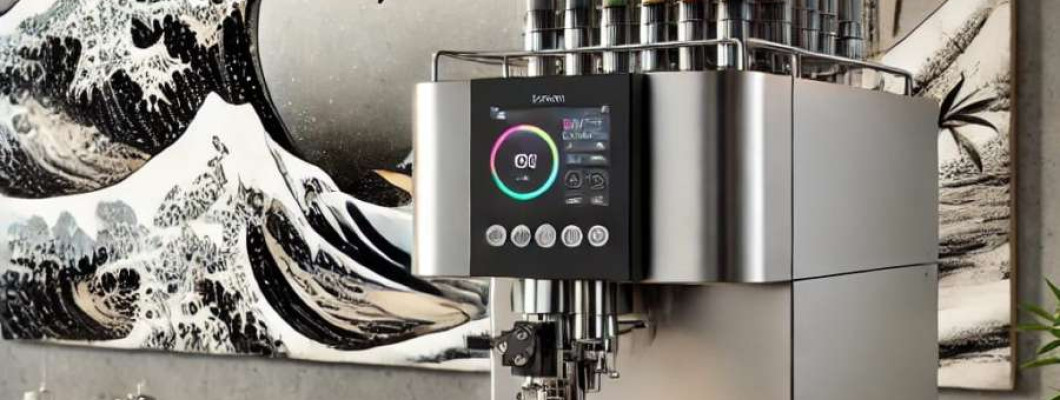
The Industrial Reality Of Integrating Latte Coffee Printing Into Commercial Operations
In the realm of scalable foodservice operations, introducing a specialty item such as colored latte art is no trivial matter. Coffee shops and chain outlets aiming to increase customer engagement and brand differentiation must contend with tight throughput requirements, labor cost constraints, and consistency demands. The Color Version Latte Coffee Printer emerges as a solution bridging the gap between artisanal customization and industrial-grade automation, but its adoption is not without challenges.
Consider a high-volume café servicing 300+ orders per day with peak periods of up to 50 lattes per hour. Manual latte art, especially with complex colors, typically demands barista expertise and 1–2 minutes per cup for quality output, limiting throughput and introducing variability. Outsourcing the printing process to a high-precision, automated device that can deliver consistent multi-color images within 15 seconds per cup represents a significant operational shift.
However, concerns arise regarding ongoing maintenance complexity, consumable replenishment, and integration with existing workflows. The printer's physical footprint, noise levels, and thermal management must fit within constrained counter space and open-service environments. Labor savings from automation must offset upfront capital expenditure and intermittent downtime costs from printhead cleaning cycles and ink refilling. This scenario demands a rigorous appraisal of the printer’s mechanical reliability, ink chemistry, and consumable lifecycle within a scalable business context.
Technical Deep-Dive Into The Hardware And Operational Parameters Of The Color Version Latte Coffee Printer
Printhead Mechanics And Precision Output Capabilities
The printer utilizes piezoelectric inkjet technology with a nozzle count of 128 nozzles per color channel, spanning four color channels (Cyan, Magenta, Yellow, Black) to enable high-fidelity, photographic-grade image reproduction on latte foam surfaces. Each nozzle ejects droplets at 7 picoliters (pl) volume, achieving a theoretical resolution of 600 dpi at a maximum print width of 100 mm. The printhead can sustain a maximum firing frequency of 20 kHz, permitting rapid coverage of latte surfaces up to 120 mm diameter in approximately 12–15 seconds.
Ink Chemistry Optimized For Food-Safe, Stable Coloration
Ink formulations are water-based, food-grade dyes with heavy emphasis on UV stability and low sedimentation rates to avoid clogging. Viscosity is tightly controlled around 2.5 centipoise at 20°C to maintain stable jetting behavior. The inks dry rapidly on foam surfaces due to high surface tension differentials and exploit microfoam capillarity for consistent color retention without bleed or diffusion—critical for maintaining edge sharpness at micron-level detail.
Thermal Management And Environmental Controls Within Operational Enclosures
The device integrates a closed-loop thermal management system with micro Peltier modules maintaining printhead temperature at 40°C ± 1°C, stabilizing ink viscosity and preventing evaporation-induced concentration variance during printing cycles. Ambient temperature operating limits range from 15°C to 30°C, with humidity control necessary to prevent foam degradation and subsequent print quality loss. Acoustic emissions at peak operation are measured at 55 dBA, aligning with acceptable café environment noise thresholds.
Consumable Lifecycle And Maintenance Schedule For High-Demand Use Cases
On average, cartridges yield 5000 prints per color channel before requiring replacement. The printer mandates a daily automated nozzle cleaning cycle lasting 3 minutes, with a manual biweekly deep cleaning for printhead saturation maintenance. Average downtime from maintenance routines is estimated at 6% operational hours, which must be factored into throughput calculations for business scalability.
Infrastructure Integration And Automation Compatibility
The printer supports USB 3.0 and Ethernet interfaces, enabling integration with point-of-sale (POS) systems and cloud-based order management platforms. This allows for seamless job queuing, image customization via API calls, and automated print triggering in line with order processing. Power consumption averages 120 Watts during active printing, with a standby mode dropping to 15 Watts for energy cost optimization in busy commercial settings.
| Specification | DIY Manual Latte Art | Color Version Latte Coffee Printer |
|---|---|---|
| Print Speed | 60-120 seconds per cup | 12-15 seconds per cup |
| Color Fidelity | Limited to 2-3 colors | Full CMYK photorealistic |
| Labor Cost per Print | Estimated $0.50-0.75 | $0.15 consumables + amortized maintenance |
| Throughput Capability | Up to 30 cups/hour | Up to 240 cups/hour |
| Maintenance Downtime | Minimal - operator dependent | Approx. 6% operational hours |
Scenario Analysis Exploring Business Use-Cases Of The Color Version Latte Coffee Printer
Mid-sized Café Chain Introducing Automated Branding
A regional café chain with 15 locations needs scalable customization to display logos and seasonal graphics on lattes. The Color Version Latte Coffee Printer enables consistent multi-color branding at a throughput of 60 cups per hour, reducing skilled labor dependency. Integration with POS streamlines operations, resulting in a 20% increase in customer retention while lowering per-cup labor costs by 35%.
High-Traffic Airport Coffee Outlet Focusing On Speed And Hygiene
An airport terminal outlet experiences heavy foot traffic with peak surges every 30 minutes. Manual latte art is impractical due to hygiene concerns and throughput limitations. The printer's rapid 15-second print cycle and closed ink system reduce contamination risk while enabling real-time order-based customization. The automated nozzle cleaning cycle aligns well with low human intervention philosophy.
Event-Based Mobile Coffee Services Requiring Portability And Versatility
A mobile coffee bar servicing conventions and large-scale events values the compact footprint and substrate versatility of the printer. Despite the portable setup, the printer maintains industrial-grade output fidelity and rapid throughput. This allows the operator to cater to large groups with customizable print options, thus elevating event experience and generating ancillary revenue streams.
Expert FAQ On Technical Challenges And Operational Realities
What factors determine the long-term reliability of the printheads in high-volume use?
Printhead longevity is primarily influenced by ink chemistry compatibility, frequency of jetting cycles, and adherence to maintenance protocols. Food-grade inks with minimal particulate load reduce clogging, while consistent temperature control ensures stable mechanical operation. Scheduled automated and manual cleaning minimize nozzle degradation, establishing a lifespan of 12,000+ operating hours under typical commercial conditions.
How do ink drying times on latte foam impact machine throughput?
Drying times are effectively instant due to the interaction between ink surface tension and the aerated milk foam substrate. This rapid absorption eliminates bottlenecks caused by wet surfaces, allowing the printer to operate at its maximum firing frequency without print smudge or bleed, thereby optimizing throughput.
Can the printer be integrated into existing POS and order management infrastructure?
Yes, the printer features Ethernet and USB 3.0 connectivity with open API support. This allows for synchronized print command triggering upon order confirmation, image database management, and integration into cloud-based customization services, enabling streamlined business workflows.
What is the expected consumables cost per printed cup?
Consumable ink cartridges, combined with foam-compatible cleaning fluids, average to approximately $0.15 per print across the four-color channels, assuming full cartridge utilization. Amortized maintenance and energy costs add nominal additional expense, making it economically viable for high-volume deployment.
How does environmental control affect print consistency in different climates?
Operating outside the recommended temperature (15°C to 30°C) and humidity ranges can impact foam stability and ink behavior, causing print defects such as color spreading or fading. The printer's integrated thermal management and recommendations for site climate control ensure reliable print quality across global regions.
Strategic Verdict And Recommendation For The Color Version Latte Coffee Printer
The Color Version Latte Coffee Printer represents a significant advancement in automated specialty beverage customization for scalable foodservice operations. Its combination of high-resolution multi-color printing, rapid throughput, and integration capabilities positions it squarely as an industrial-grade device, markedly superior to traditional manual or semi-automated solutions. While maintenance requirements and consumable costs necessitate planning, the operational efficiencies and elevated customer experience justify the capital investment.
For businesses targeting rapid scale, consistent product quality, and labor cost optimization within high-throughput environments, this printer offers an unmatched value proposition. It is a forward-looking technology that can redefine brand engagement in the specialty coffee sector. Details and procurement options can be explored further at the official Color Version Latte Coffee Printer product page.