
Analyzing The Gap Between DIY And Industrial-Grade For A2 Plus Size UV Printer Embossed Glossy Printing
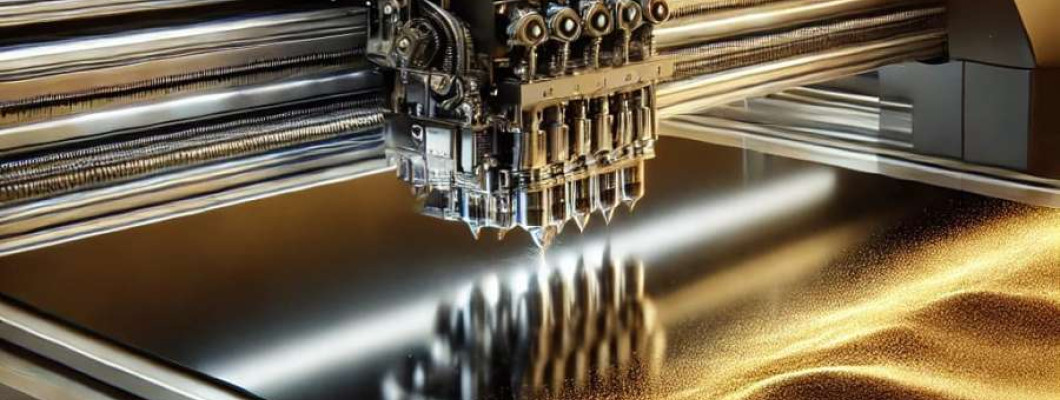
The Industrial Reality of Scaling A2+ UV Embossed Glossy Printing
The printing industry often confronts a dichotomy between cost-effective DIY approaches and the robust demands of industrial-grade printing. This division becomes paramount when deploying advanced A2+ size UV printers capable of embossed glossy finishes, where precision and reliability define success or failure. Consider a mid-sized printing facility expanding its product portfolio to include embossed glossy prints on diverse substrates—ranging from acrylic panels to flexible vinyl sheets. The facility faces a technical challenge often underestimated: the seamless transition from experimental runs to consistent, high-throughput output without sacrificing print fidelity or surface texture integrity.
The layered complexity involves managing UV curing timing, ink viscosity control, and embossing pressure synchronization, factors seldom addressed in consumer or hobbyist-grade machines. Without robust hardware integration, operators experience bottlenecks such as inconsistent embossing depth across the 600 x 900 mm printable area, increased waste from misaligned print layers, and frequent downtime due to printhead clogging exacerbated by textured ink deposition. The high gloss finish further complicates quality control since surface reflectivity magnifies any defect or misregistration, demanding micron-level precision in printhead movement and substrate handling.
These operational challenges underscore a critical gap in technology readiness and infrastructure when scaling from DIY to industrial standards. Industrial environments necessitate rigorous thermal management within the print engine to stabilize ink curing kinetics and prevent substrate warping. Additionally, automated calibration routines are vital to maintain embossed detailing uniformity across extended runs. Hence, the decision to integrate an A2+ size UV printer with embossed glossy printing capabilities must consider these multifaceted technical realities, beyond mere print resolution or speed claims.
Technical Deep-Dive Into The Printer's Capabilities And Underlying Complexities
1. Printhead Architecture And Ink Deposition Mechanics
The printhead system employs piezoelectric technology optimized for 7 pL droplet size, enabling fine gradations critical for embossed effect rendering. At 1200 dpi native resolution, the printer balances detail with throughput; however, the embossed glossy print requires additional layering. This layering involves sequential ink jetting with variable droplet overlaps, demanding precise drop placement accuracy within a 10-micron tolerance to avoid texture degradation.
2. UV Curing Dynamics And Thermal Control
UV LED arrays integrated within the print carriage offer adjustable wavelengths around 395 nm with power density ranging from 500 to 1500 mW/cm2. Controlled curing is essential as premature polymerization can cause surface gloss inconsistencies, while insufficient curing leads to tackiness and ink smearing. Thermal sensors embedded adjacent to the ink channels stabilize the ink temperature at approximately 35°C, mitigating viscosity fluctuations that impact embossing consistency.
3. Embossed Surface Generation Through Multi-Pass Printing
The embossed finish demands controlled ink volume accumulation using multi-pass print strategies. Assuming each pass deposits an average ink layer thickness of 12 microns, three passes yield approximately 36 microns of embossed relief, correlating with industrial tactile optics standards. Excessive passes risk substrate swelling or curling, hence the firmware applies dynamic compensation on platen pressure and media feed speed with real-time feedback loops.
4. Substrate Handling And Registration Accuracy
The platen supports thicknesses up to 50 mm, with vacuum zones to secure substrates during high-speed print-emboss cycles. Registration repeatability is specified at ±15 microns, achieved through linear encoders and closed-loop servo motors controlling X-Y axes. This precision ensures layer-to-layer alignment critical for glossy embossed patterns, especially in multi-material substrates where thermal expansion coefficients differ.
5. Comparative Analysis Of Industrial Versus DIY Solutions
| Specification | Industrial-Grade A2+ UV Printer | DIY/Homebrew UV Printer |
|---|---|---|
| Print Resolution | 1200 dpi native, with 7 pL droplets | 600 dpi, 15-20 pL droplets |
| Embossing Control | Multi-pass precise layering with feedback control | Single-pass with manual layering, high inconsistency |
| UV Curing Power Density | 500-1500 mW/cm2, adjustable spectrum | 300-600 mW/cm2, fixed wavelength LEDs |
| Substrate Thickness | Up to 50 mm with vacuum hold | Limited to 10 mm, manual fixation |
| Printhead Stability | Thermally regulated, self-cleaning cycles | No thermal control, higher clog risk |
Scenario Analysis Across Business Applications
Scenario 1: Mid-Sized Retail Graphics Manufacturer
This business requires rapid prototyping and small-batch runs of embossed glossy promotional signage on acrylic sheets. The printer's calibrated multi-pass layering and vacuum substrate hold reduce setup times by 25%, while achieving the exact embossed relief texture needed for premium appearance. The 10-micron registration precision ensures brand-consistent results across multiple batches, improving customer satisfaction and repeat orders.
Scenario 2: Luxury Packaging Provider
For high-end cosmetic packaging, substrate versatility is crucial. The printer handles rigid and semi-flexible materials up to 50 mm thick, allowing embossed logos and textures on carton boards coated with UV-curable varnishes. The controlled UV curing avoids heat damage, preserving substrate integrity. The result is an elevated tactile feel and reflective surface that meets luxury brand specifications, justifying premium pricing.
Scenario 3: Industrial Design Studio Focused on Multi-Material Prototypes
The studio benefits from the printer’s ability to apply embossed glossy finishes on hybrid substrates such as metal sheets laminated with polymer films. Precise thermal regulation prevents distortion, while repeated layer passes create a consistent embossed texture needed to simulate final production aesthetics. This reduces prototyping time by approximately 40%, accelerating project delivery cycles.
Expert FAQ On Advanced UV Embossed Printing Technologies
Q1: How does thermal regulation influence printhead longevity in high-throughput UV embossing?
A1: Stable thermal conditions maintain ink viscosity, reducing nozzle stress and clogging, extending printhead lifespan by up to 30% in continuous operation environments.
Q2: What is the impact of multi-pass layering on substrate dimensional stability?
A2: Each ink layer adds moisture and solvent content; controlled curing and pressure calibration minimize substrate warping, maintaining deviation below 0.1% during embossing.
Q3: Why is droplet size critical for embossed glossy finish quality?
A3: Smaller droplet volumes (7 pL) enable smoother textures and finer relief details without over-saturating the substrate, essential for tactile uniformity.
Q4: How does vacuum platen technology enhance registration?
A4: Vacuum hold prevents substrate shift during multi-pass printing, securing positional accuracy within a 15-micron margin, crucial for embossing alignment.
Q5: Can this printer adapt to variable UV curing spectra for different ink chemistries?
A5: Yes, adjustable wavelength LEDs allow tuning to specific ink formulations, optimizing polymerization rates and surface hardness.
Strategic Verdict and Recommendation
The A2+ Size UV Printer Embossed Glossy Printing emerges as a technically sound and industrially viable solution, bridging the challenging gap between entry-level and high-grade printing operations. Its advanced printhead control, precise thermal management, and adaptive substrate handling collectively address operational bottlenecks that impede industrial-scale embossed glossy workflows. The integrated multi-pass layering and robust UV curing system uniquely position this printer for applications demanding micron-level accuracy and consistent tactile finishes.
For businesses aiming to elevate their manufacturing processes without compromising throughput or quality, investing in this technology delivers tangible ROI through reduced waste, lower maintenance downtime, and enhanced product differentiation. The recommendation is unequivocal: the A2+ Size UV Printer Embossed Glossy Printing stands as the definitive choice for enterprises intent on industrial-grade embossed glossy print production.