
Analyzing The Gap Between DIY And Industrial-Grade For The Scalable Business Owner
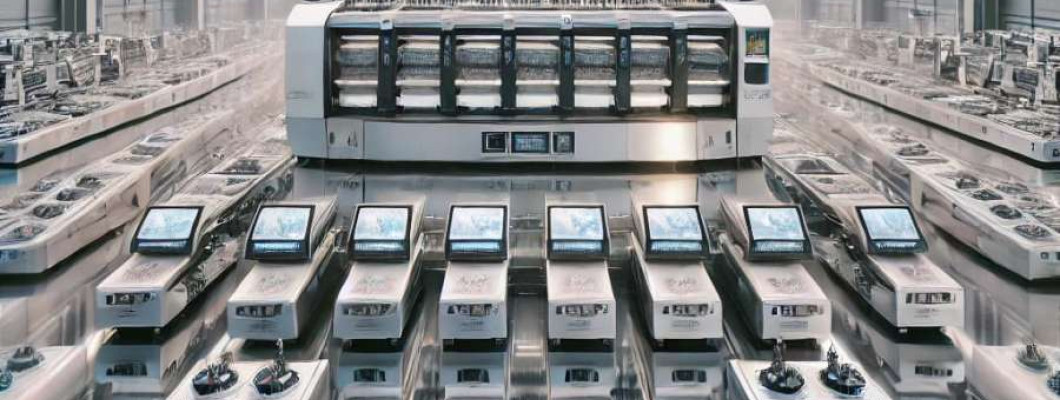
The Industrial Reality of Integrating an A3 DTG Printer into Scalable Operations
For scalable business owners in the textile printing sector, moving beyond small-scale or DIY direct-to-garment (DTG) systems presents complex operational challenges. Unlike entry-level units that appeal with low upfront cost and compact footprint, industrial-grade A3 DTG printing machines must sustain continuous throughput without sacrificing print fidelity or requiring frequent downtime. In a high-demand environment, bottlenecks emerge around automated substrate handling, color drying cycles, and maintenance intervals. Business owners therefore face the task of balancing throughput against labor costs, machine uptime, and material waste reduction. The transition from hobbyist setups to enterprise-grade machinery involves critically evaluating the printer's ability to support batch printing, integrate with scalable workflows, and minimize operator intervention—all while delivering consistent color accuracy and durability across large order volumes.
Consider a mid-sized garment printing enterprise aiming to produce 500 shirts daily with complex color profiles. A typical DIY or low-end device might require manual loading and drying, leading to operator fatigue and inconsistent output. In contrast, a dedicated A3 DTG printer designed for industrial application can support multi-shift operation with automated platen movement and inline curing, reducing manual touches and improving throughput. However, these capabilities come with infrastructure requirements such as stable power input, ventilation, and robust thermal management to ensure printhead longevity—factors often underestimated by businesses attempting to scale too rapidly.
Strategically, understanding the hardware's limits in print speed, platen capacity, and throughput cycles is essential before committing to acquisition. Moreover, hidden operational costs such as ink consumption rate per print, replacement frequency of printheads, and preventive maintenance schedules must be factored into ROI calculations to avoid unexpected overheads. This scenario illustrates why evaluating the technological and logistical nuances of the A3 DTG Printer T-shirt Printing Machine in an industrial context is indispensable for any scalable business owner plotting their growth trajectory.
Technical Deep-Dive into Industrial Performance of the A3 DTG Printer
1. Printhead Technology and Throughput Capacity
The printer employs piezoelectric printheads with a nozzle density of 180 nozzles per inch and droplet size variability from 6 to 12 picoliters. This allows high-resolution imaging at 1440 dpi, balancing speed and color gradation fidelity. Under continuous operational conditions, print cycle time for a single A3 platen measures approximately 90 seconds for full coverage. Assuming a multi-platen system with 4 platens, theoretical maximum throughput approaches 160 shirts per hour, excluding drying time.
2. Ink Chemistry and Consumption Economics
Water-based pigment inks used are optimized for rapid fixation and high wash durability. Typical ink consumption ranges from 0.35 to 0.5 ml per A3 print, depending on color density. Given ink cartridge capacity at 250 ml per color channel, operators should budget for approximately 500-700 prints per cartridge. The ink drying process is integrated with a dual IR and hot air curing system consuming 1500 Watts, balancing energy efficiency with fixation quality—critical for maintaining substrate integrity and print longevity.
3. Thermal Management and Printhead Longevity
Thermal fluctuations during multi-hour operation can degrade printhead performance. The printer incorporates closed-loop cooling with thermoelectric modules and heat sinks maintaining printhead operating temperature within 35-40°C. This extends printhead lifespan from an average 500 million drops to over 1 billion drops before scheduled maintenance. This feature is vital in high-volume environments to minimize unscheduled downtime and protect capital investment.
4. Automation and Infrastructure Integration
Supporting semi-automated platen indexing and optional robotic arm substrate handling, the machine interfaces via standard industrial Ethernet protocols for integration with Manufacturing Execution Systems (MES). This capability allows batch programming, print queue management, and remote status monitoring, aligning with the demand for operational scalability and labor cost reduction in multishift production models.
5. Maintenance Scheduling and Lifecycle Cost Modeling
Routine maintenance involves nozzle head cleaning cycles every 8 hours of print time and UV sensor recalibration biweekly. Consumables replacement including wiper blades and dampers occurs every 3 months under continuous use. Financial models incorporating fixed depreciation over 5 years and OPEX related to ink, electricity (approximately 2 kWh per hour), and maintenance estimate total cost per shirt at $1.20. Such modeling aids in precise budgeting and scaling decisions.
| Feature | DIY/Low-End DTG | Industrial A3 DTG Printer |
|---|---|---|
| Print Speed | 40 shirts/hour | 160 shirts/hour |
| Ink Consumption | ~0.7 ml/print | 0.35-0.5 ml/print |
| Printhead Lifespan | ~200 million drops | 1 billion drops |
| Automation | Manual platen loading | Semi-automated platen indexing, robotic compatible |
| Maintenance Interval | Daily cleaning required | Every 8 hours cleaning cycle |
Scenario Analysis Illustrating Impact on Scalable Business Models
Case 1: High-Volume Retail Apparel Production
A retail printing business targeting quick turnaround on bulk orders needs throughput of over 400 shirts per day with minimal operator intervention. The A3 DTG printer’s multi-platen capability and automated curing enable reliable delivery timelines with consistent quality, reducing overtime labor costs by 30% versus lower-grade systems.
Case 2: Customized Premium Small Batch Runs
Small batch producers focusing on premium prints require exceptional color depth and minimal substrate handling to preserve shirt integrity. The printer's advanced printhead droplet control allows precise color layering and microdot placement, maintaining artisanal print quality at scalable speeds.
Case 3: On-Demand E-Commerce Fulfillment
E-commerce platforms demand rapid, single-item order turnaround with low error rates. Integrated MES connectivity permits real-time print queue adjustments and batch prioritization, ensuring operational flexibility while maintaining cost effectiveness.
Expert FAQ Addressing Complex Technical Concerns
How does nozzle density affect print quality and speed trade-offs?
Higher nozzle density offers finer resolution but may reduce print speed due to increased nozzle firing cycles. The A3 DTG balances 180 nozzles/inch to optimize these parameters.
What specific thermal management strategies ensure printhead longevity?
Use of thermoelectric cooling modules stabilizes temperature fluctuations, preventing thermal stress that causes micro-cracks in piezoelectric elements, thus extending lifespan.
How is ink consumption optimized for cost efficiency?
Optimized droplet size and pigment density reduce waste, and integrated drying ensures ink fixation without excessive application, balancing color saturation with cost.
Can the printer be integrated into existing MES architectures?
Yes, it uses industrial Ethernet and standard communication protocols allowing seamless integration for automated job tracking and reporting.
What key indicators should guide maintenance scheduling?
Ink drop ejection consistency, printhead temperature stability, and scheduled cleaning cycles based on operational hours are critical to preempt downtime.
Strategic Verdict and Recommendation
The evaluated A3 DTG Printer T-shirt Printing Machine demonstrates a robust solution bridging the operational gap between entry-level DIY devices and scalable industrial printing demands. Its enhanced printhead technology, superior thermal management, and automation-friendly architecture ensure throughput and quality can be simultaneously achieved. For scalable business owners aiming to optimize labor costs, reduce downtime, and maintain print fidelity, this machine offers a decisive upgrade path. Considering lifecycle maintenance, ink consumption economics, and MES integration readiness, it stands as an industrial-grade workhorse poised to drive competitive advantage in garment printing enterprises. Detailed product specifications and purchasing options are accessible via the official product page at A3 DTG Printer T-shirt Printing Machine. It is recommended as a definitive investment for businesses seeking scalable, automated, and high-throughput DTG solutions.