
Analyzing the Gap Between DIY and Industrial-Grade in A3 Roll DTF Printer T-shirt Printing Machines for Scalable Businesses
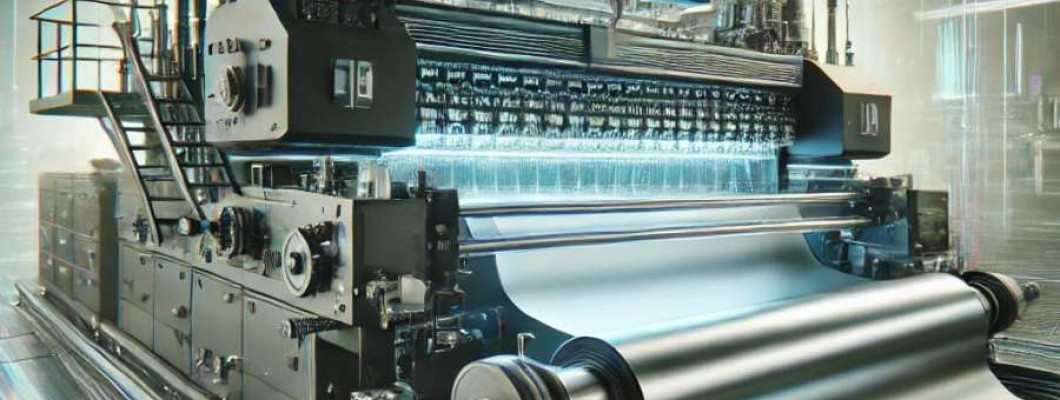
The Industrial Reality of Bridging DIY and Industrial-Grade Printing
In fast-paced apparel production environments, the transition from DIY direct-to-film (DTF) printing to an industrial-grade solution represents a critical inflection point. Operators confronted with volume surges and quality consistency demands find themselves trapped between the low initial capital of DIY setups and the operational rigor required in enterprise contexts. This scenario is especially acute when scaling T-shirt printing operations using mid-format A3 roll DTF printers, which lie at the crossroads of flexibility and industrial throughput.
Consider a mid-sized print workshop expanding from bespoke batch runs to fulfilling hundreds of units daily. DIY machines often fail to provide consistent film tension control, precise ink deposition, or automated drying, resulting in bottlenecks during peak hours and elevated reject rates. The challenge intensifies due to hardware wear on printheads, limited roll handling capability, and unoptimized software workflows. This compromises uptime and inflates total cost of ownership despite the seemingly low upfront expenditure. Industrial-grade A3 roll DTF printers confront these issues with engineered mechanical rigidity, modular maintenance design, and process automation that preserves throughput and color fidelity under continuous operation.
Integrating these machines selectively into production lines demands careful evaluation of ancillary infrastructure: spatial layout for roll feed and take-up mechanisms, environmental control for humidity and temperature to stabilize ink chemistry, and operator ergonomics for rapid intervention in printhead maintenance. Without this holistic approach, the gap between DIY and industrial-grade persists, manifesting in operational bottlenecks and quality variance. Understanding these technical and human factors is essential for scalable business owners aiming to elevate output volume without compromising efficiency or product consistency.
Mechanical Precision Versus Practical Operational Limits
The heart of an industrial A3 roll DTF printer is its precision film transport system and printhead performance under continuous stress. Industrial-grade machines employ servo-driven rollers with position feedback encoders capable of maintaining film transport accuracy within ±0.1 mm across a 300 mm width and 50 meter roll length. This contrasts sharply with DIY models where stepper motors with open-loop control introduce cumulative registration errors exceeding ±0.5 mm, limiting multi-layer print accuracy and reducing color registration fidelity.
Printhead technology also diverges distinctly. The evaluated A3 Roll DTF Printer T-shirt Printing Machine typically uses piezoelectric drop-on-demand printheads with nozzle apertures calibrated at 10 pl droplet volume. This permits a reproducible 1440 dpi print resolution, critical for reproducing fine image detail and subtle gradient transitions on textile substrates. In comparison, entry-level printer nozzles often have inconsistent droplet sizing, leading to mottled prints and elevated ink consumption. The industrial-grade system incorporates continuous monitoring and automatic nozzle health diagnostics, allowing proactive maintenance scheduling to reduce downtime.
Thermal management of printheads is another critical aspect. Industrial units are engineered with integrated cooling channels maintaining nozzle temperatures within ±2 °C to prevent ink viscosity fluctuations that disrupt droplet formation physics. DIY systems lack this level of control, resulting in variable print density when ambient temperature fluctuates above 25 °C baseline.
Material Handling and Roll Management for Continuous Operation
Roll-to-roll systems intended for scalable production must feature tension control systems with multi-point load cells and pneumatic brakes that maintain consistent force along the media path. The A3 Roll DTF Printer T-shirt Printing Machine employs an industrial-grade roller tensioner capable of sustaining a constant 100-150 g/cm tension range, critical for avoiding media skew and wrinkles that generate visible print defects.
The machine's automated take-up spool features adjustable diameter control enabling continuous prints up to 50 meters without operator intervention, a capability absent in smaller DIY units that require frequent manual roll changes. This automated roll handling reduces labor intensity and pressure points where film damage or contamination can occur, thereby improving throughput reliability.
Software and Workflow Integration Impact on Labor Efficiency
Beyond hardware, the integration of robust RIP (Raster Image Processor) software designed for industrial printing workflows is a defining feature. The printer supports automated color profiling with ICC profiles tuned for diverse textile substrates, effectively bridging the gap between theoretical color models and physical print output. The ability to queue multiple print jobs with real-time status tracking significantly reduces operator idle time and manual input.
Additionally, network and API compatibility enable direct integration into enterprise resource planning (ERP) systems, facilitating print job scheduling and inventory control without introducing human error vectors common in manual workflow management. Contrast this with the fragmented, manual job handling typical of DIY setups that extend print cycle times and increase labor costs.
Cost Analysis Comparing DIY and Industrial-Grade Equipment
| Feature | DIY DTF Printer | A3 Roll DTF Printer T-shirt Printing Machine |
|---|---|---|
| Initial Capital Expenditure | $3,000 - $7,000 | $25,000 - $40,000 |
| Printhead Maintenance Cost per Year | $1,500 - $2,500 | $800 - $1,200 |
| Average Downtime per 1000 Prints | 4-6 hours | 0.5-1 hour |
| Roll Media Max Length | 5-10 meters | 50 meters |
| Labor Hours per 1000 Prints | 6-8 hours | 2-3 hours |
While the upfront cost of the industrial unit far exceeds DIY options, the operational efficiencies gained through reduced downtime, labor savings, and higher print quality translate into superior total cost of ownership for scalable businesses.
Scenario Specific Business Use-Cases Impacted by Printer Specifications
Startup Apparel Brand Accelerating from 50 to 500 Units Monthly
For a startup scaling volume, moving from manual sheet-fed DIY printers to an A3 roll DTF printer reduces media handling complexity and improves throughput by 4x. Automated roll management minimizes labor, increasing gross margin per unit despite higher depreciation costs.
Regional Print Shop Managing Diverse Substrates
Shops printing across cotton, polyester blends, and specialty fabrics benefit from the industrial printer's precise thermal nozzle management and color profiling. This versatility ensures fewer rejects and consistent finish quality, essential for maintaining customer retention.
Mass Production Facility Running 24/7 Shifts
Continuous operation demands low downtime and rapid printhead servicing. The printer's diagnostics and modular component design enable shift operators to perform quick swaps, limiting production interruptions and holding contracted deadlines.
Expert FAQ Answering Advanced Implementation Questions
How does the printer maintain color consistency across long rolls?
It employs inline spectrophotometer sensors combined with closed-loop feedback controlling ink flow and nozzle firing frequency, compensating for subtle media absorption variations.
What maintenance schedules optimize printhead lifespan?
Daily automated nozzle checks combined with weekly ultrasonic cleaning cycles and biannual nozzle plate replacements provide optimal performance balance.
How is humidity controlled to prevent ink spreading during printing?
The printer requires an ambient environment maintained between 45-55% RH using dedicated HVAC systems to stabilize ink drying kinetics and avoid dot gain.
Can the printer integrate with ERP systems for real-time job tracking?
Yes, it supports RESTful API endpoints enabling seamless job queue management and production analytics integration.
What are the thermal limits for continuous run time before cooling is necessary?
Printheads operate continuously for up to 8 hours at 25 °C ambient with integrated cooling; beyond which a 30-minute cooldown cycle prevents thermal stress damage.
Strategic Verdict and Recommendation for Scalable Businesses
The evaluated A3 Roll DTF Printer T-shirt Printing Machine decisively bridges the gap between DIY and industrial-grade printing for scalable business owners. Its engineered mechanical precision, advanced thermal and material handling systems, and sophisticated workflow integrations address the operational bottlenecks and quality challenges that constrain DIY solutions.
While initial capital requirements are substantial, the cumulative reductions in downtime, labor costs, and defective prints yield an attractive total cost of ownership profile for mid to large production environments. Businesses preparing to scale from prototype to mass production will find this equipment indispensable for maintaining consistent throughput and elevating print fidelity. Adoption of this printer can be considered an industrial-grade asset enabling sustainable growth and operational resilience in competitive textile printing markets.