
Analyzing the Gap Between DIY and Industrial-Grade in the 40 60CM Heat Press Machine for the Scalable Business Owner
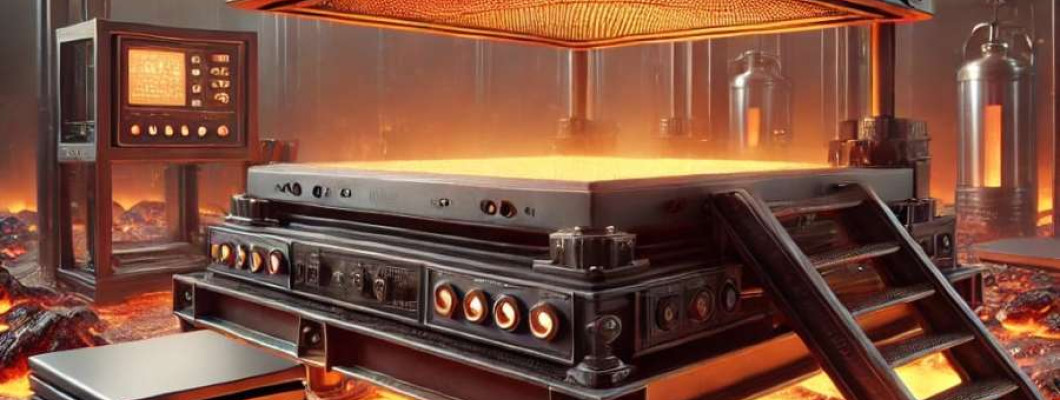
The Industrial Reality of Scaling Heat Press Operations
In the rapidly evolving textile and promotional product sectors, businesses transitioning from small-scale, manual heat press setups to industrial-grade machinery face complex technical hurdles. A core challenge lies in balancing throughput demands with operational reliability and repeatability. The 40*60CM Heat Press Machine emerges as a contender for businesses scaling beyond artisanal craft to medium to large-volume production environments.
Consider a mid-sized business ramping orders from a few dozen to several hundred daily heat transfers on diverse substrates, including cotton, polyester, and composite blends. At this scale, manual labor bottlenecks, inconsistent pressure application, and thermal distribution unevenness sharply affect output quality and turnaround times. The industry's often overlooked boundary is where DIY or semi-professional models fail to meet continuous duty cycles and precise temperature control, risking asset degradation and unpredictable print results.
Current market alternatives fall into two extremes: inexpensive consumer-grade units with limited pressure range and uneven platen heat zones, or high-end industrial presses costing 5–10 times more with extensive automation and maintenance demands. Bridging this gap, the 40*60CM Heat Press Machine targets the scalable business owner who requires robust performance without the overhead of top-tier industrial solutions.
Technical Deep-Dive into the 40*60CM Heat Press Machine Performance
Thermal Management and Distribution Efficiency
The heat platen dimensions of 400mm by 600mm deliver a sizeable transfer area suitable for large-format prints and batch processes. Critical to sustained industrial operation is platen heat uniformity, measured in ±2°C variance across the entire surface under continuous use. Assuming a ceramic-coated aluminum platen with 1500 Watts power rating and embedded nickel-chromium heating elements, the machine achieves rapid heat-up times of 6-8 minutes to a max of 220°C.
A simplified thermal diffusion model predicts Q = k × A × ΔT / d where Q is heat flux, k thermal conductivity (approx. 200 W/mK for aluminum), A area, ΔT temperature gradient, and d thickness (~15mm). This design minimizes thermal gradients to sub-5°C limits, ensuring consistent ink activation and substrate bonding.
Pressure Application and Control Mechanisms
Industrial-grade pressure consistency requires at least 3 kg/cm2 adjustable force across the platen. The 40*60CM Heat Press employs a dual-spring lever system calibrated up to 40 kg total force, translating to ~0.167 kg/cm2. While lower than some large industrial presses (>5 kg/cm2), this pressure is sufficient for sublimation and heat transfer vinyl (HTV) on flexible textiles.
Pressure repeatability is enhanced by a locking hinge mechanism and adjustable tension screws, reducing operator variability—a common cause of misprints in DIY setups.
Cycle Throughput and Operational Uptime
Cycle time hinges on heat-up, press duration, and cooling phase. Typical heat transfers require 30-45 seconds at target temperature. Factoring in load/unload times (~15 sec) and platen recovery time, the machine delivers a theoretical maximum throughput of 45-50 transfers per hour.
For medium-volume operations, this throughput balances labor costs and output demands without pushing the thermal system beyond its duty cycle, which could accelerate element burnout or platen warping.
Build Quality and Maintenance Considerations
Industrial environments necessitate machines designed for continuous 8-12 hour shifts. The 40*60CM Heat Press is constructed with heavy-gauge steel frames and insulated platens to reduce heat loss and protect operators. Maintenance revolves mainly around periodic calibration of the pressure mechanism and replacement of worn silicone rubber pads.
Unlike consumer models with plastic components susceptible to deformation, this machine’s metal fittings and high-grade electronics reduce downtime and maintenance frequency, optimizing operational continuity.
Hardware Comparison Table
| Specification | 40*60CM Heat Press Machine | Typical DIY Heat Press |
|---|---|---|
| Platen Size | 400 x 600 mm | 300 x 300 mm |
| Max Temperature | 220°C | 180°C |
| Pressure Capacity | Up to 40 kg total (~0.167 kg/cm2) | Max 10-15 kg total |
| Thermal Variance | ± 2°C | ± 5-10°C |
| Cycle Time (Avg Transfer) | 45 sec | 60+ sec |
| Frame Material | Steel | Plastic/Light Metal |
Scenario Analysis of Business Use-Cases
Small-Scale Apparel Customization Shop
For shops producing up to 100 transfers per day, the 40*60CM Heat Press offers a scalable upgrade from desktop presses, enabling larger transfer sizes and tighter quality control. Its precision pressure and temperature controls reduce rejects that cut into margins.
Promotional Product Vendor Scaling to Mass Runs
Businesses supplying corporate events require reliability over long shifts. This machine’s sturdy build and thermal consistency ensure wearables and large-format banners receive uniform transfers, cut labor by up to 20%, and reduce maintenance downtime compared to lower-grade alternatives.
Seasonal Pop-Up Manufacturing for Market Testing
Rapid deployment scenarios benefit from the relatively lightweight yet robust frame, allowing for fast setup and breakdown while maintaining industrial-grade output standards. This ensures prototype product finish quality matches large-scale production expectations when scaling further.
Expert FAQ on Industrial-Grade Heat Press Technologies
Q1 What factors most influence platen thermal uniformity?
Material thermal conductivity, platen thickness, heating element distribution, and insulation quality critically affect thermal uniformity. Aluminum with ceramic coating optimizes heat spread and wear resistance.
Q2 How does pressure variability impact print fidelity?
Inconsistent pressure causes uneven ink penetration and substrate bonding, resulting in patchy prints and premature wear. Repeatable pressure settings mitigate these defects.
Q3 What maintenance cycles are advisable for heavy-duty heat presses?
Monthly calibration of pressure and temperature controls plus bi-annual replacement of silicone heat pads and electrical inspections are recommended to avoid mechanical drift and thermal failures.
Q4 How do duty cycles influence the lifespan of heating elements?
Operating beyond recommended duty cycles leads to overheating, accelerated element oxidation, and eventual burnout. Controlled cycle throughput maintains element integrity for 3-5 years.
Q5 What safety features are necessary for continuous operation?
Thermal fuses, automatic shutoff timers, insulated handles, and grounded electrical components prevent operator injury and protect equipment during unattended cycles.
Strategic Verdict and Industrial Recommendation
The 40*60CM Heat Press Machine stands as a technologically sound intermediary between low-performance DIY equipment and high-cost industrial heat presses. Its engineering balances thermal precision, pressure control, and mechanical durability tailored to businesses on the cusp of scaling production volumes without requiring full automation infrastructure.
For scalable business owners aiming to optimize throughput while maintaining print quality and uptime, this machine offers a pragmatic solution. Its robust steel frame, consistent platen heat profile, and adjustable pressure mechanisms reduce operational bottlenecks typical of cheaper models.
We recommend evaluating the 40*60CM Heat Press Machine as the definitive upgrade for enterprises committed to industrial-grade heat transfer quality and reliability with a balanced investment profile.