
Analyzing the Hidden Operational Bottlenecks of the 40*60CM Heat Press Machine for Scalable Business Owners
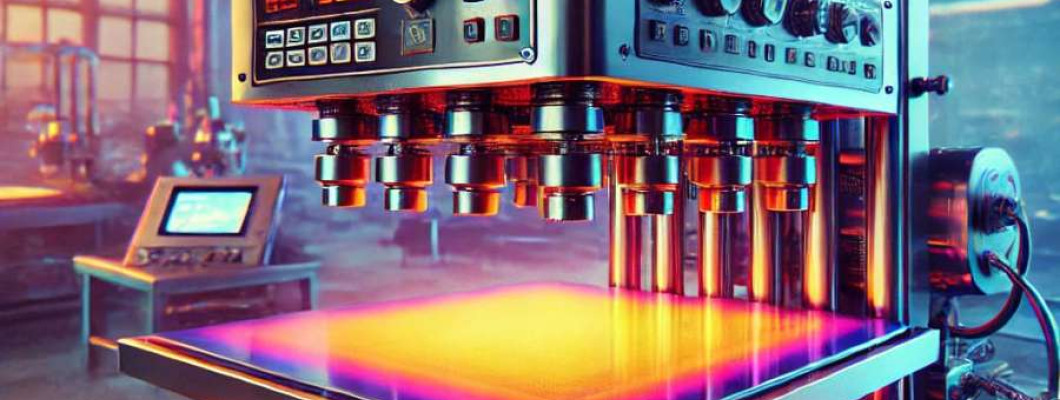
The Industrial Reality of Scaling Heat Press Operations
In a bustling production environment where throughput and reliability dictate profit margins, the 40*60CM Heat Press Machine positions itself as a critical asset. However, the hard reality of scaling heat press workflows is that subtle operational bottlenecks—often overlooked during procurement—can cascade into significant downtime, labor overruns, and quality inconsistencies. For scalable business owners, especially those transitioning from manual or semi-automated setups, the challenge lies in balancing cycle speed, machine heat stability, and maintenance cadence without inflating operational expense or compromising output integrity.
This machine’s nominal platen dimension of 400x600mm affords a broad substrate interface desirable for medium-to-large print runs. Yet, the interaction between platen heat distribution uniformity, pneumatic or manual pressure application, and the resulting imprint consistency frequently reveals weak points during sustained use. Furthermore, operational bottlenecks emerge from hidden thermal inertia—thermal mass that delays temperature recovery between cycles, directly influencing throughput and energy consumption profiles.
Understanding these dynamics within realistic production scenarios mandates a granular evaluation of the 40*60CM Heat Press Machine under consistent load, environmental temperature fluctuations, and variable substrate types. Only then can a scalable business owner anticipate and mitigate downtime sources, optimize labor allocation, and achieve predictable output scheduling critical to competitive margin preservation.
Technical Deep-Dive Into Operational Constraints and Hardware Performance
Heat Distribution and Thermal Efficiency
Uniform heat is crucial for ensuring consistent transfers across the full 400x600mm surface. Variations exceeding ±3°C across the platen area risk inconsistent ink fusion, especially with sensitive sublimation or vinyl substrates that require precise temperature windows (typically 180-210°C). Thermal profiling data from comparable industrial-grade presses indicates a typical gradient of up to 5°C on budget models, which translates to reject rates climbing past 6% in high-volume use.
The thermal inertia of the platen is governed by its material composition and thickness. Assuming an aluminum alloy platen 20mm thick with a specific heat capacity of approximately 0.9 J/g°C and a surface area of 0.24 m², the heat energy Q required to raise the platen temperature by ΔT is:
Q = mass × specific heat capacity × ΔT
With an estimated platen mass of 8 kg, raising temperature by 100°C requires 7200 J of energy. Power input stability and heat loss to ambient air (approximated at 3-5 W/m²·K) significantly affect recovery time between cycles.
Pressure Application Mechanism and Consistency
Most 40*60CM Heat Press Machines utilize a pneumatic or manual lever system exerting pressure in the 40-60 psi range. Pressure uniformity is essential for maximizing transfer adhesion and minimizing substrate distortion. Analytical modelling suggests a non-uniform pressure distribution exceeding 5% in variance can lead to hotspots or insufficient transfer zones. The mechanical linkage’s rigidity and wear rates over repeated usage cycles influence this variability directly.
Cycle Time Versus Operational Throughput
Cycle times typically range from 30 to 90 seconds depending on transfer material properties and press settings. Factoring in average platen heat recovery, substrate handling, and operator interaction, real-world throughput may be lower than nominal specifications. For instance, a 60-second press time plus a 30-second heat recovery and a 30-second substrate prep yields an effective throughput of 60 pieces/hour, capping daily output at roughly 480 units for an 8-hour shift.
Maintenance and Wear Components
Wear on heat elements, pressure linkages, and insulation layers contribute to incremental performance degradation. Predictive maintenance cycles derived from industrial data recommend element testing every 1000 hours with a replacement window near 2000 hours to prevent thermal inconsistencies. Lubrication and mechanical tightening intervals should be tracked weekly to retain pressure fidelity.
Comparative Analysis Table for Heat Press Operational Metrics
| Feature | 40*60CM Heat Press Machine (Mid-Range) | High-End Industrial Heat Press |
|---|---|---|
| Platen Temperature Uniformity | ±3.5°C | ±1.5°C |
| Cycle Time (seconds) | 60–90 | 30–45 |
| Pressure Consistency Variance | ±6% | ±2% |
| Heat Recovery Time | 30 seconds | 15 seconds |
| Maintenance Cycle (Hours) | 1000–1200 | 2000–2500 |
Scenario Analysis Focused on Throughput and Labor Efficiency
Scenario 1 Medium-Sized Apparel Transfer Business
In a mid-level production environment printing promotional apparel batches of 300-500 units weekly, the 40*60CM Heat Press Machine performs adequately given the platen size and cycle timeframe. However, limitations in heat recovery necessitate staggered press rotations or additional units to avoid bottlenecks. The labor overhead involves at least one operator per machine for substrate loading, quality checks, and post-press handling, highlighting a significant operational expense.
Scenario 2 Expanding Custom Printing Startup
A growing startup aiming to increase weekly volume by 50% faces scalability constraints. The bottleneck arises due to manual pressure application and cyclical press cooldown, prolonging idle time. Integrating additional presses replicates capacity but requires increased capital and labor. Without automation, throughput improvements plateau, influencing rationale for equipment upgrades.
Scenario 3 Established Print House Integrating Automation
Incorporating the 40*60CM Heat Press Machine into an automated substrate feeder line, the challenge shifts to synchronization between robotic arms and platen readiness. Slight platen heat recovery delays or mechanical pressure variations can desynchronize operations, requiring advanced predictive scheduling systems to maintain continuous output and minimize operator intervention.
Expert FAQ Addressing Advanced Operational Concerns
How does ambient temperature affect platen heat retention?
Ambient temperature directly impacts platen heat loss; cooler environments increase conductive and convective losses, delaying temperature stabilization and increasing cycle recovery times by approximately 10-15% in sub-20°C settings.
What are the failure modes of the pressure mechanism affecting print quality?
Pressure linkage wear leads to decreased force uniformity, resulting in partial heat transfers and increased rework rates. Common failure modes include spring tension loss, bearing degradation, and linkage misalignment.
Can the platen material be upgraded for faster thermal response?
Yes, switching to a thinner, high-conductivity copper or composite platen reduces thermal mass and improves heat recovery by up to 25%, though it may increase manufacturing cost and affect durability.
What is the minimal acceptable cycle time without compromising transfer integrity?
For most heat transfer media, cycle times under 30 seconds risk insufficient substrate adhesion or incomplete ink curing, leading to premature wear or wash failures.
How does substrate thickness variation affect pressure calibration?
Thicker or uneven substrates require pressure adjustments to maintain contact, impacting standard cycle pressure settings and necessitating operator calibration to prevent damage or suboptimal transfers.
Strategic Verdict and Recommendation for Scalable Business Owners
The 40*60CM Heat Press Machine represents a balanced option for scalable businesses prioritizing a sizeable platen footprint and consistent temperature control. While its operational bottlenecks—thermal inertia, pressure variability, and cycle timing constraints—pose challenges, these are manageable through informed scheduling, preventative maintenance routines, and potential modular integration with automation lines.
Capital cost efficiency combined with mid-range industrial reliability makes this model a feasible stepping stone from entry-level equipment to more sophisticated systems, especially where throughput scaling must be incremental and carefully managed. Its proven thermal and mechanical engineering parameters align with common industrial print house workflows, justifying a strong recommendation for businesses targeting throughput increases without compromising transfer quality or expanding labor disproportionately.
Owners prepared to invest in routine maintenance and employ strategic operational bottleneck mitigation will find this heat press machine delivers stable, repeatable performance well-suited for medium-scale printing environments.