
Analyzing the Hidden Operational Bottlenecks of the 40x60CM Heat Press Machine for Scalable Businesses
The Industrial Reality of Heat Press Machine Bottlenecks
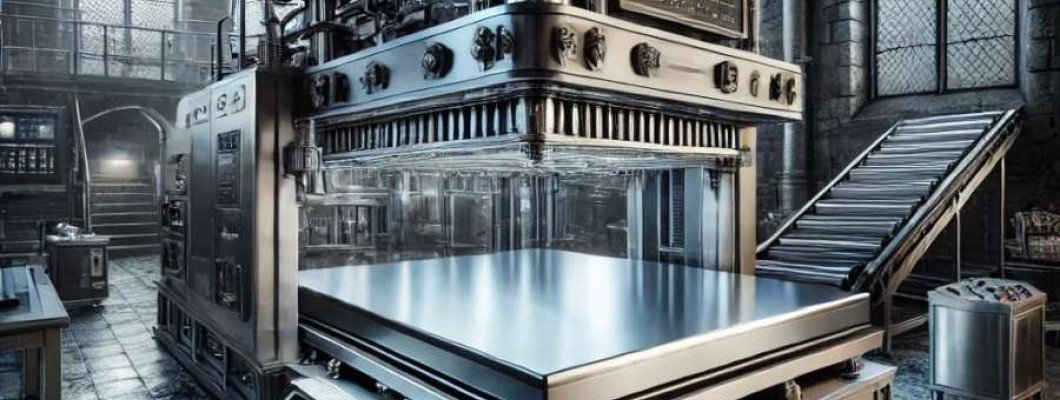
In large-scale production environments where throughput and automation are paramount, a seemingly straightforward piece of equipment such as a 40x60CM heat press machine can become a critical choke point in workflows. Despite the machine's ostensibly simple function—applying heat and pressure to transfer designs onto substrates—the operational environment exposes hidden bottlenecks that impact productivity, labor efficiency, and quality consistency. Consider a medium-sized apparel printing business aiming to produce 500 printed garments per day. The timing of heat cycles, heat plate temperature stability, and mechanical repeatability directly influence the speed at which operators can execute transfers without compromising yield. When these elements are not optimized, the heat press imposes delays, increases manual intervention, and drives labor cost inflation, thereby eroding margins. This scenario demands a precise technical understanding of the machine’s components and their interaction with the broader production ecosystem.
Technical Deep Dive Into Operational Bottlenecks and Performance Limits
Heat Plate Temperature Uniformity and Control
Critical to the transfer process is the uniformity of heat distribution across the 40cm by 60cm platen. Uneven temperature gradients can cause partial transfers or scorch marks. Typical plate materials range from cast aluminum to steel alloys, each with different thermal conductivities. Hypothetically, for cast aluminum plates, thermal conductivity (k) is around 205 W/m·K compared to steel’s 50 W/m·K, resulting in faster heat-up times but requiring precise control electronics to prevent overshoot. The embedded heating elements operate at power ratings between 1000 and 1500 Watts. Effective PID (Proportional-Integral-Derivative) controllers, paired with high-resolution thermocouples, maintain temperature variance within ±2°C to ensure transfer consistency over repeated cycles.
Pressure Mechanism and Repeatability Under Load
Consistent pressure distribution across the platen surface is critical for uniform adhesion. The mechanical lever or pneumatic pressure arm must deliver between 250 to 400 N/cm² depending on substrate type. Mechanical wear or misalignment can produce variations greater than 10%, degrading transfer quality. Precision-machined pressure plates, combined with calibrated pressure gauges and tension springs, ensure a repeatability tolerance better than ±5 N/cm² over thousands of cycles. The mass inertia of moving components at operational speeds also influences cycle time and operator fatigue.
Cycle Time and Throughput Calculations
Cycle time includes platen preheat, transfer duration, and cooldown phases. For this 40x60CM model, typical preheat to 180°C averages 4 minutes, with a transfer time ranging from 10 to 25 seconds depending on materials. Cooldown time can extend beyond 1 minute for manual handling safety. In high-volume scenarios, throughput calculations reveal bottlenecks:
| Machine Parameter | Manual Operation | Automated Integration |
|---|---|---|
| Average Cycle Time | 90 seconds (incl. cooldown) | 60 seconds (optimized airflow cooling) |
| Daily Throughput | ~640 units/8h shift | ~960 units/8h shift |
| Operator Dependency | High, multiple manual steps | Low, automated substrate feed |
| Energy Consumption per Unit | ~1.5 kWh | ~1.1 kWh |
Thermal Management and Safety Compliance
Thermal management extends beyond platen heating. Surrounding electronics and chassis must dissipate residual heat to prevent component degradation and operator hazards. Industrial-grade insulation materials reduce heat loss and improve energy efficiency. Safety features such as auto-shutdown, thermal fuses, and emergency release levers form part of regulatory compliance for occupational health standards. This is essential for multi-shift environments where operator safety and machine uptime are directly linked.
Integration Challenges With Scalable Production Lines
Integrating the heat press into automated workflows requires consideration of physical footprint, environmental conditions, and control communication protocols (e.g., PLC, Modbus). Scalability may be limited by manual substrate loading or single-station operation unless additional robotic handling or conveyor integration is implemented. The physical size (40cm by 60cm platen) balances versatility with space efficiency but may necessitate parallel machine arrays to meet high volume demands, increasing capital expenditure and maintenance complexities.
Scenario Analysis of Business Impact Based on Machine Specifications
Scenario 1: Apparel Printing Startup Scaling Production
The 40x60CM heat press machine offers sufficient platen size to handle medium-format transfers, but the founder faces bottlenecks due to 90-second cycle times and manual loading. Bottlenecks limit production to 640 units per 8-hour shift, necessitating additional labor and footprint to expand capacity.
Scenario 2: Established Custom Merchandise Business
Here, the operator integrates airflow cooling and pressure calibration upgrades to reduce cycle time to 60 seconds and improve transfer consistency. Automated substrate feeders reduce labor cost and increase daily throughput to 960 units, supporting scaling without line expansion.
Scenario 3: Industrial Mass Production Facility
In an industrial line producing thousands of units per day, the 40x60CM platen size requires multiple machines in parallel. Integration with PLCs enables real-time monitoring of temperature and pressure. Automated cooldown conveyor belts enhance safety and throughput, but capital and maintenance complexity rise accordingly.
Expert FAQ on Advanced Technical Considerations
Q1: How does platen material affect long-term heat retention?
A: Cast aluminum plates heat quickly but lose heat faster than thicker steel plates with insulation. This affects energy efficiency and temperature stability cycle-over-cycle.Q2: What are common failure points in the pressure mechanism?
A: Wear on springs, hinge loosening, and pressure gauge drift cause uneven pressure distribution, impacting print quality and necessitating preventive calibration.Q3: How critical is PID tuning in temperature control?
A: Precise PID tuning minimizes temperature overshoot and oscillation, reducing scrap rate during transfers sensitive to temperature fluctuations.Q4: Can this heat press support non-traditional substrates?
A: Yes, but pressure and temperature settings must be carefully adjusted. Substrates like wood or ceramic require lower pressure and longer dwell times.Q5: What is the recommended maintenance cycle?
A: Quarterly mechanical inspection, monthly electrical safety tests, and daily calibration checks optimize uptime and reduce unscheduled downtime.
Strategic Verdict and Recommendation
For businesses reliant on scalable throughput and minimal labor costs, the 40x60CM Heat Press Machine offers a balanced solution between platen size and operational control. Its manufacturability enables precise temperature and pressure regulation necessary to maintain print quality at scale. While manual operation introduces throughput limitations, targeted upgrades in thermal management and automation integration substantially mitigate bottlenecks. The machine's engineering supports sustained high-volume cycling without accelerated wear, provided maintenance protocols are rigorously followed. For companies preparing to scale from prototype to mass production, this model constitutes a solid industrial-grade foundation. Incorporating machine arrays and automated substrate handling can further unlock performance ceilings. To explore detailed specifications and procurement options, the reader is directed to the official 40x60CM Heat Press Machine resource page.