
Analyzing the Industrial-Grade Potential of the A3 Roll DTF Printer T-shirt Printing Machine with a Focus on Infrastructure Integration Challenges
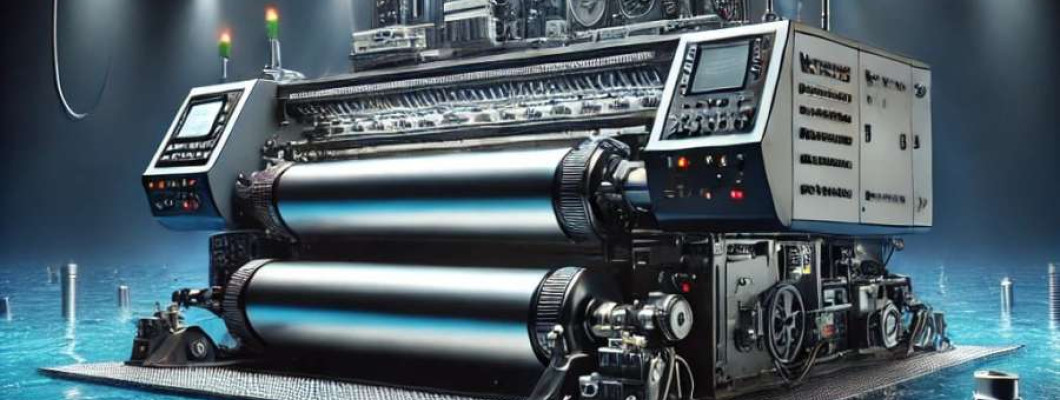
The Industrial Reality of Integrating an A3 Roll DTF Printer into Existing Production Lines
Companies aiming to expand or upgrade their textile printing capabilities face a complex landscape when considering industrial-scale roll-to-roll Direct To Film (DTF) printers. The A3 Roll DTF Printer T-shirt Printing Machine, while compact in size, introduces significant technical and operational considerations. Unlike standalone desktop machines, this printer must fit seamlessly within existing workflows, which often involve automated substrate handling, drying conveyors, and scheduled maintenance windows. The challenge lies not only in the technical specifications of the machine but also in how it interfaces physically and digitally with upstream and downstream equipment.
Consider a medium-sized manufacturing plant upgrading from screen printing to DTF technology. The integration process reveals bottlenecks such as inconsistent tension control on the film roll, improper synchronization with curing stations, and legacy software that restricts print job queueing and monitoring. The printer's networking capabilities and thermal management further complicate matters, as high-density industrial environments require rigorous control of ambient conditions to prevent print defects and premature hardware wear.
Such scenarios underscore that deploying an A3 Roll DTF Printer in an industrial context is not merely about purchasing hardware — it involves a multi-disciplinary approach encompassing mechanical engineering, IT infrastructure, and process optimization. Companies must assess physical dimensions, power consumption, heat dissipation, and communication protocols alongside print speed, resolution, and ink chemistry compatibility.
Technical Deep-Dive into Infrastructure Integration Challenges
Physical Footprint and Mechanical Compatibility
The A3 Roll DTF Printer typically measures approximately 1200 mm in length, 600 mm in width, and 800 mm in height, which positions it in a mid-sized industrial footprint category. To accommodate continuous roll-to-roll printing, precise roller tensioning mechanisms are mandatory. Assuming a substrate roll width of 320 mm and a maximum roll diameter of 200 mm, the printer's feed system must apply uniform tension, ideally between 1 to 3 Newtons, to prevent curl-induced misfeed or print registration errors.
Power and Thermal Management Considerations
The printer consumes roughly 2000 Watts at peak operation, with heat generation concentrated in the curing and printhead heating zones. For environments with multiple units installed within a 12-square-meter room, cumulative heat of over 10 kW demands forced air or localized HVAC solutions. Inefficient thermal management risks premature ink drying within print heads, leading to clogging. Facilities must therefore engineer airflow to maintain ambient temperature within 20-25°C.
Network and Software Integration
Modern DTF printers rely on Ethernet-based connections with support for TCP/IP. The A3 Roll DTF Printer supports RIP software integration enabling color management and print job scheduling. However, compatibility with existing enterprise print management systems varies, necessitating middleware or API customization. Data throughput peaks at approximately 100 Mbps during large batch transfers, impacting network design in shared environments.
Ink Chemistry and Environmental Compliance
DTF inks are solvent-based or water-based with specific drying profiles. This printer primarily uses eco-solvent ink with volatile organic compound (VOC) emissions measured at less than 150 mg/m3 during operation, which complies with Class A industrial air quality standards. Facilities must maintain adequate ventilation with air exchanges of at least 6 ACH (air changes per hour) to meet safety regulations.
Maintenance Access and Workflow Automation
The printer's design incorporates front and side access panels to facilitate printhead cleaning, roller alignment, and ink refill. Maintenance cycles typically occur every 50-80 operating hours, aligning with shift schedules. Integration with automated substrate loading and unloading systems reduces manual labor and improves throughput, but introduces additional control system complexity requiring PLC-level synchronization.
| Specification | Standalone Desktop DTF Printer | A3 Roll DTF Printer Industrial Unit |
|---|---|---|
| Physical Dimensions (mm) | 600x400x400 | 1200x600x800 |
| Power Consumption (W) | 500-800 | 2000 Peak |
| Network Protocol | USB / Wi-Fi | Ethernet (TCP/IP), RIP Software |
| Ink Type | Water-based | Eco-solvent |
| Maintenance Interval (hours) | 20-40 | 50-80 |
| Integration Complexity | Low | High - Requires Process Engineering |
Scenario Analysis of Business Use Cases
Small Batch Custom Apparel Production
In a business focused on producing customized t-shirts with low to moderate volume, the printer’s ability to handle A3-sized rolls with a maximum print speed of approximately 1.5 m2/hr offers a good balance of quality and throughput. However, integration challenges around software compatibility can slow job turnaround unless the workflow is simplified with dedicated print stations.
Mid-Sized Textile Manufacturing Facility
Facilities transitioning from manual screen printing to automated DTF printing benefit from the printer’s robust mechanics, but must invest in infrastructure upgrades. Power supply stability, enhanced HVAC, and network configuration become critical to maintain uptime above 90%. Scheduled maintenance must align with production shifts to avoid costly downtime.
Industrial Mass Production Setting
At scale, multiple units of the A3 Roll DTF Printer can be deployed in parallel, boosting throughput linearly. However, this requires advanced automation integration, including robotics for roll handling and real-time print quality monitoring. The infrastructure must support high electrical loads, noise mitigation, and environmental compliance to sustain long production runs over weeks without quality degradation.
Expert FAQ on the A3 Roll DTF Printer and Infrastructure Integration
What are the critical parameters for effective roller tension control?
Roller tension should be maintained within 1-3 Newtons. Exceeding this range risks substrate deformation; under tension causes registration errors. Tension sensors backed by closed-loop feedback provide optimal control.
How does the printer’s power consumption influence facility HVAC design?
With peak consumption near 2000 Watts per unit, cumulative thermal output can reach 10 kW in multi-unit installations. HVAC systems must account for this heat load to maintain 20-25°C ambient temperatures, preventing ink drying issues and electronics overheating.
Can the printer integrate directly with legacy ERP or MES systems?
Direct integration is limited; middleware or API customization is often required. Ethernet with RIP software supports standard print management but interfacing with ERP or MES typically requires additional software development.
What ink types are compatible, and how do they impact safety compliance?
The machine primarily operates with eco-solvent inks emitting VOCs below 150 mg/m3, compliant with Class A standards. Proper ventilation with a minimum of 6 air changes per hour is necessary to maintain workplace safety.
What maintenance practices extend printhead lifespan?
Routine cleaning every 50-80 hours minimizes clogging. Using manufacturer-recommended cleaning agents and calibrating roller alignment reduces mechanical wear. Integration with automated cleaning cycles improves uptime.
Strategic Verdict and Recommendation
The A3 Roll DTF Printer T-shirt Printing Machine offers a compelling solution to enterprises seeking an industrial-grade printing platform that bridges manual and automated production environments. While integration challenges surrounding mechanical fit, thermal management, and software compatibility are non-trivial, they are addressable through targeted infrastructure upgrades and process engineering.
For scalable business owners balancing throughput and automation, this printer's industrial design, power profile, and print quality metrics validate its deployment potential. The higher upfront investment in integration translates into operational efficiency gains and improved asset longevity. Prospective adopters should engage multidisciplinary teams early to ensure seamless incorporation into broader manufacturing ecosystems.
You can review detailed technical and purchasing information on the A3 Roll DTF Printer T-shirt Printing Machine to assess suitability for your operational requirements.