
Analyzing the Infrastructure Integration Challenges of the A3 Roll DTF Printer for the Scalable Business Owner
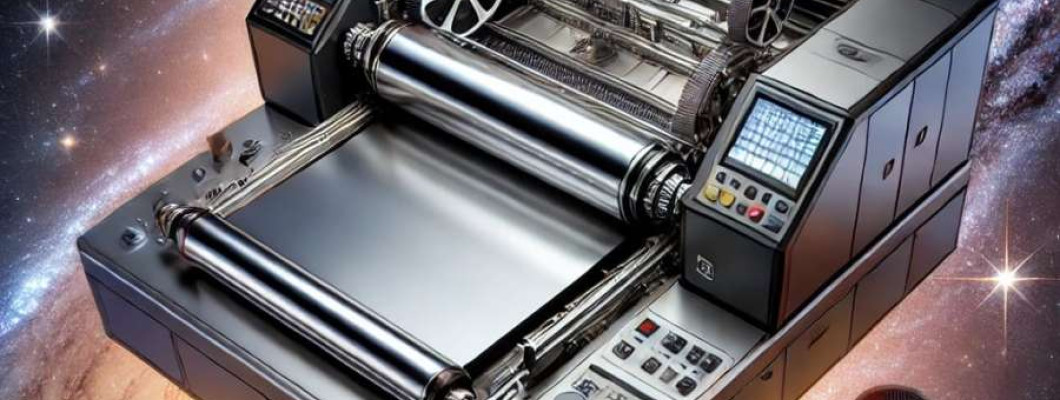
The Industrial Reality of Integrating A3 Roll DTF Printing in Scalable Production
Entering industrial-grade T-shirt printing using Direct to Film (DTF) technology presents a host of infrastructure challenges often underestimated by scalable business owners. The A3 Roll DTF Printer T-shirt Printing Machine promises enhanced throughput with roll-to-roll operation, but the realities of integrating this hardware into existing production lines reveal critical bottlenecks.
Consider a mid-sized apparel print shop aiming to scale from manual heat press workflows to automated continuous printing. The incorporation of the A3 Roll DTF Printer necessitates precise environmental conditions; temperature and humidity control are paramount to maintain ink adhesion and drying times within optimal ranges. Ambient fluctuations induce variation in film stretching, ink curing, and drying stages, leading to inconsistent color density and registration errors. The need for clean ventilation to manage the fine particulates emitted during powder application and curing phases adds another layer of complexity, often requiring retrofitted exhaust and filtration systems.
Moreover, data throughput between the print server and the hardware must sustain uninterrupted, high-volume print jobs to avoid printhead idling or buffer overflows. This leads to questions around network infrastructure upgrades and dedicated print servers optimized for RIP (Raster Image Processing) operations. Power supply stability is another concern; the printer’s stepper motors, heaters, and UV curing units draw significant current in pulses, necessitating industrial-grade power conditioning to prevent voltage dips that can compromise printhead electronics sensitive to ESD (Electrostatic Discharge) events.
Human-machine interfaces must be considered as well. Operators require intuitive control panels for real-time monitoring of print parameters such as ink density, temperature, and roller tension, reducing training time and minimizing operator error. As throughput targets increase, the integration of automated roll feeding and take-up systems becomes essential but adds to the coordination complexity, requiring synchronization with upstream and downstream machinery such as pre-treatment stations and curing ovens.
Technical Deep-Dive Into Infrastructure Requirements
Environmental Control and Its Effects on Ink Deposition
Ink rheology and drying kinetics in DTF printing are heavily influenced by ambient humidity and temperature. For the A3 Roll DTF Printer, ideal conditions hover around 22°C with 45-55% relative humidity. Deviations beyond +/-5% RH cause ink to either dry prematurely on the printhead or remain tacky, resulting in film adhesion failures. Furthermore, stretching coefficient (S) of PET film varies with humidity; experimentally, S can shift from 0.015 mm/m/%RH to 0.025 mm/m/%RH, directly impacting pixel registration at a standard 1440 dpi (approx. 17.6 μm per dot). Over a 300 mm print width, this can lead to cumulative positional errors approaching 100 μm without real-time tension adjustment.
Network and Data Handling Capabilities
RIP software output for 1440 dpi, 8-bit CMYK plus white channel, 1 meter length prints can approach 3 GB per print job. The A3 Roll DTF Printer requires seamless reception of these large files at rates exceeding 100 Mbps to maintain an average print speed of 1.2 m/min. Without the dedicated Gigabit Ethernet infrastructure, the printer buffers can overflow, causing job pauses and printhead overheating cycles due to forced idling.
Electrical Power Conditioning and Printhead Reliability
The stepper motors responsible for precise film feeding and carriage motion on the A3 Roll DTF Printer draw peak currents around 2.5 A at 24 V during acceleration phases. Heater elements consume 500 W intermittently for powder curing. Power fluctuations beyond ±0.5 V from nominal 220 V AC induce transient undervoltages leading to microcontroller resets and printhead misfires. Industrial UPS with surge protection and voltage regulation is recommended, adding approximately 300 W to the site power budget. This infrastructure investment directly impacts operational uptime and maintenance intervals.
Mechanical Integration: Roll Handling and Synchronization
Automated roll feeding systems integrated with the A3 Roll DTF Printer must maintain constant tension in the 0.6 N/mm range to avoid slack or stretching. Load cells combined with servo feedback loops regulate tension within ±0.05 N to maintain print registration accuracy. The take-up unit must continuously spool printed film without inducing curling or wrinkling, which necessitates precise speed matching within 1% tolerance of the main print roller velocity. Failure to achieve this results in print defects that can reach the magnitude of 500 μm lateral displacement over 1 meter length—well above acceptable limits for garment printing.
User Interface and Operational Software Ecosystem
The A3 Roll DTF Printer includes a touchscreen interface supporting parameter adjustments such as ink density (measured in pl or picoliters), nozzle check frequency, and roller speed in mm/s. Integration with factory MES (Manufacturing Execution Systems) is facilitated via standard industrial protocols (TCP/IP, Modbus TCP). However, operational complexity rises as operators must manage print job queues, consumable inventory, and error diagnostics simultaneously. Training programs focused on the machine's software environment significantly improve uptime and reduce operator-induced defects.
Scenario Analysis Showing Infrastructure Impact in Three Business Contexts
Scenario 1 Mid-Size Print Shop Scaling to Continuous Production
With manual heat press workflows, average throughput is 20 shirts/day. Integrating the A3 Roll DTF Printer increases potential to 120 shirts/day, provided HVAC upgrades maintain stable environment conditions. Without these environmental controls, color fidelity varies by up to 15 Delta E, leading to reprints and waste. Network upgrades to Gigabit Ethernet reduce wait time between print jobs by 40%, optimizing operational workflow.
Scenario 2 High-Volume Apparel Manufacturer with Automated Line
For large-scale batch runs, the printer's need for precise tension control requires integration of advanced servo systems and load sensors. Investing in power conditioning equipment reduces printhead downtime by estimated 20%, translating to 98% overall equipment effectiveness (OEE). Operator interfaces connected to MES enable real-time monitoring, reducing defects by 30% compared to manual systems.
Scenario 3 On-Demand Small Business Using Hybrid Workflow
Small businesses combining manual and automated production benefit from the printer’s modular roll feeding but face challenges in adapting existing electrical infrastructure. Power fluctuations cause printhead errors, halting jobs unexpectedly. Installing dedicated UPS and environmental sensors improves uptime from 75% to 90%, enabling reliable batch sizes of 50-70 shirts with consistent quality.
Comparative Table of Two Infrastructure Approaches
| Infrastructure Aspect | Basic Setup | Industrial-Grade Upgrade |
|---|---|---|
| Environmental Control | Natural Ventilation, No Humidity Control | HVAC with Humidity & Temperature Sensors |
| Network Speed | 100 Mbps Shared Network | Dedicated Gigabit Ethernet with RIP Server |
| Power Conditioning | Standard Circuit with No UPS | UPS with Surge Protection and Voltage Regulator |
| Roll Tension Control | Manual Adjustment | Servo-Driven Load Cell Feedback Loop |
| User Interface | Basic Touch Panel | Integrated MES with Real-Time Monitoring |
Expert FAQ Addressing Critical Infrastructure Integration Concerns
Q1 How does ambient humidity affect color accuracy on the A3 Roll DTF Printer?
Humidity alters the film's dimensional stability and ink drying rate, causing shifts in color registration by up to 100 μm, which the printer cannot compensate without environmental control.
Q2 What network bandwidth is optimal for sustained high-resolution printing?
Minimum 1 Gbps Ethernet is required to avoid bottlenecks in RIP data transfer for 1440 dpi jobs exceeding 2 GB per print, ensuring continuous printing without buffer underruns.
Q3 Can standard power outlets support the printer's peak load?
No, industrial-grade power conditioning with UPS and voltage stabilization is necessary given the intermittent 500 W heater load and 2.5 A stepper motor peaks to protect electronic components and maintain uptime.
Q4 How critical is roll tension control for print quality?
Extremely critical; tension variability directly leads to pixel misalignment, with servo-driven feedback reducing errors from 500 μm to under 50 μm, essential for garment print accuracy.
Q5 Does the printer's interface support integration with common manufacturing execution systems?
Yes, the printer supports TCP/IP and Modbus TCP protocols, allowing seamless data exchange for job tracking and predictive maintenance when properly configured.
Strategic Verdict and Recommendation for Business Leaders
The A3 Roll DTF Printer T-shirt Printing Machine represents a robust industrial-grade solution optimized for scalable apparel printing businesses. While its roll-to-roll design and high-resolution printhead capabilities promise elevated throughput and quality, success hinges on the strategic investment in infrastructure adaptation. Environmental controls, network upgrades, power conditioning, and automated roll handling form the backbone of reliable operation and uptime maximization.
For business owners targeting medium to large batch production with minimized labor costs, the initial CAPEX on infrastructure translates directly into reduced OPEX losses from reprints, downtime, and operator errors. This machine’s modular software and hardware integration potential position it well for evolving workflows that demand agility and precision.
In summary, the machine’s deployment without simultaneous infrastructure modernization exposes latent failure modes and operational bottlenecks that undercut intended throughput gains. Conversely, a well-engineered integration plan leveraging HVAC controls, power stabilization, and industrial networking elevates the A3 Roll DTF Printer from a capable printer to a mission-critical asset. Therefore, it is recommended as the definitive industrial-printing hardware for scalable T-shirt printing enterprises committed to transforming production efficiency and quality assurance rigorously and sustainably.