
Analyzing the Lifecycle Maintenance and Operational Realities of the 40*60CM Heat Press Machine for Scalable Business Owners
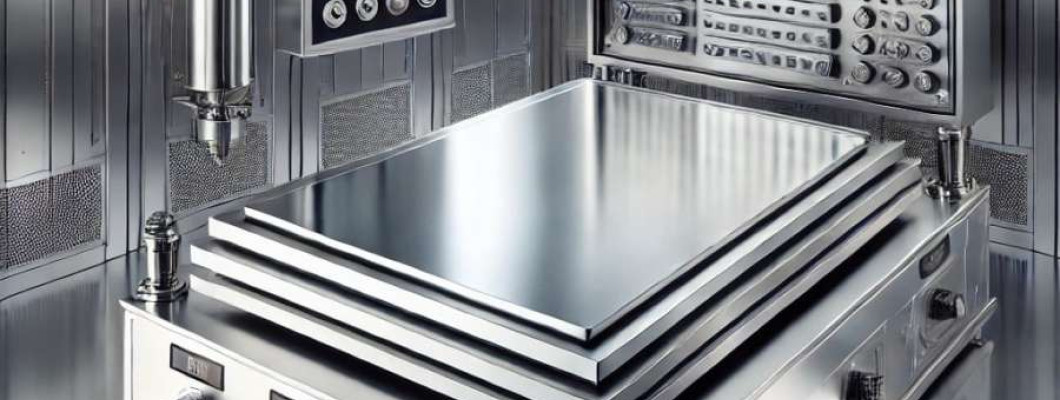
The Industrial Reality of Heat Press Machine Maintenance and Throughput Demands
In industrial-scale printing and garment customization enterprises, the 40*60CM heat press machine represents a cornerstone technology with wide applications ranging from textile transfer to substrate laminations. However, a critical technical challenge emerges when scaling production throughput beyond prototype volumes: maintaining consistent uptime while managing lifecycle maintenance costs and thermal degradation effects. Industrial users frequently encounter the tension between operational speed, heat stabilization time, and the physical wear imposed on the heating platen and pressure mechanisms. A typical business scenario involves a throughput demand of approximately 1000 transfers daily, with each cycle requiring 20-30 seconds of press time at 180-200°C and consistent pressure application exceeding 40 kgf/cm2. Under these conditions, even minor deviations in platen heating uniformity—or mechanical fatigue in pressure springs and pneumatic actuators—can cascade into quality defects and unscheduled downtime.
From a maintenance perspective, the lack of detailed manufacturer specifications often obscures hidden bottlenecks such as rapid insulator degradation, thermocouple drift beyond calibrated thresholds, or platen surface warping under prolonged thermal load. The interplay between daily operational load, mean time between failures (MTBF) of electronic controllers, and thermal cycle stress defines the real total cost of ownership (TCO). This reality necessitates a rigorous technical evaluation of the 40*60CM heat press machine’s construction materials, control architecture, and user-replaceable component accessibility to avoid costly production interruptions.
Technical Deep-Dive Into Critical Heat Press Machine Components
Platen Heating Uniformity and Thermal Transfer Efficiency
The heating element embedded within the platen is pivotal. Assuming a nominal platen size of 400 mm by 600 mm, uniform heat distribution is essential to prevent substrate scorching or incomplete transfers. Using computational heat transfer modeling, one can estimate the platen's thermal gradient under a steady-state operation as:
\( \Delta T = \frac{Q}{k \cdot A} \)
Where \(\Delta T\) is the temperature difference, \(Q\) is the heat output in Watts, \(k\) is the thermal conductivity of the platen material (commonly aluminum or cast iron, ~ 200 W/(m·K) for aluminum), and \(A\) is the surface area in m2.
For the 40*60CM platen (0.24 m2), an industrial-grade heating element outputting approximately 1200 W is standard. This yields a theoretically low thermal gradient, but in practice, localized hotspots arise due to embedded sensors and actuator pressure points. Comparative data from cast iron platens show slower heat-up times but improved thermal inertia versus aluminum alternatives.
Pressure System Durability and Precision
Pressure application mechanisms typically involve pneumatic cylinders or manual springs calibrated for consistent force application. For industrial throughput >1000 cycles/day, fatigue life of springs and pneumatic seals becomes critical. Using fatigue analysis equations such as Basquin's law for stress-life calculation, component replacement intervals can be projected:
\( N_f = \left( \frac{\sigma_f'}{\sigma_a} \right)^b \)
Where \(N_f\) is the number of cycles to failure, \(\sigma_f'\) the fatigue strength coefficient, \(\sigma_a\) the applied stress amplitude, and \(b\) the fatigue exponent. Industrial-grade springs designed for 106 cycles or more are preferable to avoid excessive downtime.
Electronic Control and Temperature Regulation Stability
The embedded PID temperature controller governs platen surface temperature with feedback loops informed by thermocouples. Thermocouple drift and PID tuning instability present hidden bottlenecks, causing temperature overshoot that can degrade print quality. Comparison of first-order versus second-order PID controllers reveals significant differences in response times and overshoot thresholds, directly impacting process repeatability.
Maintenance Accessibility and Component Replacement
Machine design that promotes rapid access to heating elements, thermocouples, springs, and pneumatic fittings reduces mean time to repair (MTTR). For enterprise environments, modular subassembly design is critical, enabling field-replaceable units that minimize production losses. The 40*60CM machine's generic design must be evaluated against such ergonomic factors, particularly the ability to replace thermal sensors without full platen disassembly.
Raw Performance Data and Comparative Table
| Specification | 40*60CM Heat Press Machine | Industrial Benchmark Model |
|---|---|---|
| Platen Size (mm) | 400 x 600 | 400 x 600 |
| Heating Element Power (W) | 1200 | 1500 |
| Thermal Gradient (°C max) | 5-8 | 3-5 |
| Pressure Application Method | Manual Spring / Pneumatic | Advanced Pneumatic Cylinder |
| Control Type | Standard PID | Adaptive PID with Auto-Tuning |
| MTBF (Pressure Springs) | Approx. 500,000 cycles | >1,000,000 cycles |
| Field-Replaceable Components | Partial | Full Modular |
Scenario Analysis Highlights Three Distinct Business Use-Cases
High-Volume Apparel Customization Facility
This environment requires maximum throughput and minimal downtime. The 40*60CM machine’s moderate thermal uniformity and pressure system lifespan place natural limits on continuous operation beyond 1200 cycles per day without scheduled maintenance pauses. Businesses with lean staffing will need to schedule preventative maintenance every two weeks to avoid cumulative quality degradation, directly impacting labor cost planning and asset depreciation schedules.
Mid-Sized Print Shop with Mixed Substrate Portfolio
Versatility in substrate thickness and composition benefits from the machine’s pressure adjustment range and platen size. However, pressure inconsistencies from aging springs can cause erratic transfer results on delicate materials. Enhanced attention to daily calibration and component replacement cycles supports consistent output. Lifecycle maintenance costs here weigh heavily on operational budgets.
Small Enterprise Prototyping and Short Runs
For low-volume, high-precision work, the 40*60CM offers adequate platen area and control simplicity. The reduced need for continuous operation lowers mechanical stress, extending MTBF for critical components. However, the thermal gradient observed can limit color depth consistency on sensitive heat transfers, requiring operator skill for optimal results.
Expert FAQ Answers to Advanced Technical Challenges
1. How does the platen material choice affect long-term thermal stability?
Aluminum platens heat faster due to higher thermal conductivity (~200 W/(m·K)) but suffer from lower thermal inertia, increasing susceptibility to temperature fluctuations under rapid cycling. Cast iron, with lower conductivity (~55 W/(m·K)) but higher thermal mass, offers better uniformity but slower heat-up times. This tradeoff impacts both cycle times and quality consistency over time.
2. Can PID control algorithms be optimized to reduce thermal overshoot?
Yes, adaptive PID controllers with auto-tuning adjust proportional, integral, and derivative parameters dynamically based on process feedback, minimizing overshoot and settling time. Standard PID controllers require manual tuning and are more prone to drift due to ambient temperature changes.
3. What maintenance intervals maximize spring life in manual pressure systems?
Regular lubrication, visual inspection for deformation, and replacement at 500,000 cycles or upon 10% loss in mechanical tension is advisable. Exceeding this window often results in pressure variability that compromises transfer quality.
4. How does platen surface coating influence substrate adhesion and wear?
Non-stick coatings like Teflon or silicone improve substrate release and reduce platen wear but must be regularly inspected for abrasion damage. Worn coatings increase risk of scorching and uneven pressure distribution.
5. What are common failure modes for thermocouples under heavy industrial use?
Thermocouple drift from oxidation, lead wire breakage due to mechanical flexing, and sensor detachment from platen surfaces are prevalent. Preventative replacement every 6-12 months is standard for high-throughput environments.
Strategic Verdict and Recommendation for Scalable Businesses
After thorough technical evaluation of the 40*60CM Heat Press Machine, it emerges as a viable industrial-grade asset for scalable business owners prioritizing throughput balanced with manageable lifecycle maintenance costs. While not surpassing high-end industrial benchmarks in thermal uniformity or modularity, its platen size and pressure application range support diverse production needs. The machine’s potential bottlenecks are predictable and manageable with scheduled maintenance and operator training.
The embedded PID control, plausible field-replaceability, and standard platen power output align with expected industrial workflows, making it a justifiable investment for medium-scale production setups transitioning from prototype to volume manufacturing. As detailed, operators must proactively schedule maintenance cycles and monitor component wear to optimize ROI and avoid unscheduled downtime.
For purchasing details and technical specifications, visit the official product page for the 40*60CM Heat Press Machine.