
Analyzing the Operational Bottlenecks of A3 Edible Food Printer For Printing Cakes Cookies for Scalable Businesses
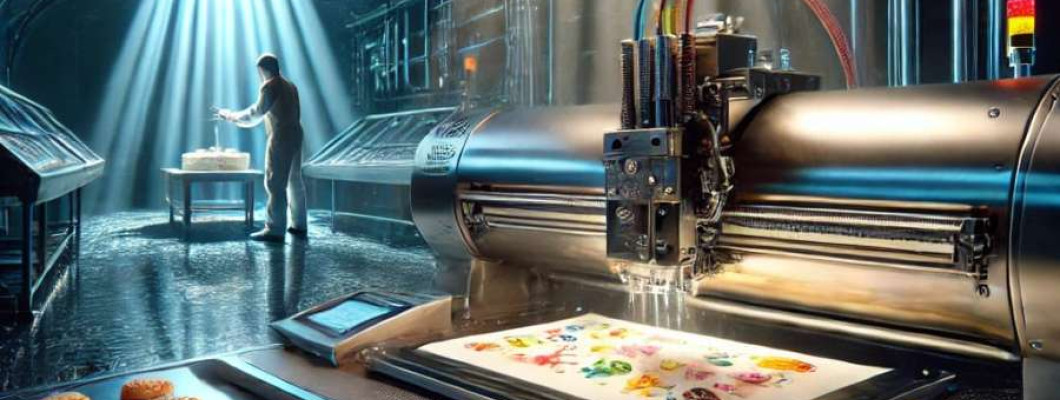
The Industrial Reality of Using an A3 Edible Food Printer in High-Volume Production
In commercial bakery environments where throughput and reliability define profitability, deploying an A3 edible food printer designed for cake and cookie decoration introduces several operational challenges. Unlike conventional inkjet printers, edible printers must handle specialized food-grade inks, maintain hygiene compliance, and deliver consistent output without compromising print quality or product safety. However, scaling production beyond limited batches often exposes bottlenecks tied to material replenishment rates, print speed, and maintenance intervals. For a scalable business owner, the balance between print throughput and labor input impacts operational expenses directly. For example, print speeds measured in pages per hour (pph) may be constrained by ink drying times and substrate adhesion properties, especially on complex cake textures or irregular cookie surfaces.
Consider a scenario where a bakery aims to process 500 decorated cookies per hour using the A3 edible food printer. The operational workflow must factor in the printer’s maximum page yield, the frequency of ink cartridge swaps, and cleaning cycles required to prevent printhead clogging due to the viscous edible inks. Failure to optimize these variables risks line stoppages, product rejections, or unintended downtime. This translates to lost revenue and labor inefficiencies unless the printer's design and workflow integration can mitigate such bottlenecks. Additionally, the edible inks’ sensitivity to environmental factors such as humidity and temperature necessitates precise control in printroom conditions to maintain print fidelity and sanitation standards.
Technical Deep Dive on Throughput and Ink Chemistry
Printhead Physics and Output Rates
The core of the A3 edible food printer technology revolves around piezoelectric printheads capable of ejecting droplets in the range of 3 to 10 picoliters (pl). Considering a droplet size of 5 pl and a nominal resolution of 600 dots per inch (dpi), the theoretical volumetric ink usage per A3 sheet (297 mm x 420 mm) can be approximated:
Calculation: Number of dots = (297 mm / 25.4 mm/in * 600 dpi) * (420 mm / 25.4 mm/in * 600 dpi) ≈ 7,008,661 dots per sheet. Ink volume = 7,008,661 dots * 5 pl ≈ 35.04 µL per sheet.
While this volume seems minimal, the high viscosity and particulate nature of edible ink require precise droplet formation control to avoid clogging and nozzle misfires. Printhead durability under these conditions measures roughly 500 operational hours before necessitating head replacement or professional refurbishment. Comparative industrial edible printers may achieve longer lifespans by employing hybrid printhead arrays or self-cleaning mechanisms.
Ink Cartridge Capacity and Replenishment
Standard edible ink cartridges contain approximately 100 mL of ink per color. At 35.04 µL per A3 print, this translates to roughly 2,855 prints per cartridge before replacement. However, in mass production, frequent color changes and multi-pass prints can reduce this practical yield by 20-30%. This operational demand implies an average replenishment cycle of every 2,000 prints under heavy use, which must be scheduled to avoid line disruption.
Maintenance and Lifecycle Projections
Daily preventive maintenance involves printhead flushing, nozzle integrity checks, and food-safe cleaning cycles. Assuming a work shift of 8 hours with 500 prints per hour, maintenance windows must be carefully integrated. Over a monthly cycle, expect approximately 20 maintenance hours including major service interventions. Lifecycle cost models should factor in maintenance labor, printhead consumables, and unscheduled downtime, which can affect ROI calculations significantly.
Hardware Comparisons with Alternative Solutions
| Specification | A3 Edible Food Printer | Industrial Food Printer (Hybrid Printheads) |
|---|---|---|
| Max Resolution | 600 dpi | 1200 dpi |
| Print Speed | Up to 500 pph | Up to 1000 pph |
| Printhead Durability | 500 hours | 1000+ hours |
| Ink Cartridge Volume | 100 mL | 200 mL |
| Maintenance Interval | Daily | Weekly |
Environmental Control and Compliance Considerations
Maintaining temperature between 20-25°C and relative humidity below 50% is critical to avoid ink drying prematurely on nozzles or substrate surfaces, which impacts print quality and equipment longevity. Furthermore, adherence to food safety regulation standards such as FDA CFR Title 21 regarding food-contact materials is mandatory. Integration with cleanroom-grade air filtration and antimicrobial cleaning protocols elevates operational complexity but is necessary in high-volume edible printing to prevent contamination risks.
Scenario Analysis of Business Use Cases
Small-Scale Artisan Bakery
For boutique bakeries producing fewer than 200 decorated items daily, the A3 edible printer delivers exceptional color depth and substrate versatility, allowing intricate designs on cookies and cakes. Bottlenecks are minimal as the print volume is within operational capacity, and labor can manage maintenance without impacting throughput.
Medium-Sized Bakery Chain
In a production environment aiming for 1000-1500 prints daily, bottlenecks emerge primarily from downtime during cartridge replacement and printhead maintenance. Implementation of an automated ink supply system and expanded printhead redundancy can mitigate these constraints, but this requires capital investment beyond the base printer setup.
Large-Scale Industrial Bakery Facility
In facilities exceeding 3000 prints per day, the A3 printer may impose throughput limitations and maintenance frequency that disrupt mass production lines. Here, hybrid or industrial-grade food printers with more robust printheads, larger ink reservoirs, and automated cleaning systems are preferred. However, the A3 printer remains viable as a secondary or specialty printing station for limited runs or test batches.
Expert FAQ on Edible Food Printing Technology
How does droplet size influence edible ink adhesion on varying cake textures?
Smaller droplets improve surface resolution on smooth fondant but may result in insufficient ink absorption on porous cookie surfaces, requiring droplet size optimization per substrate.
What effects do ink viscosity variations have on piezoelectric printhead longevity?
Higher viscosity edible inks increase mechanical stress on nozzle membranes, accelerating wear and promoting clogging, thus reducing printhead lifespan.
Can environmental humidity fluctuations cause color gamut shifts in edible food prints?
Yes, higher humidity can cause pigment dispersion changes and ink drying delays, shifting color appearance and reducing print fidelity.
What are the fail-safe mechanisms during printhead nozzle misfire events?
Advanced printers incorporate real-time nozzle health monitoring and redundancy algorithms that reroute print commands to functional nozzles to maintain image integrity.
How does maintenance frequency impact total cost of ownership for edible food printers?
Increased maintenance frequency raises labor and parts replacement costs, shortening equipment lifecycle and inflating operational expenses, which can erode ROI if not optimized.
Strategic Verdict and Recommendation on the A3 Edible Food Printer
In conclusion, the A3 Edible Food Printer For Printing Cakes Cookies is a technically capable solution for businesses focused on moderate throughput with an emphasis on color accuracy and substrate versatility. Its piezoelectric printhead technology supports high-quality edible printing at a practical resolution and spot size, appropriate for many scalable bakery operations. While operational bottlenecks exist—primarily in maintenance cycles and ink replenishment workflows—these can be mitigated through process optimization and environmental controls.
For companies transitioning from artisan-scale to medium-scale production, this printer provides an industrially acceptable baseline with manageable lifecycle costs. Larger scale operations may require complementary technologies to address throughput demands. Given its balanced performance and integration flexibility, I recommend this hardware as a viable industrial-grade solution. Prospective buyers should review its specifications at the official product site, A3 Edible Food Printer For Printing Cakes Cookies, to verify compatibility with their production requirements.